Clear Sky Science · en
Organic electrochemical transistors for metabolite sensing across the transition from in vitro to in vivo
Watching the Body’s Chemistry in Real Time
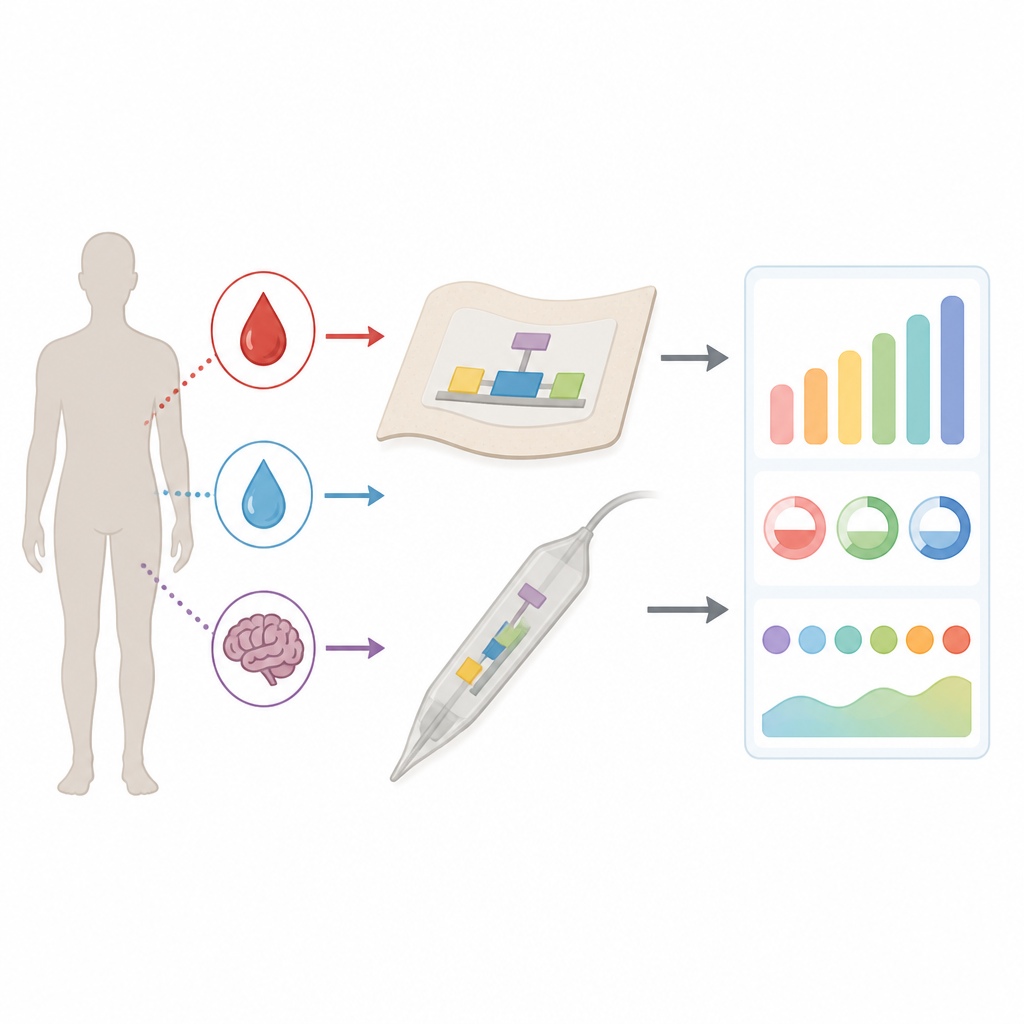
Many of the most important clues about our health come from tiny molecules that constantly circulate through blood, sweat, and even brain fluid. Glucose, lactate, dopamine, and uric acid shift as we eat, exercise, think, or fall ill. This article explains a new class of soft electronic devices that can sit on or inside the body and turn those invisible chemical changes into clear electrical signals, opening the door to more comfortable, continuous health monitoring.
From Simple Wires to Smart Chemical Switches
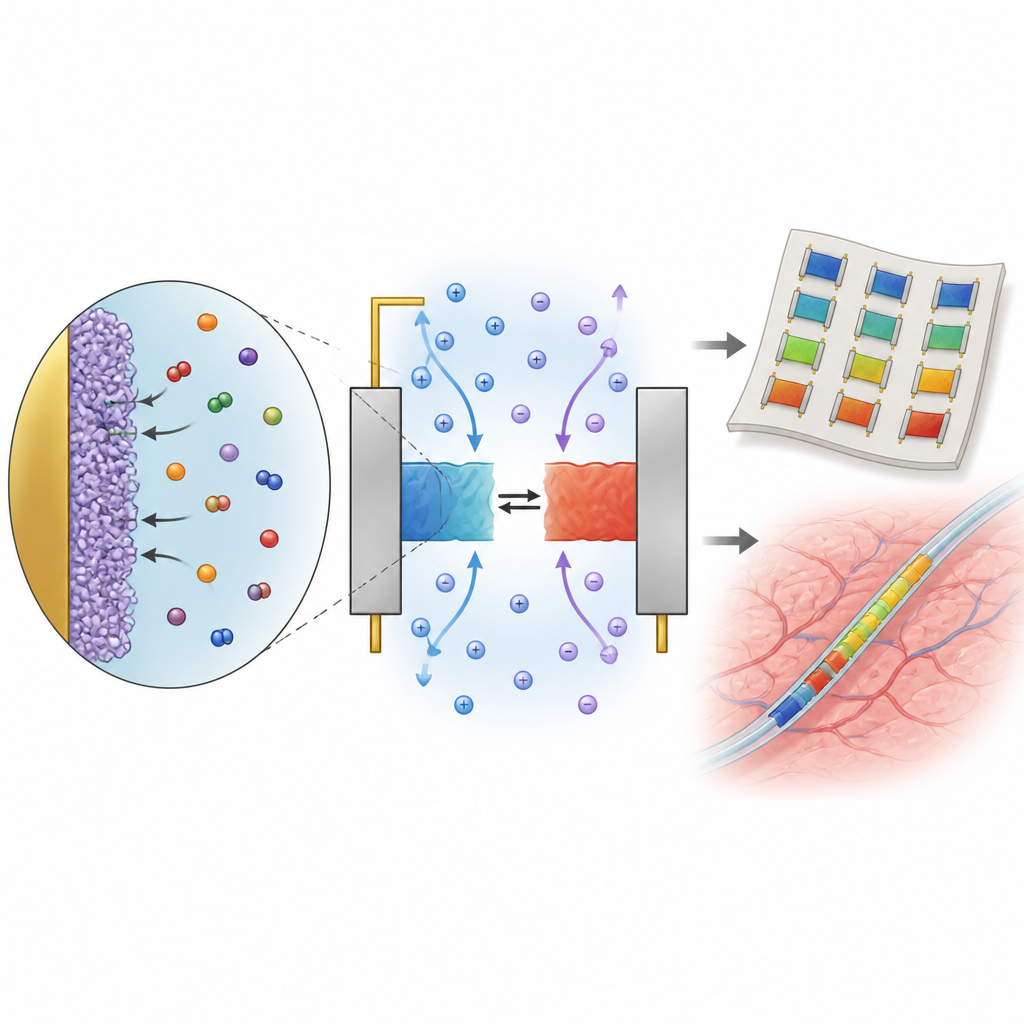
Traditional electrochemical sensors use metal electrodes that directly measure reactions of molecules at their surface. They work well but struggle when the signal is very small or buried in noise, as often happens inside the body. Organic electrochemical transistors, or OECTs, add a twist: they are three-terminal devices, more like tiny switches than plain wires. Their channel is made from soft, carbon-based polymers that can carry both ions and electrons. When a small voltage is applied at the gate, ions from an electrolyte move into or out of this channel, dramatically changing how well it conducts electricity. Because a tiny chemical event at the gate can produce a large change in current through the channel, OECTs naturally amplify weak biological signals.
Shaping Tiny Devices for Skin and Tissue
OECTs are not one-size-fits-all. The review explains several layouts that trade manufacturing simplicity for speed, sensitivity, and flexibility. In bottom-contact designs, the polymer channel sits on top of metal source and drain electrodes, a straightforward structure suited to many lab sensors. Top-contact and coplanar designs rearrange these parts to improve repeatability or make flat, flexible layouts that can be printed on plastics and textiles. A newer vertical design stacks the electrodes so that current flows straight through a very short polymer layer. This shrinks response time and boosts signal but is harder to build. Choosing the right geometry helps engineers match the device to tasks ranging from disposable test strips to stretchy patches and implantable probes.
Turning Molecules into Signals
The heart of OECT biosensing is how the device is “decorated” to recognize a chosen molecule. One approach coats the gate with enzymes, antibodies, or aptamers that grab the target. For glucose or lactate, enzymes convert the molecule into hydrogen peroxide, which changes the gate potential and thus the channel current. Another strategy builds recognition sites directly into the polymer channel so that binding events alter its bulk conductivity. A third places the biology into the electrolyte itself, for example by adding enzymes or living cells, while the transistor mainly reads out the resulting ion changes. Each route balances sensitivity, stability, and resistance to interference, and the review compares their strengths for measuring small metabolites in real samples like saliva, sweat, and blood.
Tracking Key Metabolites in and out of the Lab
Using these design rules, researchers have built OECT sensors for many medically important molecules. Glucose sensors, often using enzyme-coated platinum or carbon gates, can detect tiny concentrations in saliva, sweat, or interstitial fluid and have even been integrated with microneedles for nearly painless continuous glucose monitoring. Lactate sensors help follow muscle fatigue and critical illness, while dopamine sensors read brain chemistry with high sensitivity using specially structured gates or soft fiber-based probes. Uric acid sensors woven into bandages watch wound healing or kidney-related changes. The devices can be printed on textiles, formed as hair-thin fibers, or made as ultra-thin implants that move with soft tissue and operate for days or weeks.
Bridging the Gap to Everyday Medicine
The authors conclude that organic electrochemical transistors are strong candidates for the next generation of health monitors. Their soft materials, built-in amplification, and adaptability make them ideal for wearable patches, smart bandages, and tiny implants that track body chemistry continuously rather than in occasional snapshots. At the same time, major challenges remain: making devices in large numbers with consistent performance, keeping their surfaces from fouling inside the body, and ensuring long-term safety. Future progress will likely combine improved materials, scalable printing methods, and smart data analysis to turn these experimental sensors into reliable tools for routine care and personalized medicine.
Citation: Zheng, J., Jiang, X., Yu, J. et al. Organic electrochemical transistors for metabolite sensing across the transition from in vitro to in vivo. npj Biosensing 3, 29 (2026). https://doi.org/10.1038/s44328-026-00096-9
Keywords: organic electrochemical transistor, metabolite sensing, wearable biosensor, implantable sensor, continuous monitoring