Clear Sky Science · en
Tonic dopamine sensing reveals a D2 and D3-mediated dopamine response to raclopride in ClockΔ19 mice model
Why daily rhythms and brain chemicals matter
Most of us have felt how a bad night of sleep can throw off mood, focus, or the pull of rewarding activities. Behind these swings are daily body clocks and powerful brain chemicals like dopamine, which helps control movement, motivation, and reward. This study looks at how a single clock gene in the brain shapes dopamine levels and responses to a common drug in mice, offering clues to why disrupted sleep schedules are tied to mood disorders and addiction.
Watching dopamine in the living brain
To track dopamine in real time, the researchers used hair-thin carbon fiber sensors coated with a special conductive film. These tiny probes were placed into key brain areas of living mice, including the nucleus accumbens, a hub for motivation and reward. The sensors detected background, or tonic, dopamine over more than an hour, allowing the team to see how levels changed as the probes moved through the brain and as drugs were given. They compared normal mice to ClockΔ19 mice, which carry a mutated version of a core circadian clock gene and are known to show risk-taking and drug-sensitive behaviors.
A clock gene tied to higher dopamine levels
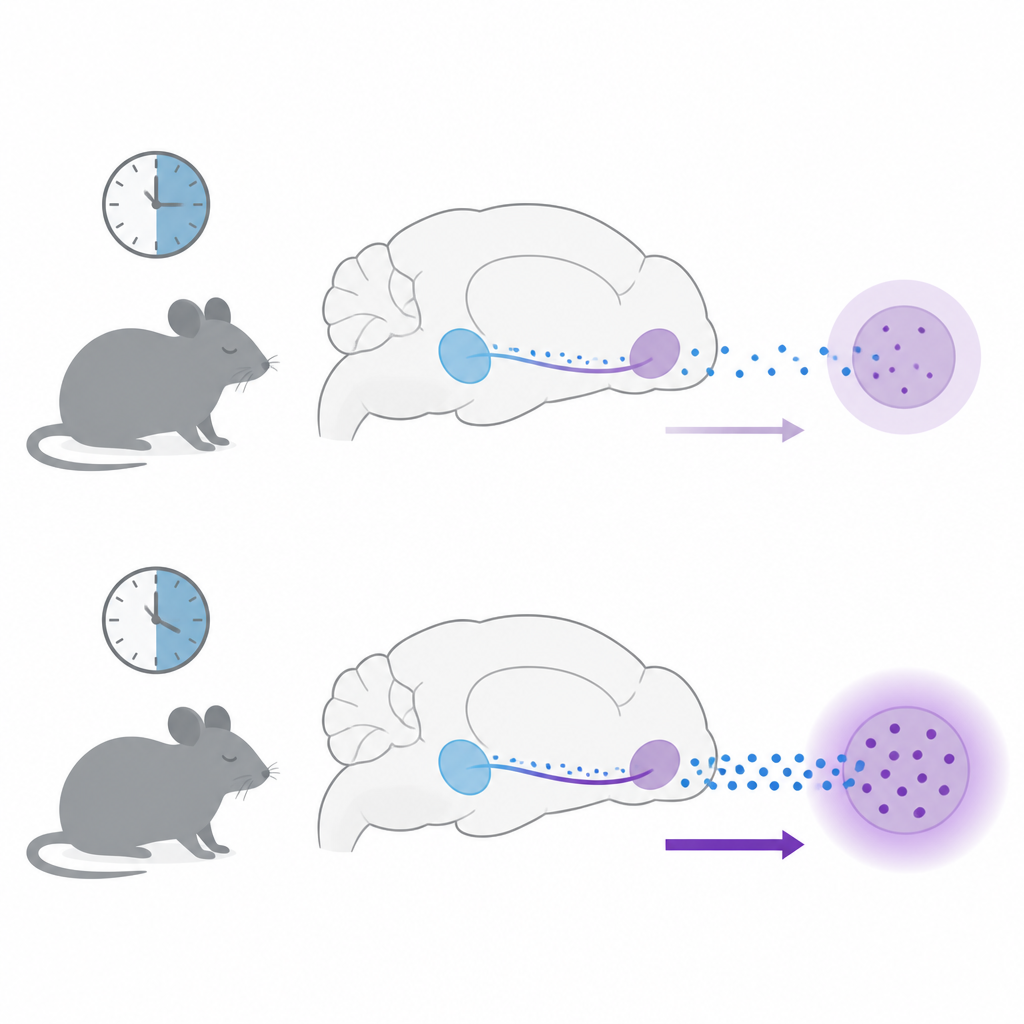
The sensors confirmed that dopamine was low in the motor cortex but clearly detectable in deeper reward regions. As the probes entered the nucleus accumbens, dopamine levels rose in both normal and ClockΔ19 mice, partly due to minor tissue damage from probe insertion. Over time, however, a consistent difference emerged: ClockΔ19 mice showed markedly higher dopamine levels in the nucleus accumbens than their normal peers. This finding directly links the disrupted clock gene to a chronically more dopamine-rich reward center, which may help explain the elevated activity and drug sensitivity previously seen in these animals.
Drug challenges reveal extra-sensitive receptors
Next, the team challenged the dopamine system with two drugs. Raclopride blocks D2 and D3 dopamine receptors, while nomifensine prevents dopamine from being cleared back into nerve cells. After raclopride injection, dopamine levels climbed in both sets of mice, as expected when feedback receptors are blocked. Yet ClockΔ19 mice showed a steeper and faster rise, and a bigger percentage increase, signaling that their dopamine system is unusually sensitive to receptor blockade. When nomifensine was added later, both groups again showed strong dopamine increases, but the size of the change relative to their starting point was similar. This suggests that the clearance “pump” for dopamine is not dramatically altered by the clock gene mutation, while receptor control is.
Gene changes behind the altered signaling
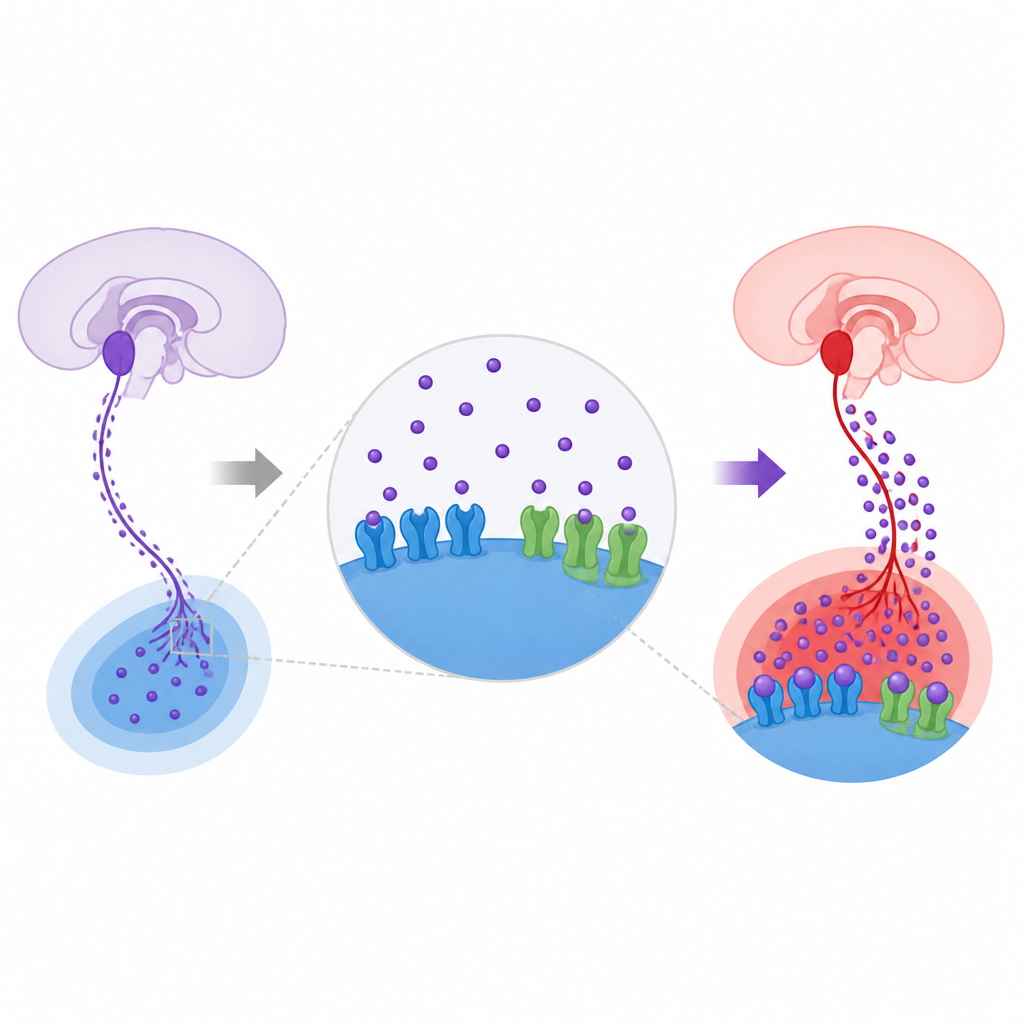
To understand what drives these altered dopamine dynamics, the researchers measured gene activity in two connected regions: the ventral tegmental area, where many dopamine cells originate, and the nucleus accumbens, where their axons release dopamine. ClockΔ19 mice had higher levels of the enzyme tyrosine hydroxylase in the ventral tegmental area, pointing to boosted dopamine production. They also showed more D2 receptors there and more D3 receptors in the nucleus accumbens. On top of this, expression of a key enzyme for making the calming messenger GABA, called Gad67, was elevated in the ventral tegmental area. Together, these changes suggest that the clock mutation ramps up dopamine output and alters both dopamine and GABA signaling in ways that could both drive and partially compensate for higher dopamine tone.
What this means for health and behavior
In simple terms, this work shows that a broken clock gene can leave the brain’s reward center bathed in extra dopamine and more reactive when certain receptors are blocked. The altered balance between dopamine and inhibitory signals in connected brain regions may help explain why clock disruptions are associated with mood swings, lowered anxiety, and stronger responses to drugs of abuse. While the study was done in mice, it supports the idea that keeping our internal clocks aligned with regular light and sleep schedules could be important for maintaining healthy brain reward circuits and emotional balance.
Citation: Wu, B., Castagnola, E., Robbins, E. et al. Tonic dopamine sensing reveals a D2 and D3-mediated dopamine response to raclopride in ClockΔ19 mice model. npj Biosensing 3, 30 (2026). https://doi.org/10.1038/s44328-026-00095-w
Keywords: circadian rhythm, dopamine, Clock gene, nucleus accumbens, D2 D3 receptors