Clear Sky Science · en
Porous silicon electrochemical biosensor for non-invasive monitoring of lactation biomarkers
Why Milk Can Tell a Health Story
Human breast milk is far more than food; it is a constantly changing chemical snapshot of a mother’s and baby’s health. Subtle shifts in certain molecules can signal when milk production is struggling, often long before problems are obvious at the crib. This study describes a new tiny sensor made from porous silicon that can read key signals in breast milk without needles or hospital lab work, opening the door to simple tests that could help mothers keep breastfeeding successfully.
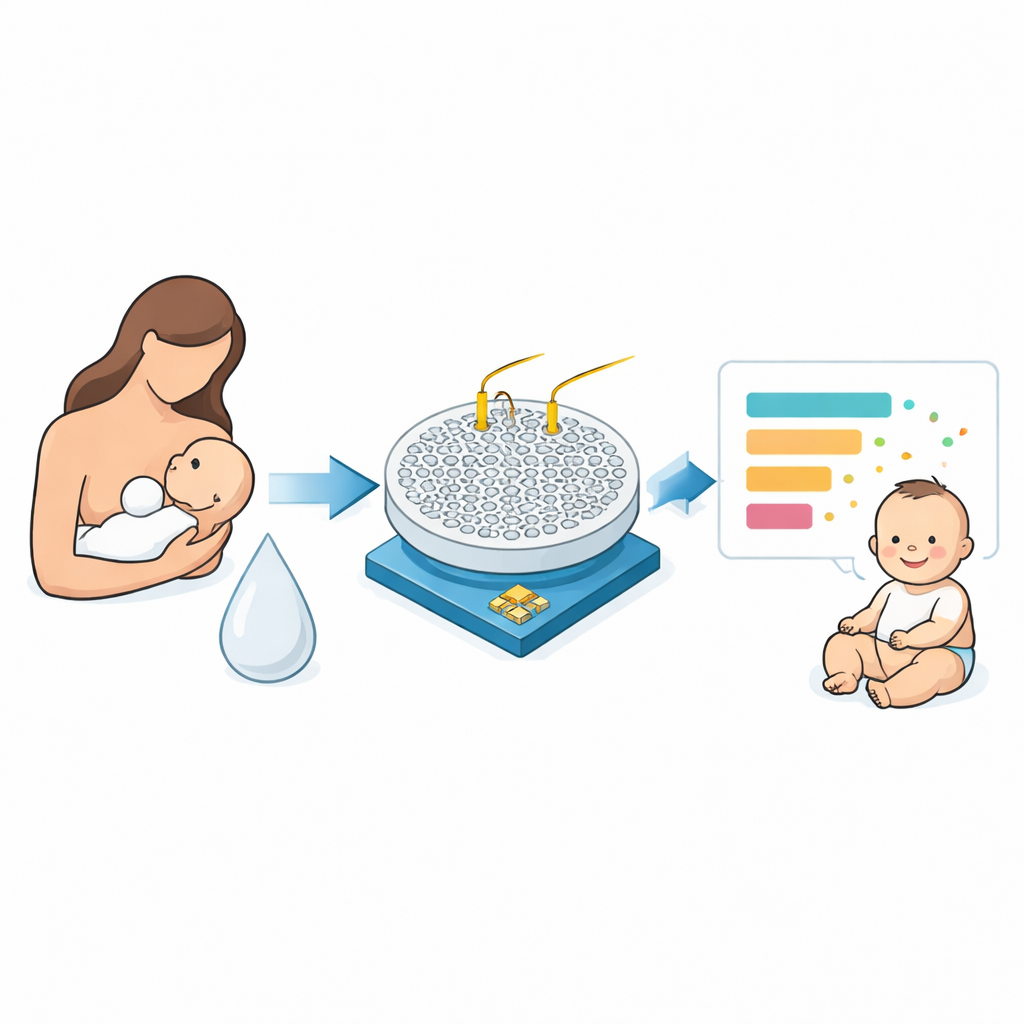
The Hidden Signals in Breast Milk
Breast milk contains an intricate mix of nutrients, hormones, fats, immune cells and genetic messengers that guide a baby’s growth and defenses. Among these, the hormone insulin and small RNA molecules called microRNAs stand out as markers tied to how well milk is produced. Women with conditions like obesity or diabetes often have altered insulin signaling and are more likely to experience low milk supply. Certain microRNAs in milk also shift in mothers who struggle with production, hinting that a careful reading of milk chemistry could warn of trouble early.
Why Current Monitoring Falls Short
Despite the clear importance of these signals, routine, personalized monitoring of breast milk is almost nonexistent. Laboratory techniques can measure insulin and microRNAs, but they are expensive, slow and require specialized staff and equipment. Breast milk is also a challenging fluid: targets are present at extremely low levels and are mixed in with fats and proteins that can confuse standard tests. The authors argue that what is needed is a small, robust, and sensitive device that can work close to the mother—ideally as a point-of-care test—without complex processing.
Building a Tiny Porous Silicon Detector
To meet this need, the researchers turned to porous silicon, a sponge-like form of silicon filled with nanoscale holes. This structure offers a huge internal surface where many sensing molecules can be attached, boosting sensitivity. The team carefully etched silicon wafers to create pores about 23 nanometers wide and then stabilized the surface by heating it in a carbon-rich gas, which made it both durable in liquid and highly conductive. They then attached tailored DNA strands and an insulin-binding aptamer—short pieces of DNA that fold into shapes that capture specific targets—using stepwise surface chemistry designed to resist unwanted adsorption from the complex milk mixture.
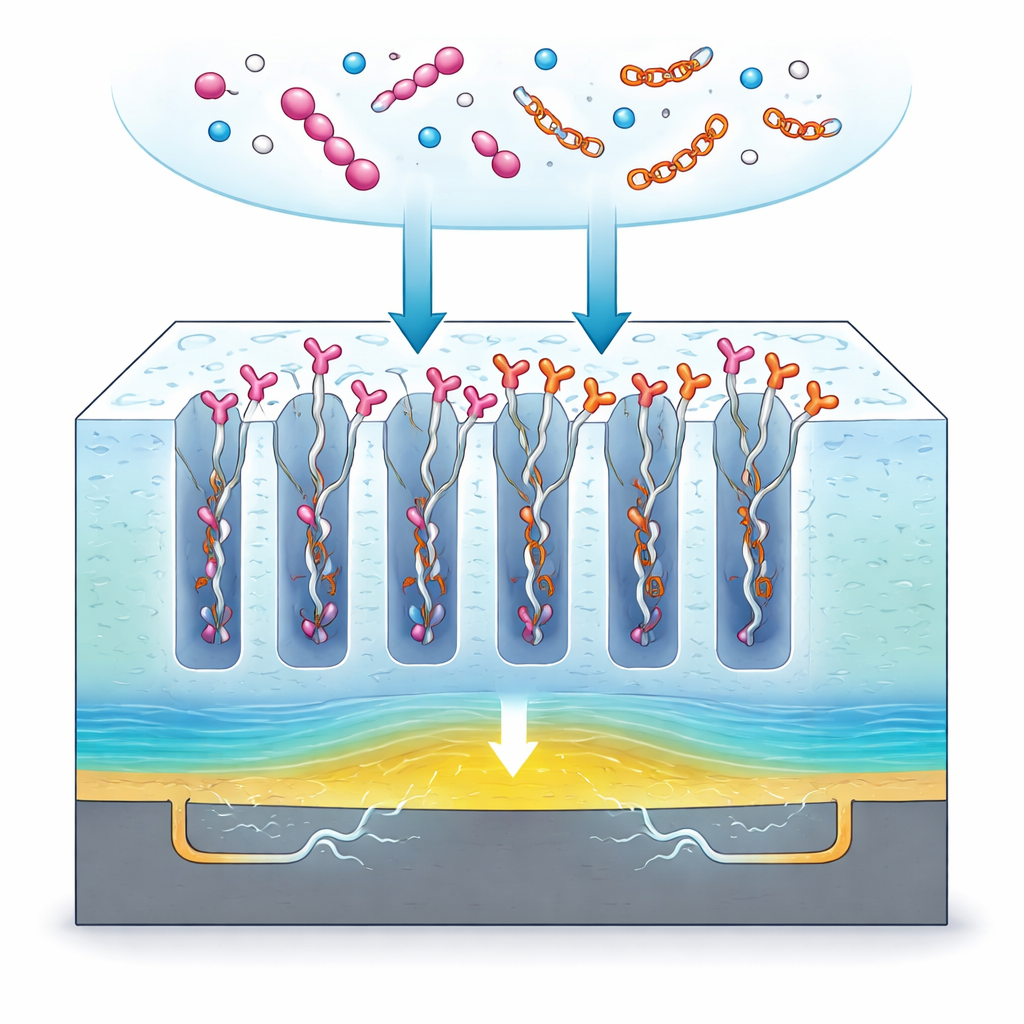
Detecting Hormones and MicroRNAs in Real Milk
With the sensor platform built, the team tested how well it could pick up insulin and two chosen microRNAs, miR148a and let-7g, first in simple buffer solutions and then in human breast milk samples spiked with known amounts. Using electrochemical readouts, the insulin sensor showed a clear, predictable response over a clinically relevant range, detecting down to the low picomolar levels typical of healthy lactating women while also covering higher levels linked to metabolic problems. The microRNA sensors, each carrying a sequence designed to recognize one specific target, reached similarly low detection limits and could distinguish between nearly identical microRNA sequences, even in the presence of complex milk components.
What This Could Mean for Mothers and Babies
Altogether, the work demonstrates that a porous silicon sensor can sensitively and selectively read out important milk biomarkers directly from breast milk, without the need for invasive sampling or elaborate laboratory processing. While still at a proof-of-concept stage, this approach lays the groundwork for compact, possibly even wearable, devices that could track a mother’s lactation chemistry in real time. In practical terms, such tools could flag women at risk of low milk supply early, guide tailored support, and help more families benefit from breastfeeding’s well-documented health protections.
Citation: Sánchez-Salcedo, R., Voelcker, N.H. Porous silicon electrochemical biosensor for non-invasive monitoring of lactation biomarkers. npj Biosensing 3, 25 (2026). https://doi.org/10.1038/s44328-026-00085-y
Keywords: breast milk biomarkers, lactation monitoring, porous silicon biosensor, insulin detection, microRNA sensing