Clear Sky Science · en
Endogenous and exogenous determinants of sex differences in blood pressure
Why blood pressure is not the same for everyone
High blood pressure is a familiar health concern, but most people do not realize that it behaves differently in women and men as they age. This review article looks at how inner biology and outer life experiences shape blood pressure over time, and why these forces may place women at particular risk in midlife and beyond. Understanding these patterns can help people and clinicians think more carefully about prevention, screening, and treatment at different stages of life.
How blood pressure usually changes with age
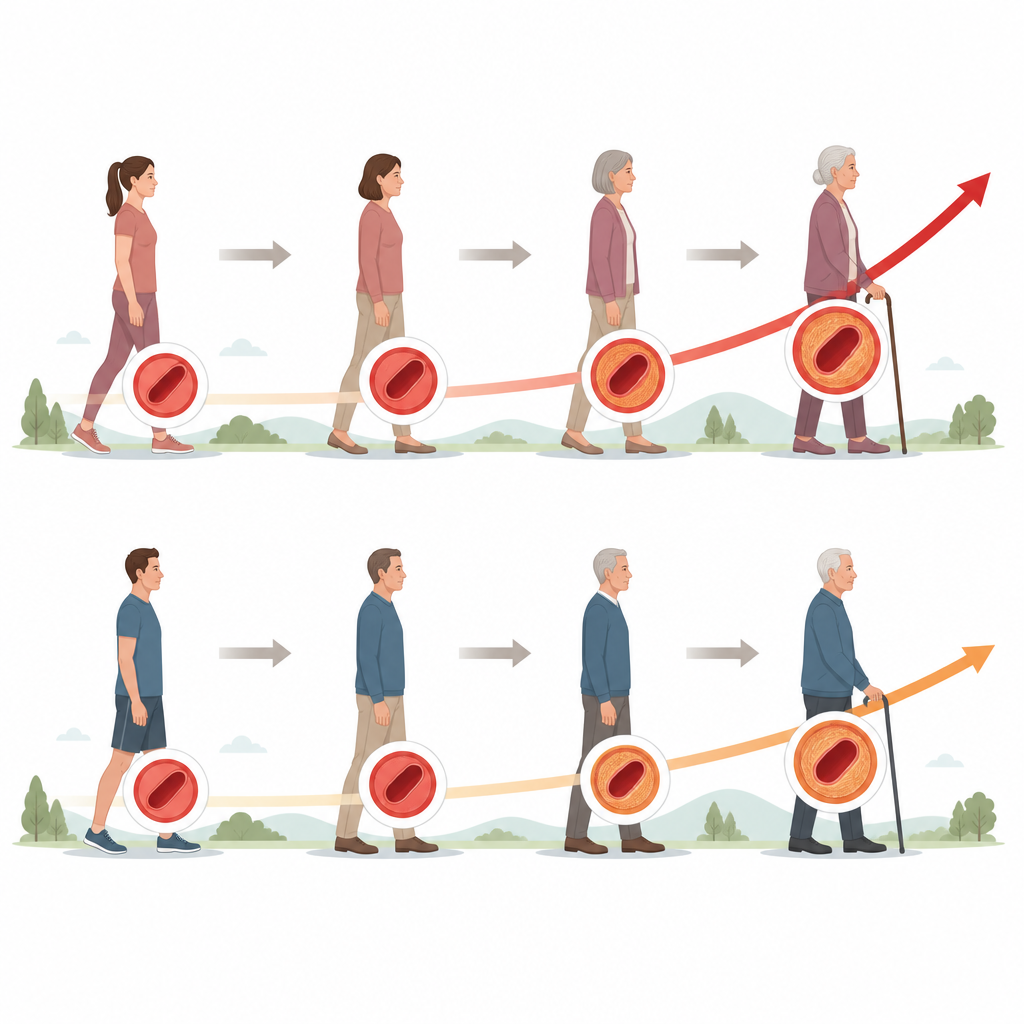
For many years, it was widely believed that blood pressure naturally rises with age in everyone. Large long term studies now show this is not inevitable. In communities with low salt intake and fewer modern lifestyle risks, blood pressure can stay low and stable across the lifespan. In industrialized societies, however, genes and environment interact to push pressures higher. On average, young women have slightly lower systolic blood pressure than young men. But once common modern exposures enter the picture, women tend to experience an earlier and steeper climb in blood pressure over adulthood, suggesting that their blood vessels may be more sensitive to added strain.
Built in differences between women and men
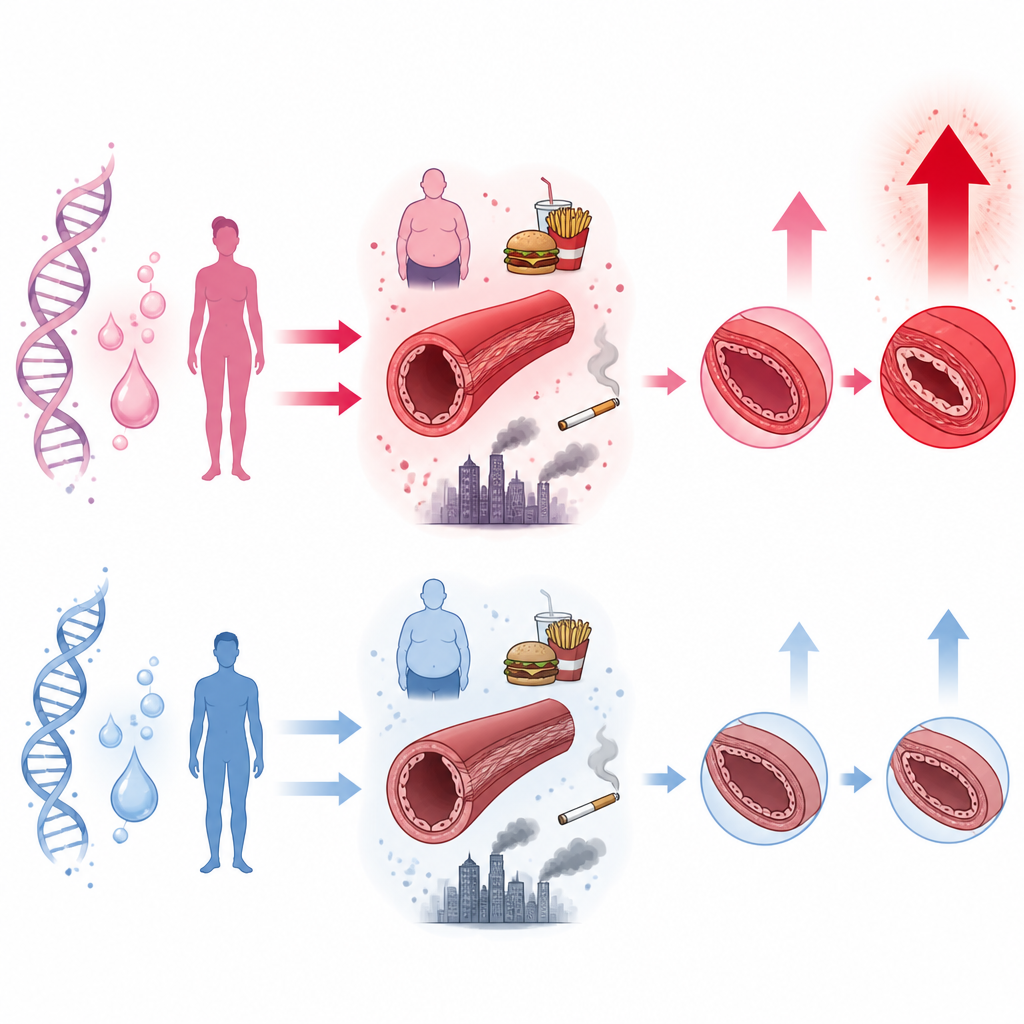
Some of the sex gap in blood pressure comes from biology present from birth. Women generally have smaller blood vessels than men, which can mean higher stress on vessel walls for the same blood flow. There are also differences in genes on the sex chromosomes and elsewhere that influence hormone systems controlling vessel tone, salt balance, and nerve activity. Certain versions of these genes appear to raise blood pressure more in women than in men, or more before menopause than afterward. Female hormones such as estrogen and progesterone often support relaxed, flexible arteries and salt loss, which tend to keep pressures lower during reproductive years. As these hormone levels change around puberty and later fall around menopause, their protective effects weaken, while male hormones such as testosterone can tilt the balance toward higher pressure in both sexes when present in excess.
Life exposures that push blood pressure higher
Beyond genes and hormones, many outside influences shape blood pressure over time, and the review highlights that women often react more strongly than men. Extra body weight, type 2 diabetes, abnormal cholesterol, and smoking all show tighter links with rising blood pressure in women across large cohorts. Women may also be more affected by everyday stresses, including sympathetic nervous system activation, especially after menopause. Differences in body fat distribution and metabolism between the sexes likely change how organs respond to these stressors, so that the same exposure can produce a bigger blood pressure jump in a woman than in a man. Even medications, such as oral hormone therapy after menopause or gender affirming hormones, can nudge pressures in sex specific ways.
What this means for care and prevention
These patterns raise important questions for clinical practice. If external stressors have a stronger cumulative effect on blood pressure in women, it may make sense to monitor and manage these factors earlier and more assertively in women than in men, particularly around midlife. At present, there is not enough prospective evidence to justify fully separate blood pressure guidelines by sex. However, recent recommendations do acknowledge women specific conditions such as hypertensive disorders of pregnancy. The authors argue that future research should test whether tailoring lifestyle strategies and medications by sex and age can improve outcomes while avoiding harm, especially in older adults who may be vulnerable to dizziness, falls, and other side effects from very tight blood pressure control.
Take home message for everyday life
The article concludes that blood pressure is shaped by a lifelong conversation between our genes, hormones, and daily surroundings, and that this conversation often plays out differently in women and men. Women appear particularly sensitive to the combined load of metabolic and environmental stresses, which may explain why their blood pressure can rise more sharply in midlife. Recognizing these sex specific patterns can guide more thoughtful prevention and treatment, but firm sex based rules for care will require more data. For now, the message is that maintaining healthy habits and monitoring blood pressure regularly are crucial for everyone, and may be especially important for women as they age.
Citation: Shangguan, S., Warsi, W., Kwong, J.L. et al. Endogenous and exogenous determinants of sex differences in blood pressure. npj Cardiovasc Health 3, 27 (2026). https://doi.org/10.1038/s44325-026-00128-3
Keywords: sex differences, blood pressure, hypertension, cardiovascular aging, women’s heart health