Clear Sky Science · en
snRNA-seq identifies Fmo2+ fibroblasts as drivers of hyperglycemic memory-induced cardiac injury
Why blood sugar stories matter for the heart
People with diabetes are told that careful blood sugar control will protect their hearts. Yet many still go on to develop heart failure even after their glucose levels look normal on tests. This study explores why early periods of high blood sugar can leave a lasting “memory” in the heart, quietly reshaping heart tissue in ways that standard treatments do not fully reverse.
A lasting scar from early high sugar
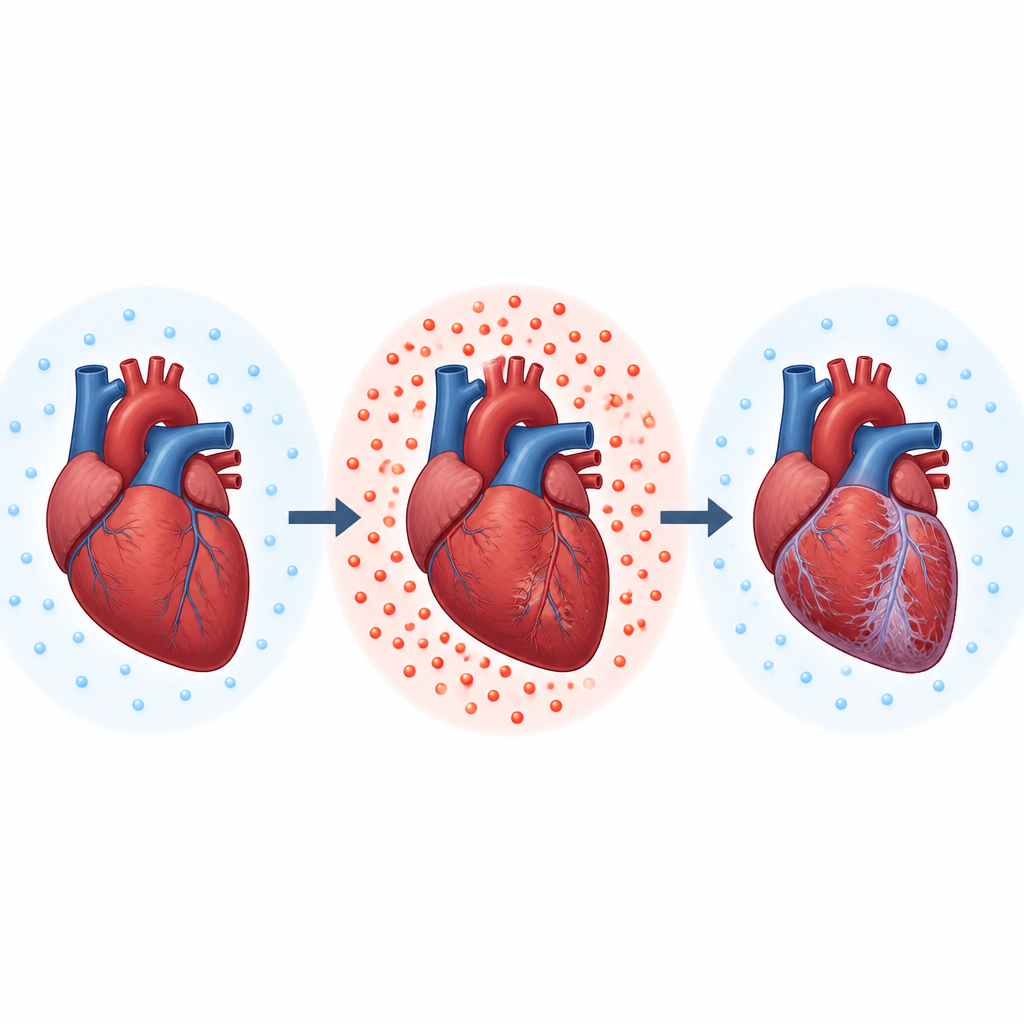
Using a rat model of diabetes, the researchers created three groups: healthy animals, animals with long term high blood sugar, and animals whose blood sugar was brought back to near normal with insulin after an early diabetic phase. Despite this careful control, the “memory” group still developed weak pumping and clear scarring and thickening of heart muscle, just like the animals that stayed diabetic. In other words, once early damage had been triggered, later blood sugar control alone could not restore a healthy heart.
Looking at each heart cell one by one
To find out which cells kept this harmful memory alive, the team used single nucleus RNA sequencing, a technique that reads the activity of thousands of genes in individual cell nuclei. From more than 86,000 heart cell nuclei, they identified major cell types such as muscle cells, fibroblasts, blood vessel cells, immune cells, and nerve related cells. Both diabetic and memory hearts showed shifts inside these populations, not just more or fewer cells, but new subgroups with very different behavior. Hearts in the memory group were especially marked by gene patterns linked to inflammation and changes in epigenetic markers, which are chemical tags that help decide which genes stay switched on over time.
Fibroblasts as hidden memory keepers
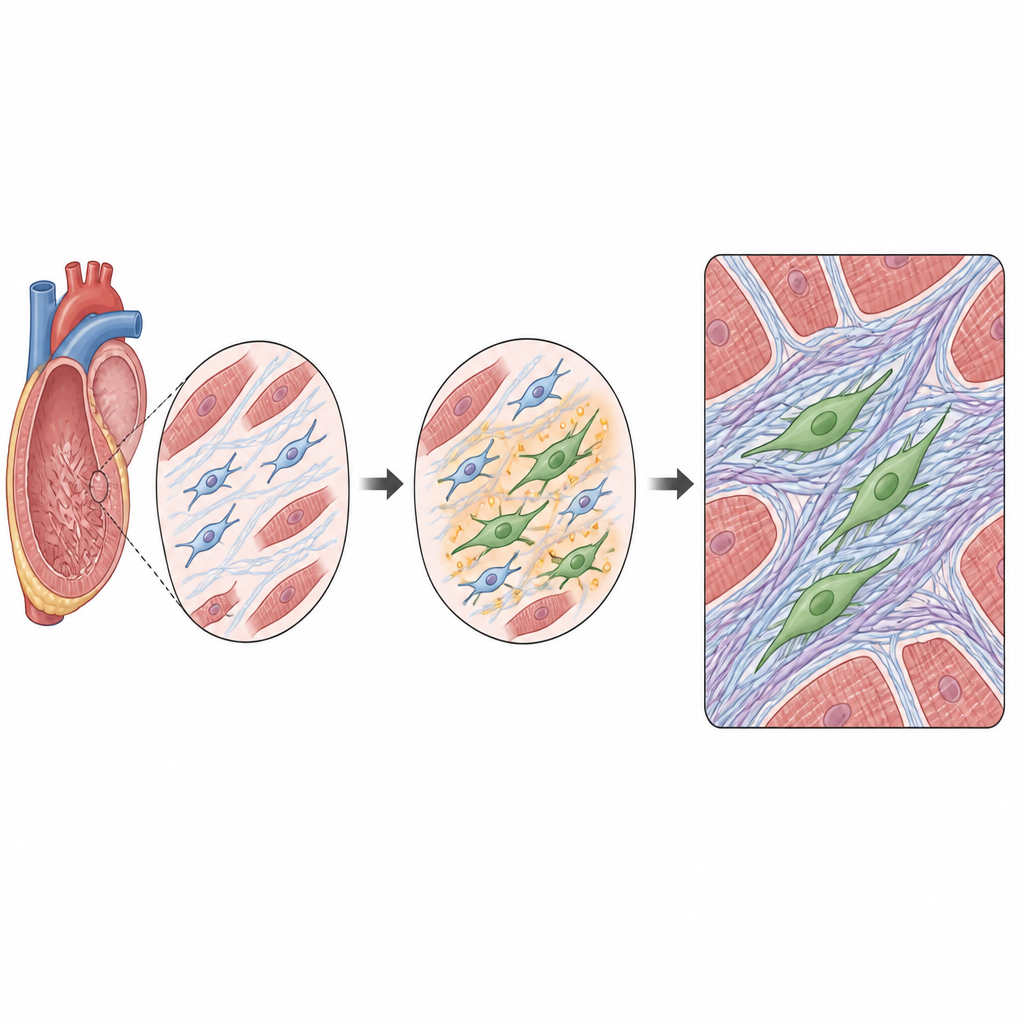
Among all cell types, fibroblasts stood out. These cells normally help maintain the heart’s supporting meshwork, but in the memory hearts they formed the busiest communication hub, sending strong signals related to collagen and laminin, key building blocks of scar like tissue. Detailed analysis broke fibroblasts into five subgroups. One subgroup, present only in the memory hearts, showed signs of high oxidative stress, changes in the way it handled certain energy carrying molecules, and a specific pattern of epigenetic change called H3K27 demethylation. This combination suggested a state primed to stay activated and keep laying down stiff matrix even after blood sugar improved.
A suspect gene at the center of the storm
This memory linked fibroblast subgroup was marked by several core genes, including one called Fmo2. The team used multiple approaches to test whether Fmo2 was more than just a bystander. They confirmed that its close human counterpart is more active in heart tissue from people with diabetic cardiomyopathy. Then, using human genetic data, they applied a method called Mendelian randomization, which uses natural genetic variation as a kind of long term experiment. Higher genetically predicted Fmo2 activity was associated with greater risk of a type of heart muscle disease not caused by blocked arteries, pointing to a possible causal role for this gene in damaging heart changes.
What this means for people with diabetes
For a general reader, the message is that the heart can “remember” early high blood sugar through a special group of scar forming cells marked by the gene Fmo2. Even when blood sugar later looks good, these cells may stay switched on, continuing to stiffen and inflame the heart. The work suggests that truly protecting the diabetic heart may require not only good glucose control but also new treatments aimed at these memory carrying fibroblasts and their signaling, opening paths to therapies that could soften or erase the heart’s harmful memories.
Citation: Xu, S., Ju, C., Zhu, M. et al. snRNA-seq identifies Fmo2+ fibroblasts as drivers of hyperglycemic memory-induced cardiac injury. npj Metab Health Dis 4, 19 (2026). https://doi.org/10.1038/s44324-026-00113-5
Keywords: hyperglycemic memory, diabetic cardiomyopathy, cardiac fibroblasts, Fmo2, single cell sequencing