Clear Sky Science · en
Quantifying the biological impacts of nightlights: implications for sleep and circadian health in children
Why Nightlights Matter for Kids’ Sleep
Many parents rely on nightlights to comfort children or help them find the bathroom in the dark. This study asks a simple but important question: how much do those tiny lights actually disturb children’s sleep and internal body clocks? By measuring the “biological strength” of common children’s nightlights, the researchers show that some popular products can send powerful signals to the brain at night, even when they look pleasantly dim, while others are far gentler.
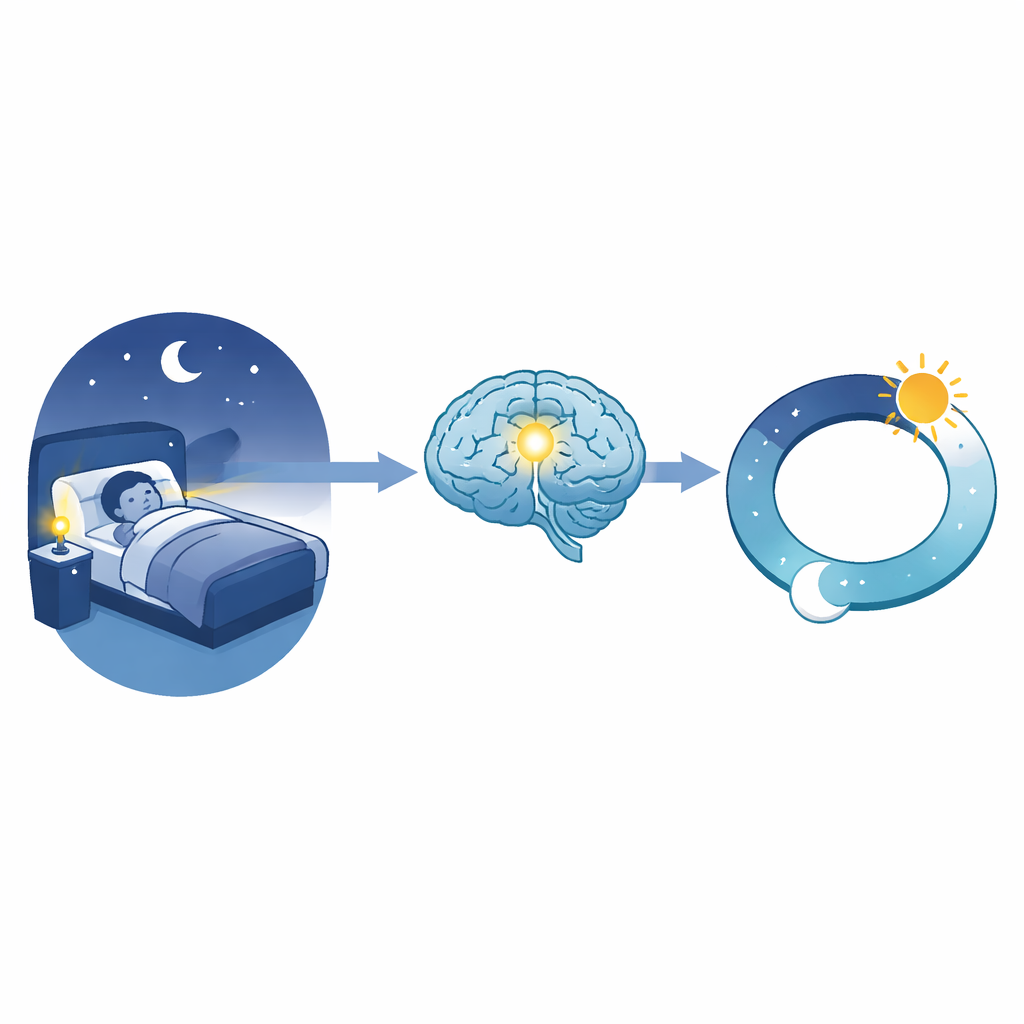
From Cozy Glow to Body Clock Signal
Light does more than help us see; it also tells the brain whether it is day or night. Special light-sensing cells in the eye send signals to a master clock deep in the brain, which helps control sleep, hormones, mood, and metabolism. These cells are especially sensitive to short, bluish wavelengths. A light that looks modest to our vision can still pack a strong biological punch if it contains a lot of this blue-rich light. To capture this hidden impact, scientists use a measure called melanopic equivalent daylight illuminance, which weights light according to how strongly it activates those clock-setting cells.
Putting Popular Nightlights to the Test
The team selected 25 highly rated children’s nightlights sold online, including handheld toys, bedside lamps, wall plug-ins, and ceiling projectors. For each product, they measured the spectrum and intensity of every color and brightness setting, first right next to the light source (a “worst-case” scenario) and then in a bedroom setup meant to mimic real life. In the bedroom, the light sensor was placed on the pillow to represent a child’s eyes, while nightlights were positioned on a bedside table, across the room, or near the wall outlet, depending on typical use for each type.
What the Measurements Revealed
At very close range, many nightlights were surprisingly strong: their biological impact spanned from extremely low levels to more than one hundred thousand units on the melanopic scale. Only a few products stayed below levels known to shift children’s body clocks and suppress nighttime melatonin. These safer options tended to emit dim, reddish light and still provided enough ordinary brightness for basic navigation. In the simulated bedroom, overall exposure dropped sharply, but the picture was still mixed. Less than half of the devices stayed within cautious nighttime limits across all settings. Some settings reached zero on the melanopic scale (below the instrument’s detection limit) while still appearing lit, yet most settings produced more biologically active light than ideal for sleep.
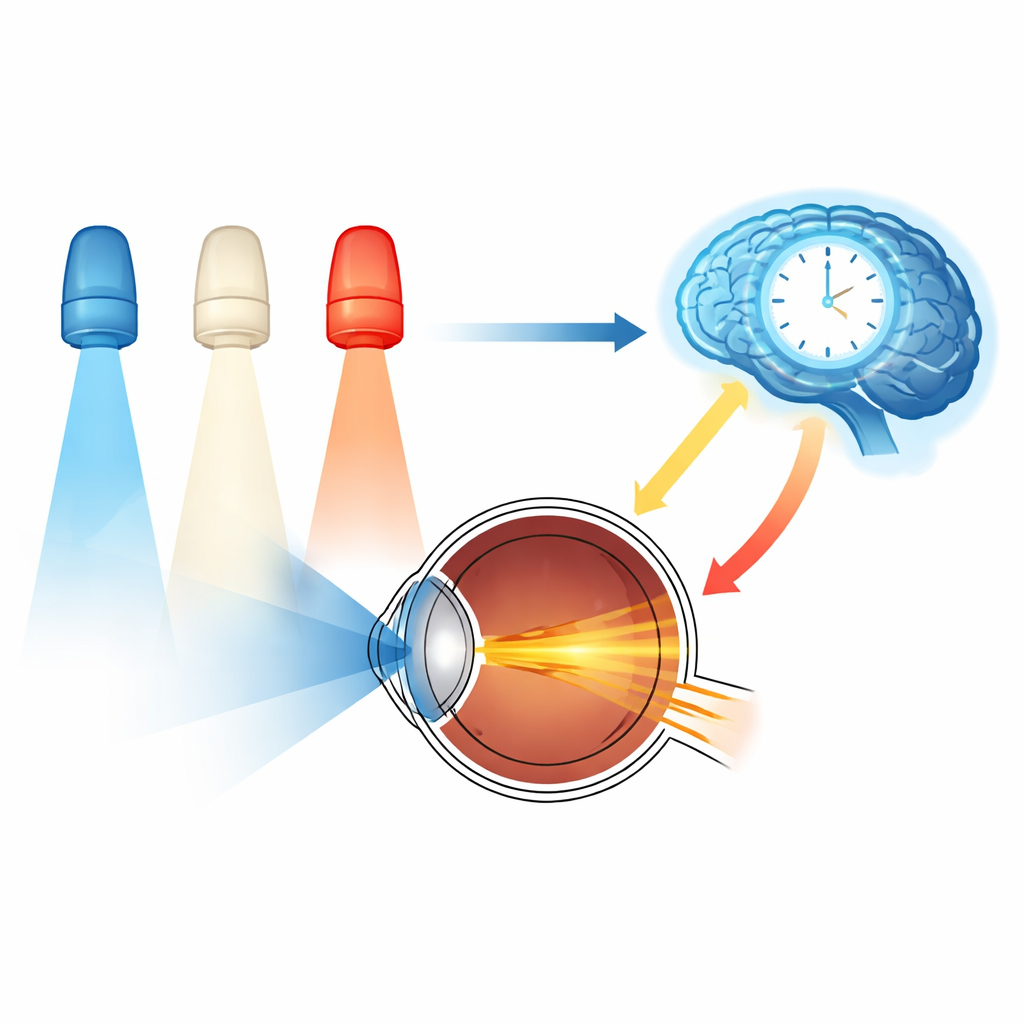
Color, Distance, and Practical Trade-Offs
Two simple design features made a big difference: color and distance. Nightlights that appeared red or amber generally had the weakest effect on the body clock because they contained little of the blue-rich wavelengths that strongly stimulate the brain’s timing system. Devices placed farther from the bed, such as wall plug-ins and some projectors reflecting off the ceiling, also tended to produce safer levels at the pillow. Handheld lights, though often less intense overall, pose a special concern when brought close to a child’s eyes. The study also uncovered a trade-off: lights bright enough to comfortably see the room often exceeded recommended biological thresholds, while ultra-gentle settings that protected circadian health sometimes did not provide enough light to be practical.
What This Means for Families and Policy
For parents, the takeaway is not that all nightlights are harmful, but that type, color, brightness, and placement matter. Dim, red-toned lights kept out of direct view and at a distance from the bed are more likely to support healthy sleep, while bright, blue-rich or white nightlights near a child’s face may delay the body’s natural nighttime signals. Because packages rarely list biologically relevant light information, the authors call for clearer labeling, clinical guidance, and safety standards that account for children’s heightened sensitivity. With better product design and smarter use, nightlights can offer comfort and safety without quietly nudging children’s body clocks in the wrong direction.
Citation: Glickman, G.L., Rothstein-Epp, R., Binkowski, K. et al. Quantifying the biological impacts of nightlights: implications for sleep and circadian health in children. npj Biol Timing Sleep 3, 14 (2026). https://doi.org/10.1038/s44323-026-00072-6
Keywords: nightlights, children’s sleep, circadian rhythms, melatonin, light exposure