Clear Sky Science · en
Environmental impact and experimental reliability of reusing plastic consumables in wet labs
Why Lab Plastics Matter to Everyone
Behind every medical breakthrough or diagnostic test lies a quiet stream of plastic waste. Modern life-science labs depend on disposable pipette tips, tubes and culture plates to keep experiments sterile and reliable. But this convenience comes at an environmental cost: globally, research labs generate hundreds of thousands of tons of plastic each year, much of it burned or buried. This study asks a simple but far-reaching question: can we safely wash and reuse those “single‑use” items, cutting pollution without compromising the science they support?
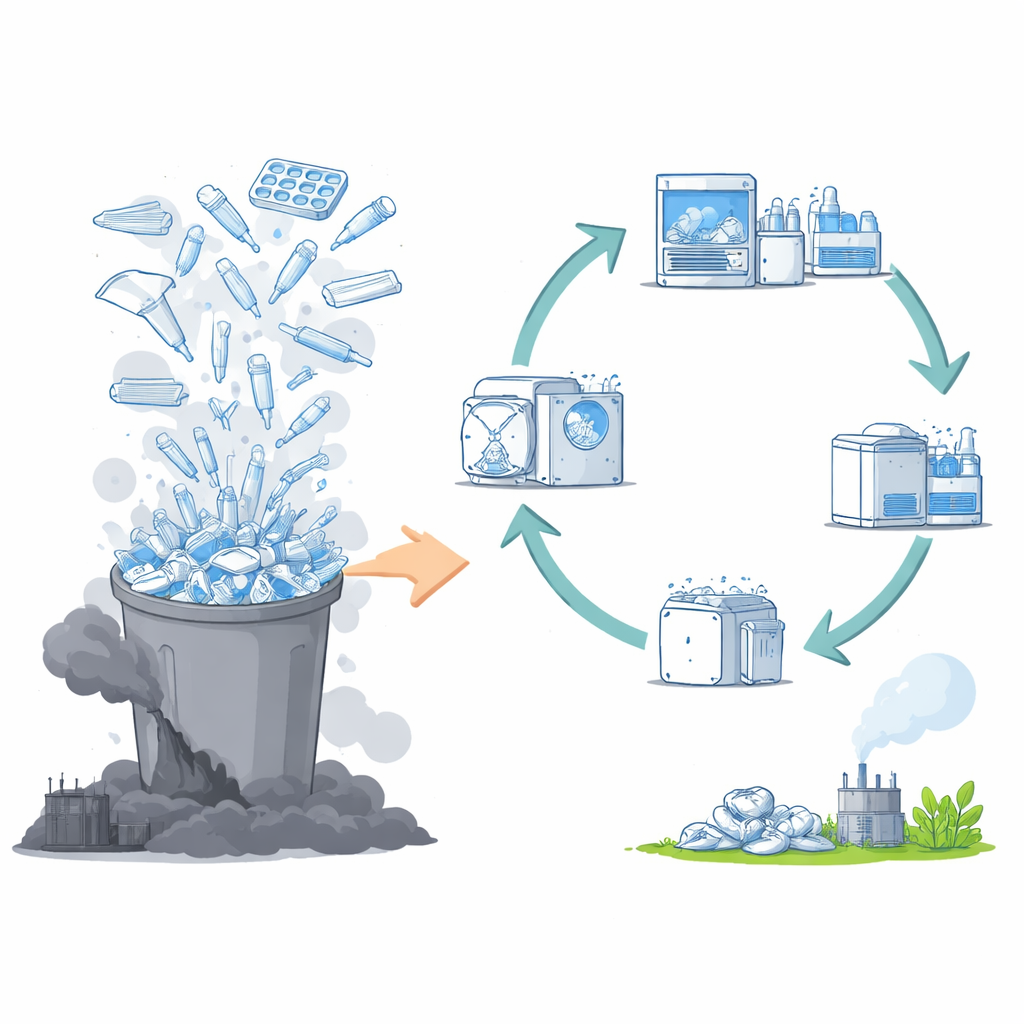
From Throwaway Culture to Circular Use
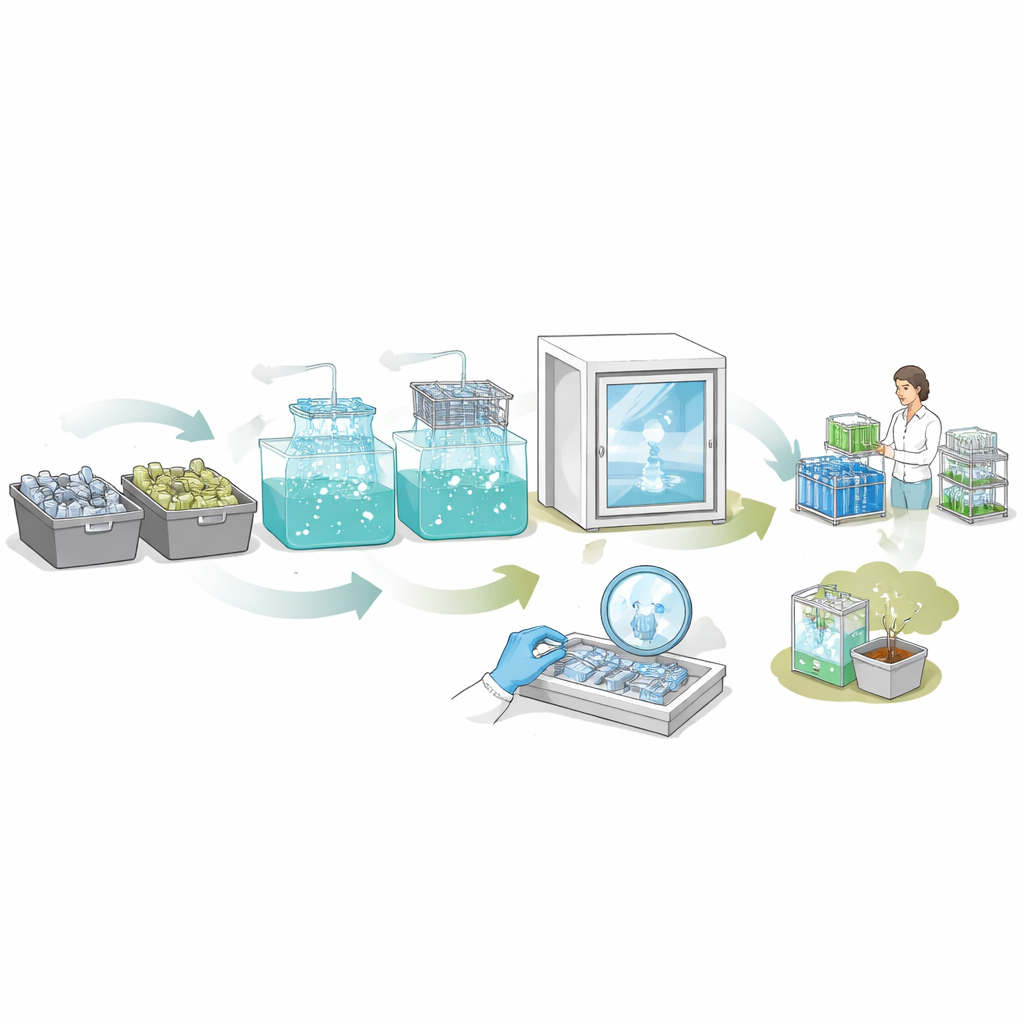
The researchers focused on a Canadian company that collects used plastic labware from low‑risk biosafety level 1 laboratories, then decontaminates, washes, dries and sterilizes it before returning it for reuse. Instead of every tube or plate being used once and discarded, each item can go through several reconditioning cycles. The team evaluated this system on three fronts: how much it reduces environmental harm, whether cleaned items still work as well as new ones in common lab tests, and how much plastic waste labs actually generate in a major research city.
Measuring the Planetary Footprint
To gauge environmental impact, the authors used a simplified life‑cycle assessment, comparing traditional single‑use tubes with tubes that go through different numbers of reuse cycles. They tracked not only climate‑warming emissions, but also fossil and nuclear energy use, effects on ecosystems and human health, and pressure on water resources. For a standard set of 1,000 uses of 50‑milliliter tubes in Montreal, even a single reuse cut climate‑change impacts by about 40 percent. Five reuses lowered them by roughly 70 percent, and a high, optimistic scenario of 50 reuses slashed them by more than 80 percent. Plastic production itself dropped sharply as well: one reuse halved the amount of new plastic needed, while five reuses cut it by 80 percent.
What Changes When Items Are Reused
At first, most environmental harm comes from making and disposing of the plastic. As items are reused, that burden is spread over many experiments, and the reconditioning step—especially packaging, water use, transport and sterilization—becomes the dominant source of impact. Because the study took place in Quebec, where electricity is mainly hydroelectric and water is abundant, the overall footprint of washing and sterilizing remained relatively low. The authors caution that in regions with coal‑based power or water scarcity, the balance could look different and must be checked locally.
Putting Reused Plastics to the Test
Environmental benefits alone are not enough if reused items subtly distort experimental results. To address this, the team compared new and reconditioned pipette tips, tubes, 96‑well plates, cuvettes and cell‑culture dishes over five reuse cycles. They measured pipette accuracy and precision; the performance of protein assays; light absorbance in chemical standards; and how well mammalian cells attached, spread and survived on plate surfaces. Across these tests, reconditioned plastics matched new ones: differences were small, inconsistent in direction and statistically insignificant, and all pipette readings stayed within the manufacturers’ strict acceptance ranges. Microscopy images showed similar cell coverage and shape on new and reconditioned plates, and no drop in cell viability.
How Big the Problem Really Is
To understand real‑world stakes, the researchers tracked plastic waste from 30 Montreal laboratories over an average of nearly five months. Together, these labs produced about 500 kilograms of discarded plastic, roughly 2 to 3 kilograms per lab per month. Extrapolating cautiously to the city’s broader research ecosystem—about 25,000 life‑science researchers in hospitals, universities and biotech companies—they estimate on the order of 200 tonnes of plastic waste per year from low‑risk labs alone. Because each kilogram of plastic that is reused avoids about 4.5 kilograms of carbon‑dioxide‑equivalent emissions, shifting to reuse for suitable items could spare roughly 900 tonnes of climate pollution annually in Montreal.
What This Means for the Future Lab
The study concludes that, for low‑risk life‑science work, carefully managed reconditioning of plastic consumables can substantially reduce environmental harm without undermining experimental reliability. At the same time, the authors highlight caveats: they did not measure sterility or endotoxin contamination directly, reconditioning was tested at only one facility, and sample sizes were modest. Scaling up reuse will require robust quality‑control protocols, thoughtful logistics and region‑specific environmental assessments. Still, the results suggest that much of today’s lab “single‑use” plastic does not have to be single‑use at all—offering a practical path to cleaner science that maintains trust in the data it produces.
Citation: Mansouri, N.S., Milano, F., Dimidschstein, M. et al. Environmental impact and experimental reliability of reusing plastic consumables in wet labs. npj Mater. Sustain. 4, 21 (2026). https://doi.org/10.1038/s44296-026-00108-9
Keywords: laboratory plastic waste, reusable lab consumables, life cycle assessment, sustainable research, environmental impact