Clear Sky Science · en
Organic wastes to next-generation bioplastics through intelligent biomanufacturing of polyhydroxyalkanoates
Turning today’s trash into tomorrow’s plastics
Plastic waste and overflowing landfills are familiar problems, but what if banana peels, used cooking oil, and sewage sludge could be turned into useful, biodegradable plastics instead of garbage? This article explores how scientists are learning to convert everyday organic wastes into a new class of “smart” bioplastics called PHAs, using a mix of clever biology, cleaner chemistry, and artificial intelligence to cut pollution and keep resources in use longer.
From leftovers to useful materials
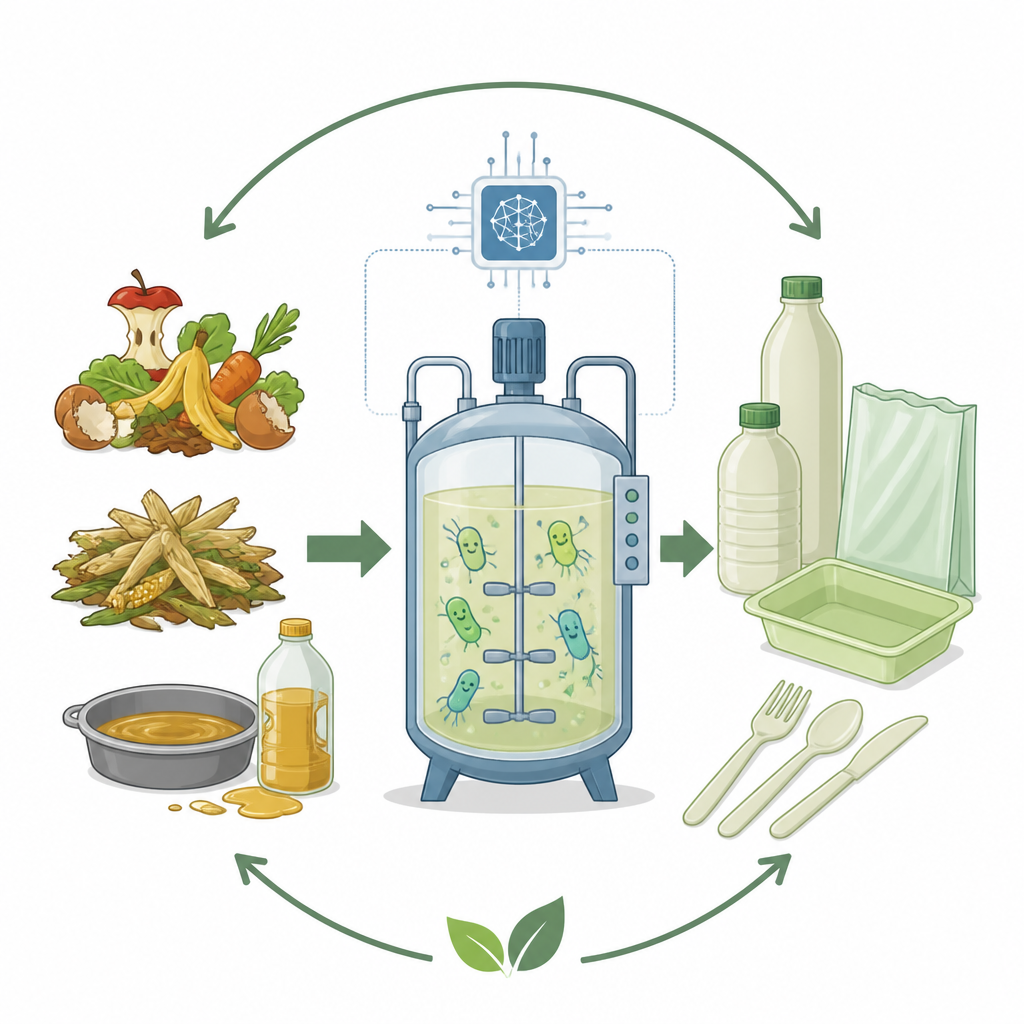
Polyhydroxyalkanoates, or PHAs, are natural plastics that many microbes make and store inside their cells. Unlike most conventional plastics made from oil and gas, PHAs can be produced from renewable or waste materials and can break down in soil, water, or compost. The review explains that PHAs already show mechanical strength similar to common plastics, and their recipe can be adjusted to make films that are flexible, rigid, or heat resistant for uses like food packaging, textiles, and even medical devices. A survey of scientific publications shows growing interest in PHAs, especially where they connect to ideas like sustainability, biodegradation, and circular use of materials.
Finding value in organic waste streams
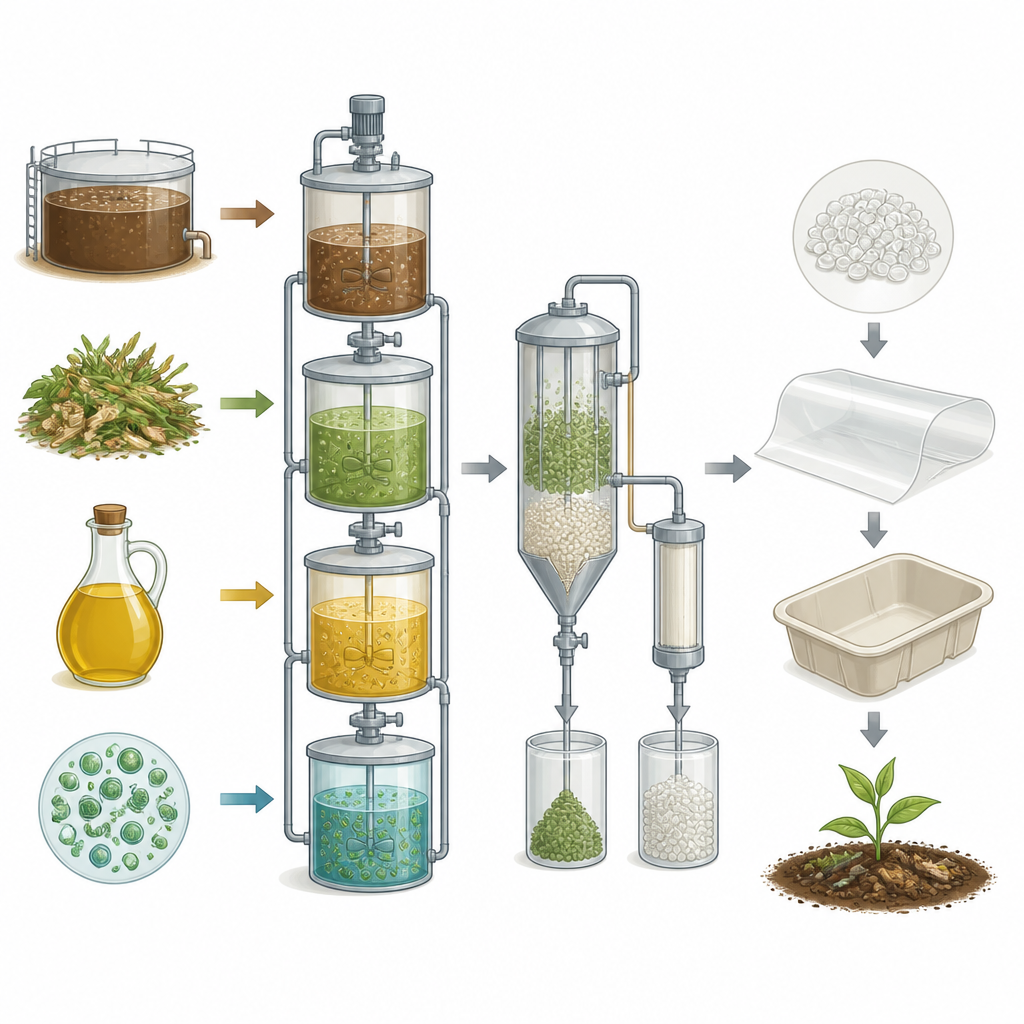
A major focus of the article is how to feed PHA-producing microbes with low-cost waste instead of crops grown for sugar or oil. Farmers’ residues, such as wheat straw, corn stalks, and sugarcane bagasse, can be broken down into simple sugars in a biorefinery and then fermented into PHA, though this often needs extra processing to overcome the natural toughness of plant cell walls. Starch-rich wastes from potatoes, rice, wheat, and cassava, as well as left-over fats and used cooking oils, have all been shown to support good PHA yields, sometimes outperforming fresh raw materials. Even algae, wastewater, and sewage sludge can serve as both nutrient sources and reinforcements, for example when converted into biochar that boosts both PHA production in tanks and the strength of finished plastic blends.
Making and recovering the plastic efficiently
Turning waste into PHA is only half the story; getting the plastic out of the microbial cells at scale is another big challenge. Traditional methods rely on large volumes of harsh solvents that are costly and polluting, even if they give high purity. The article reviews gentler options including “green” solvents, alkaline solutions like sodium hydroxide, and purely mechanical approaches such as high-pressure homogenization, bead milling, and ultrasound to crack cells. Biological tricks, from enzymes to predatory bacteria and even insects, can free PHA without damaging its structure, though they are harder to scale. Overall, mild alkaline treatment and mechanical disruption currently look like some of the most practical choices for large plants because they balance cost, purity, and environmental impact.
Letting data and design work together
Because PHA production involves many moving parts, from the type of waste and microbe to tank conditions and recovery steps, the review highlights the growing role of artificial intelligence. Machine learning models and neural networks are being used to fine-tune nutrient feeds, predict how changes in recipe affect polymer strength and melting behavior, and even help design whole factories by comparing energy use and costs for different process choices. At the same time, new models are starting to link how a PHA is built at the molecular level to how it will break down at the end of its life, guiding the creation of plastics that perform well in use but still decompose under the right composting or environmental conditions.
Designing plastics that truly return to nature
The article stresses that PHAs are not automatically “guilt free.” If they are simply composted on a huge scale, they still release large amounts of carbon dioxide, so recycling, reuse, and careful control of breakdown are needed to capture their full climate benefit. PHAs can degrade through sunlight, heat, physical wear, microbes, or specialized catalysts, and researchers are now using machine learning to search for better enzymes and smarter polymer recipes that respond predictably to these triggers. By viewing the whole system as an intelligent loop from waste feedstock to end-of-life, the authors argue that PHAs can help build a more circular plastics economy, where organic wastes become durable products and then safely cycle back into the environment instead of lingering as long-term pollution.
Citation: Esmaeili, Y., Timms, W., Barrow, C.J. et al. Organic wastes to next-generation bioplastics through intelligent biomanufacturing of polyhydroxyalkanoates. npj Mater. Sustain. 4, 22 (2026). https://doi.org/10.1038/s44296-026-00104-z
Keywords: PHA bioplastics, organic waste, circular bioeconomy, green extraction, artificial intelligence