Clear Sky Science · en
Nature-inspired sustainable membrane shades for mitigating water evaporation in algal cultivation
Turning Sunlight into Sustainable Fuel
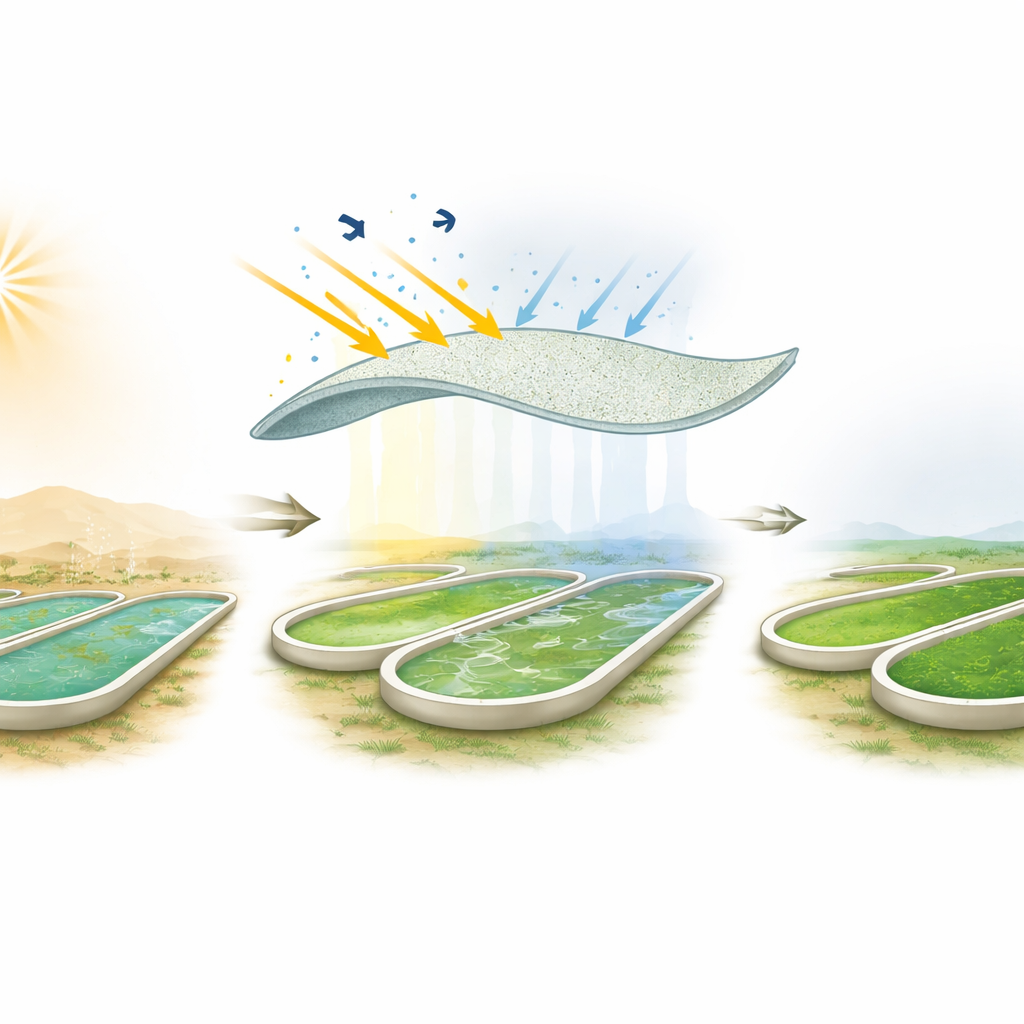
Algae may not look like much, but these tiny green organisms could help supply future fuels, foods, and chemicals while soaking up carbon dioxide from the air. The challenge is that growing algae outdoors, especially in hot, dry regions, wastes enormous amounts of water as ponds evaporate under intense sun. This study explores a simple, nature-inspired way to shield algal ponds so they lose far less water, yet still receive enough light and air for healthy growth.
Why Algae Matter for a Thirsty World
Algae can turn sunlight, carbon dioxide, and nutrients into oils, proteins, and other useful products, making them promising sources of biofuels, animal feed, and specialty chemicals. Each kilogram of algal biomass can lock away nearly twice its own weight in carbon dioxide, and global production already reaches tens of millions of tons per year. Hot, sunny regions such as the Arabian Peninsula are especially attractive for large-scale algae farms because they offer abundant sunlight, non‑arable land, seawater, and nearby industrial sources of carbon dioxide. But in these arid climates, open ponds lose huge volumes of water to evaporation, pushing up costs and limiting expansion.
The Problem with Conventional Pond Covers
One obvious idea is to cover the water. Floating balls, foam sheets, films, and even chemical monolayers have all been tested to reduce evaporation from reservoirs and algal ponds. Many of these solutions save water, but they often block too much light or hinder the exchange of gases between air and water. For algae, that trade-off can be deadly: they need just the right intensity of visible light to perform photosynthesis—and they must be able to take in carbon dioxide and release oxygen freely. Dense covers may protect water, but they can overheat cultures, starve them of light, trap harmful levels of oxygen, and ultimately reduce productivity.
A Nature-Inspired Shade with Tiny Fibers
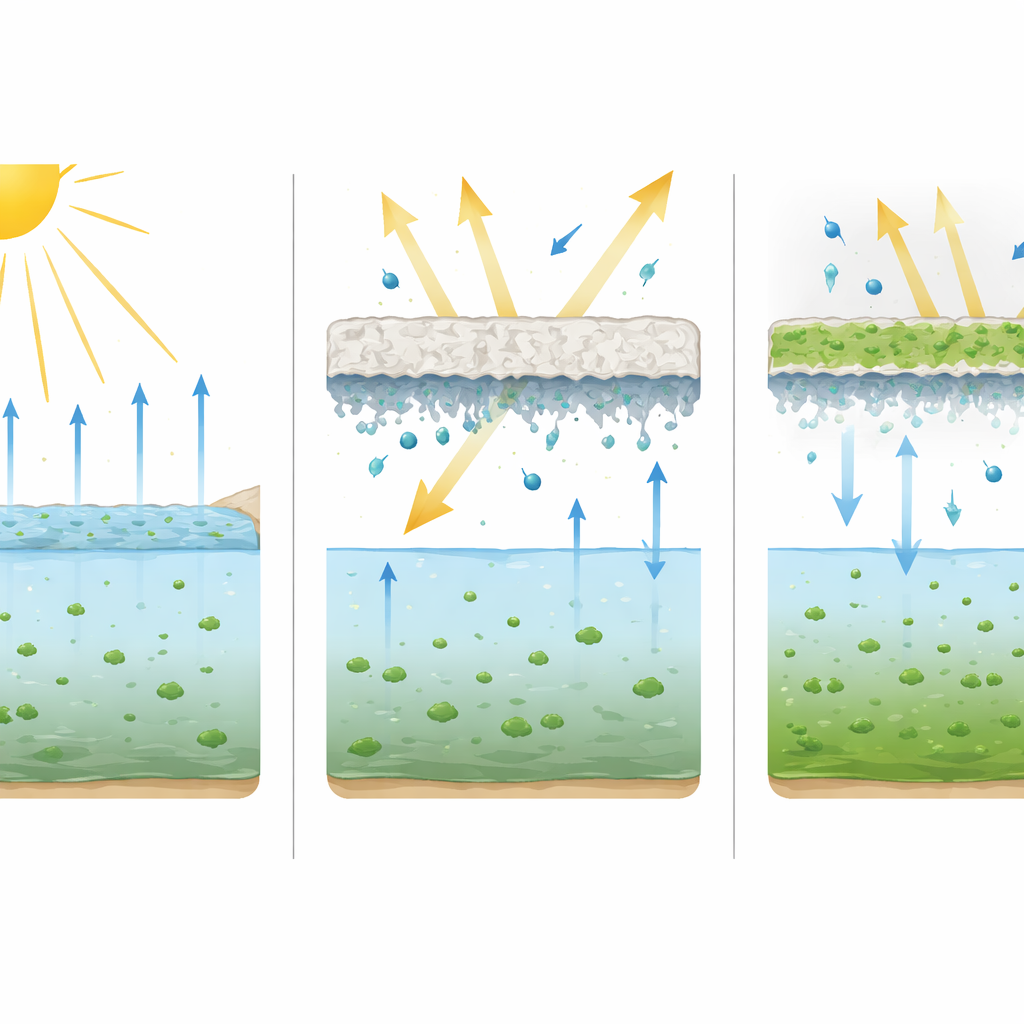
To tackle this, the researchers took a cue from plant leaves, which use a waxy outer skin to slow water loss while still letting gases move in and out. They created thin, porous “shades” made of nanofibers—extremely fine threads—laid over a supporting plastic mesh. Two common polymers were used: polylactic acid (PLA), which can biodegrade under industrial composting, and poly(methyl methacrylate) (PMMA), which is highly durable and recyclable. Produced using a scalable roll‑to‑roll electrospinning process, these nanofiber mats are strongly water‑repelling, mechanically robust, and thermally stable. They allow 70–80% of growth‑useful visible light to pass through while blocking much of the harsher ultraviolet radiation that can damage algal cells.
Letting Gases Through While Holding Water Back
Outdoor tests showed that ponds covered with the nanofiber shades lost up to 86–87% less water than uncovered ponds, even under strong desert sun. At the same time, careful measurements of dissolved carbon dioxide and oxygen revealed that the shades barely slowed gas exchange: carbon dioxide could still enter the water to feed photosynthesis, and oxygen could escape before reaching harmful levels. The shades also smoothed out sharp spikes in light intensity, keeping it around a more comfortable range for algal growth and reducing the risk of light‑induced stress. Over eleven days of cultivation with the PLA shade, algal cultures used about half as much water per day as uncovered cultures.
Trading a Little Biomass for Much Greater Control
There was a trade-off: shaded cultures produced somewhat less final biomass than the brightest, uncovered ponds—about one‑third lower in this study. However, the shaded systems grew more consistently and predictably, with similar cell densities and biomass across replicates. In contrast, some uncovered cultures struggled or behaved unpredictably. The shades also trapped airborne dust, acting as a barrier that can improve the cleanliness of the final product. Because the fiber layer can be peeled off its support, the components can be handled at end‑of‑life using established recycling or composting routes; PLA shades biodegraded readily in industrial composting tests, while PMMA remained intact, making it better suited where long service life is desired.
What This Means for Future Algae Farms
This work shows that thin, nature‑inspired membrane shades can dramatically cut water loss from algal ponds while maintaining enough light and air for productive growth. Although they slightly reduce peak biomass, they offer water savings, more stable growth, easier harvest planning, and added protection from dust and ultraviolet light. Scalable to long lengths and made from recyclable or biodegradable materials, these nanofiber shades could help bring large‑scale algae cultivation to hot, dry regions—supporting cleaner fuels, new food and feed sources, and climate‑friendly industry without an excessive water bill.
Citation: G. Oldal, D., Bokhari, A., Abdurrokhman, I. et al. Nature-inspired sustainable membrane shades for mitigating water evaporation in algal cultivation. npj Mater. Sustain. 4, 19 (2026). https://doi.org/10.1038/s44296-026-00103-0
Keywords: microalgae cultivation, water evaporation control, nanofiber membranes, sustainable biofuels, arid climate agriculture