Clear Sky Science · en
Black Soldier Fly composting of fecal sludge cake and its effects on frass quality
Turning Waste into a Useful Resource
Billions of people rely on pit latrines and septic tanks, which leave behind thick “sludge cakes” that are hard to dispose of safely. At the same time, farmers everywhere need affordable, organic fertilizers. This study explores an unusual ally that can connect these problems: the larvae of the black soldier fly. By feeding these insects a mix of human fecal sludge and common organic wastes, the researchers show how a dirty liability can be transformed into a cleaner, nutrient-rich soil amendment.
How Insects Help Clean Up Human Waste
The team worked with fecal sludge cake collected from a large sewage treatment plant in Kampala, Uganda. On its own, this material is bulky, smelly, and can contain harmful substances, but it also holds valuable nutrients like nitrogen, phosphorus, and potassium. The researchers combined the sludge with either cattle manure or fruit and vegetable scraps in different proportions, then introduced hungry black soldier fly larvae into these mixtures. Over two weeks, the larvae fed, burrowed, and mixed the material, leaving behind a processed residue known as frass—essentially insect-made compost. 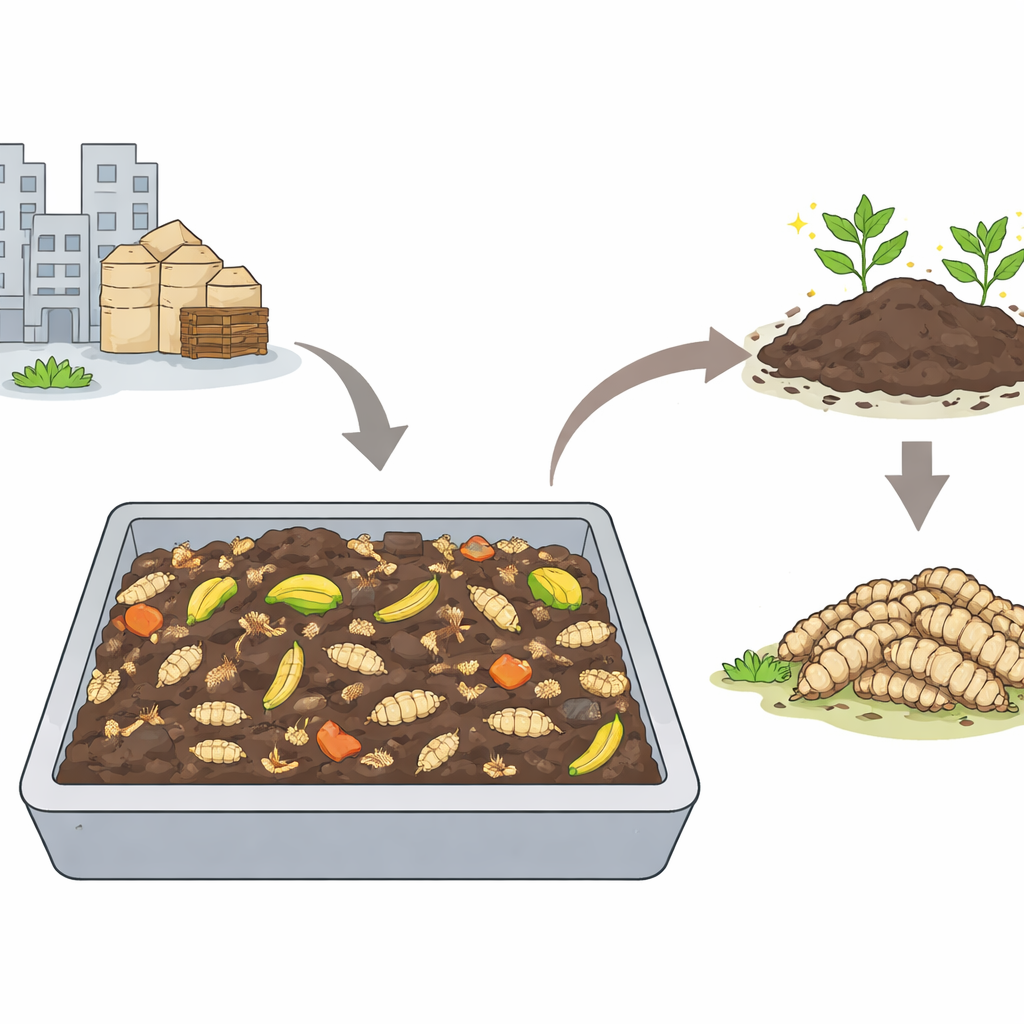
Finding the Best Recipe for Fertilizer
Seven treatment recipes were tested, ranging from pure fecal sludge to blends with nearly half cattle manure or nearly half fruit and vegetable waste. The scientists measured moisture, acidity, organic carbon, and key plant nutrients before and after the larvae did their work. In all cases, the frass became drier and slightly more alkaline, conditions that make it easier to store, transport, and apply to fields. Organic carbon dropped as the larvae and microbes converted part of the material into energy and simpler compounds, signaling a more stable compost less likely to rot or smell.
How the Nutrients Shift and Settle
The different recipes produced frass with distinct nutrient profiles. Treatments rich in fruit and vegetable waste tended to gain the most nitrogen and potassium, both crucial for leafy growth and overall plant health. In contrast, systems dominated by fecal sludge held onto more phosphorus, an element important for roots and flowering. One blend in particular—55% fecal sludge with 45% fruit and vegetable waste—stood out. It produced frass with well-balanced levels of nitrogen, phosphorus, and potassium, along with good moisture reduction and organic matter stabilization, making it especially promising as a general-purpose fertilizer.
Beyond Basics: Trace Elements and Safety
The study also followed supporting nutrients such as calcium, magnesium, sulfur, and a suite of trace metals that plants need in tiny amounts, like copper, zinc, and iron. Magnesium and silicon generally increased in the frass, which can help plants tolerate stress and strengthen their tissues. At the same time, many other minerals, including calcium, sulfur, and several micronutrients, decreased as the larvae took them up into their bodies or as they became more tightly bound and less mobile in the compost. Earlier work by the same group, using similar treatments, showed that the process can also reduce heavy metals and disease-causing organisms to levels considered safe for agricultural use. 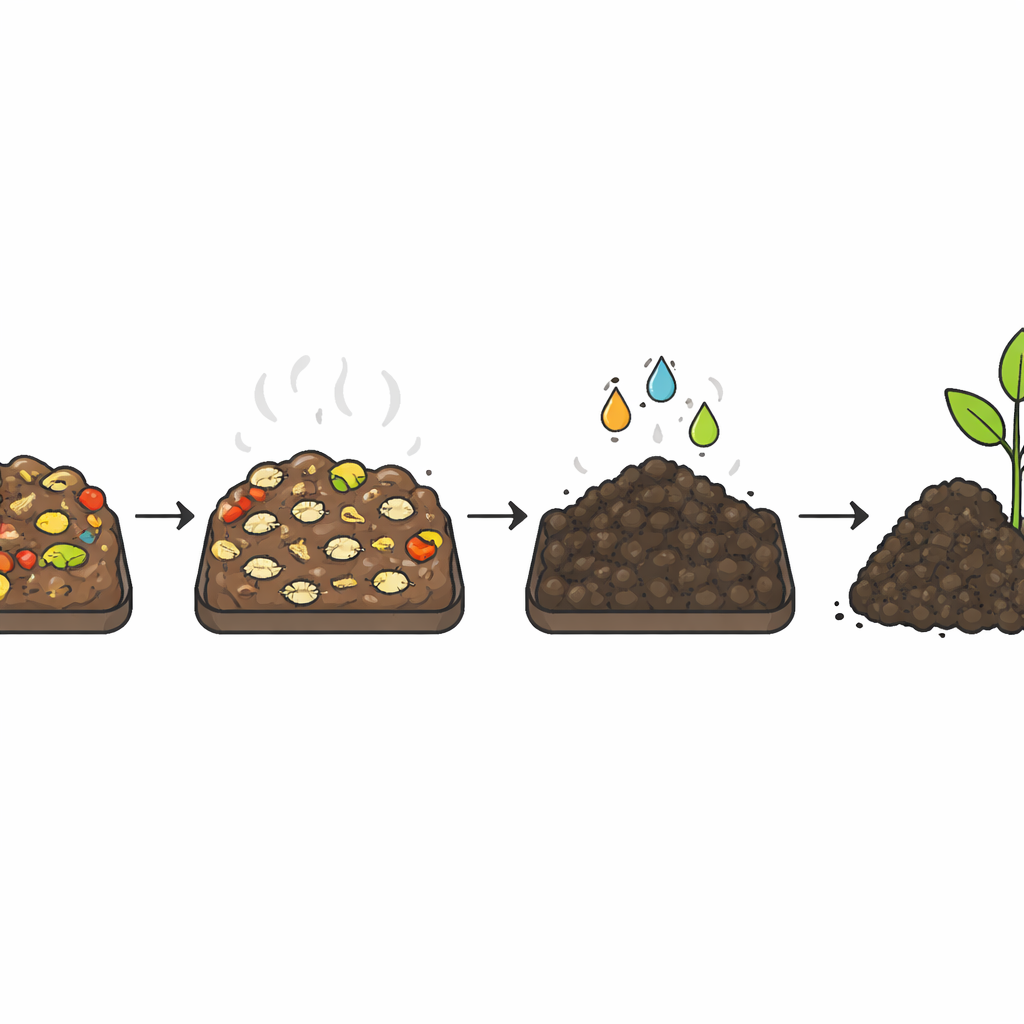
A Practical Path to Cleaner Cities and Healthier Soils
To a non-specialist, the message is straightforward: carefully managed swarms of black soldier fly larvae can turn a hazardous waste product into a valuable fertilizer. By choosing the right mix of fecal sludge with manure or market scraps, it is possible to tailor the nutrient content of the resulting frass to suit farming needs while shrinking the volume and risks of untreated sludge. This approach links urban sanitation with food production in a circular system, offering a low-tech, scalable way for rapidly growing cities—especially in the tropics—to clean up their waste and nourish their soils at the same time.
Citation: Nalunga, A., Komakech, A.J., Karungi, J. et al. Black Soldier Fly composting of fecal sludge cake and its effects on frass quality. npj Mater. Sustain. 4, 15 (2026). https://doi.org/10.1038/s44296-026-00102-1
Keywords: black soldier fly larvae, fecal sludge composting, organic fertilizer, circular bioeconomy, waste valorization