Clear Sky Science · en
High expression of the ADC target Claudin-6 associates with aggressive endometrial cancer and remains high in metastatic lesions
Why this matters for women’s health
Endometrial cancer, a cancer of the womb lining, is usually curable when found early. But for women whose disease comes back or spreads, treatment options are limited and often harsh. This study looks at a molecule called Claudin-6 on cancer cells and asks a practical question: can it help doctors both predict which cancers will behave aggressively and open the door to a newer, more precise type of treatment known as antibody–drug conjugates? 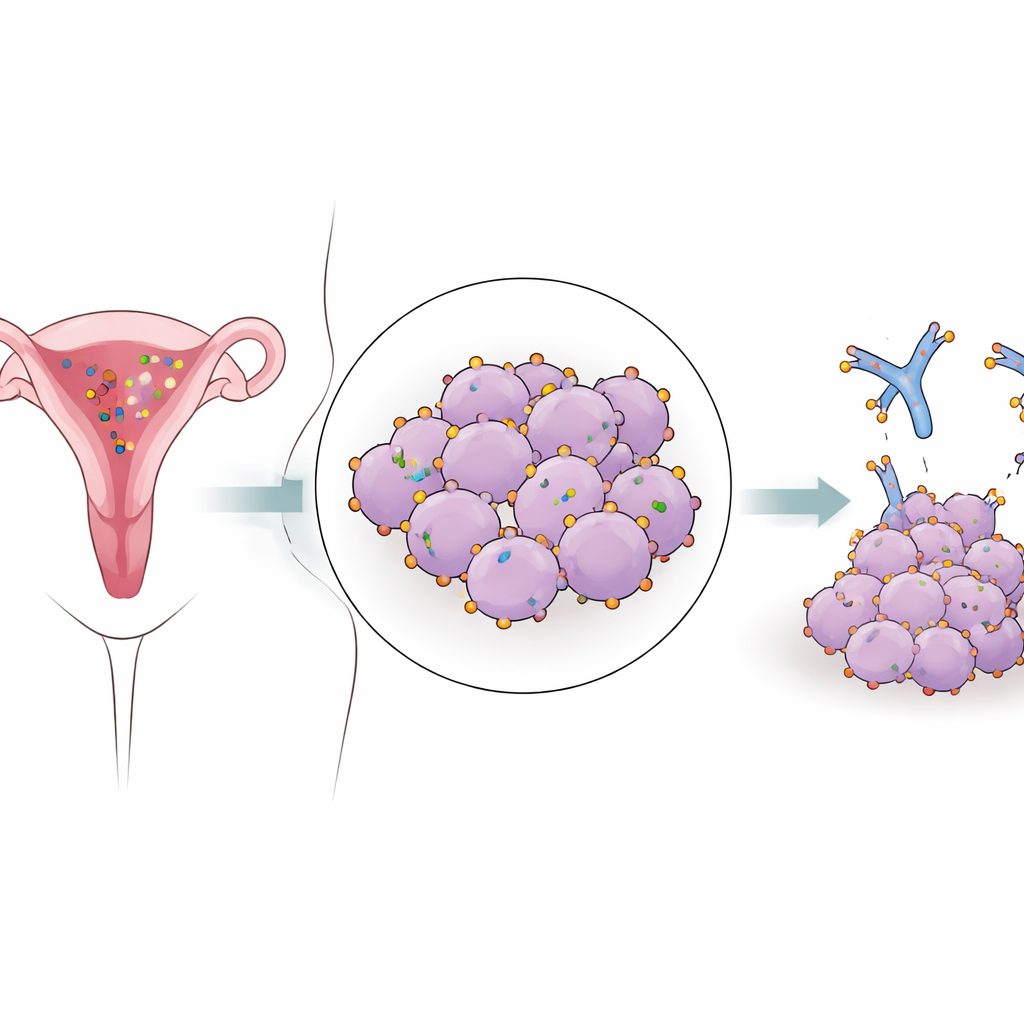
A new target on the cancer cell surface
Claudin-6 is a protein that sits in the outer membrane where neighboring cells touch each other. In healthy adult tissues it is usually scarce, which makes it attractive as a beacon for drugs to home in on cancer cells while sparing normal ones. The researchers focused on endometrial cancer and examined more than 1100 primary tumors stored in a Norwegian biobank, plus 187 samples from sites where the cancer had spread. By using standard pathology staining techniques, they scored how strongly Claudin-6 appeared on the surface of tumor cells, then matched these scores with detailed clinical data and long-term follow-up.
Who has high Claudin-6, and what does it mean?
Most tumors—about four in five—showed no detectable Claudin-6 at all. Among the remaining patients, around 10% had clearly high levels. Those high-Claudi n-6 tumors tended to be the most worrisome kinds of endometrial cancer: they occurred more often in older women, in non-endometrioid subtypes such as serous cancers and carcinosarcomas, and in cancers diagnosed at a higher stage. At the genetic level, high Claudin-6 was especially common in tumors with many DNA copy-number changes, a molecular pattern already linked to aggressive behavior. Patients whose tumors had high Claudin-6 also showed distinct activity in certain gene groups, particularly those involved in transporting substances across cell membranes.
Claudin-6 and the chances of survival
To understand how Claudin-6 relates to outcomes, the team followed patients for a median of six years and compared survival between different staining levels. There was a clear pattern: the stronger the Claudin-6 signal, the lower the chance of being alive five years after surgery without dying from endometrial cancer. When the researchers grouped tumors simply into "low" versus "high" Claudin-6, women with high levels had a five-year disease-specific survival of about 55%, compared with 87% for those with low levels. Even after accounting for age and standard risk categories, high Claudin-6 still signaled about a 70% higher risk of dying from the disease, meaning it provides extra prognostic information beyond usual clinical factors.
Staying high when cancer spreads
Treatments for advanced cancer must reach and affect metastases—the cancer deposits that appear in other parts of the body. Because tumors can change as they spread, a key question was whether Claudin-6 remains present in these secondary sites. In the subgroup where both primary and metastatic samples were available, nearly one in five primary tumors showed high Claudin-6. Of these, more than three quarters kept high expression in at least one metastatic lesion, and almost half did so in all sampled metastases. Overall, a quarter of patients in this paired group had at least one metastasis rich in Claudin-6. The pattern was especially strong in serous cancers and carcinosarcomas, reinforcing the idea that these aggressive forms may be particularly suitable for Claudin-6–directed therapies. 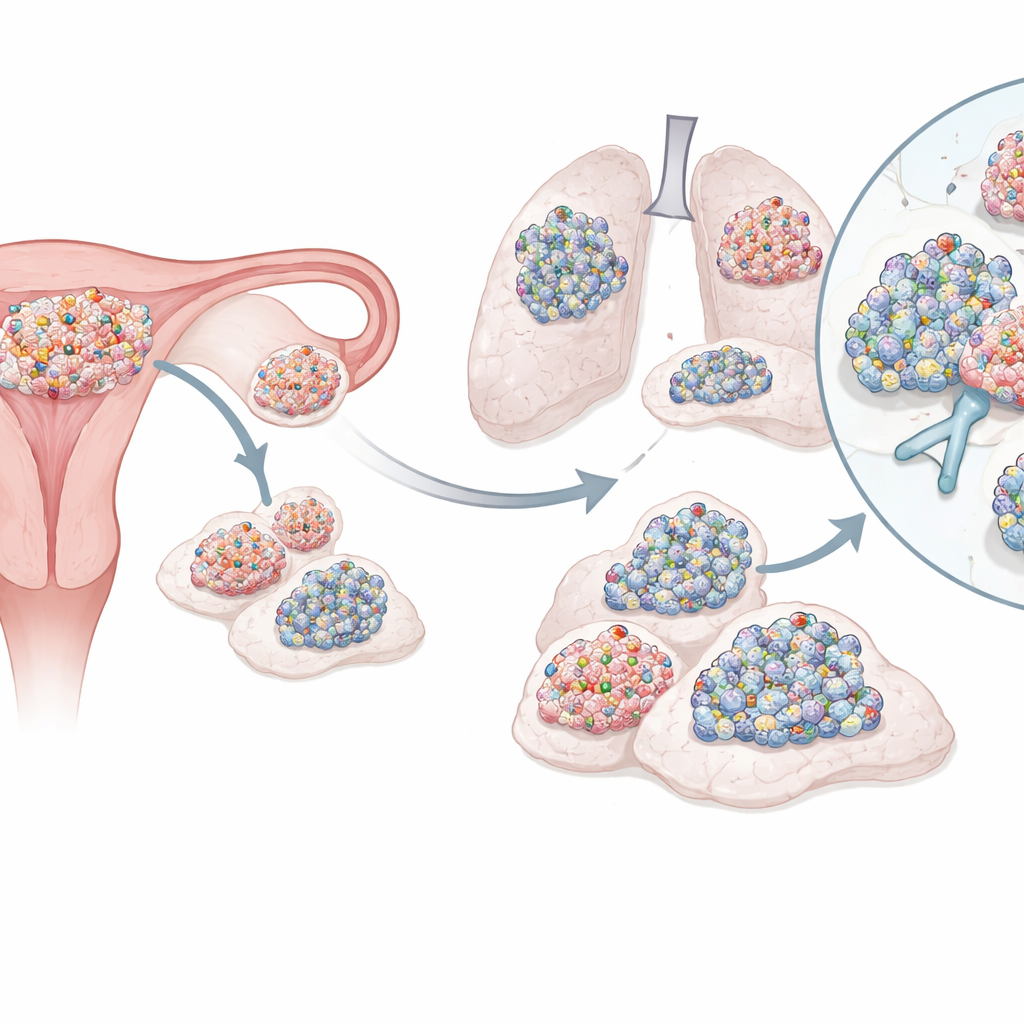
From marker to treatment opportunity
Antibody–drug conjugates link a tumor-seeking antibody to a powerful chemotherapy payload, aiming to deliver the drug directly where it is needed. Several early-stage clinical trials are already testing Claudin-6–targeted versions of these medicines in solid tumors, with encouraging results in ovarian cancer. This study shows that in endometrial cancer, Claudin-6 not only marks tumors with poorer survival prospects but also remains high in many metastatic lesions. For patients, that combination is important: Claudin-6 could help doctors identify those at greatest risk and, at the same time, flag who might benefit from future Claudin-6–targeted therapies. While more work is needed to refine testing and confirm which patients respond best, the findings support Claudin-6 as both a warning sign and a promising bullseye for next-generation drugs in aggressive endometrial cancer.
Citation: Gullovsen, V.L., Pavlicenco, D., E. Hjelmeland, M. et al. High expression of the ADC target Claudin-6 associates with aggressive endometrial cancer and remains high in metastatic lesions. BJC Rep 4, 17 (2026). https://doi.org/10.1038/s44276-026-00225-x
Keywords: endometrial cancer, Claudin-6, antibody-drug conjugates, metastatic cancer, cancer biomarkers