Clear Sky Science · en
Obesity-associated gene mutations across cancer types: a pan-cancer analysis of TCGA data
Why Your Weight May Matter for Cancer DNA
Many people know that carrying extra weight can raise the risk of certain cancers, but fewer realize that obesity may also change the very DNA of tumors. This study asks a simple but powerful question: does a person’s body weight leave a detectable fingerprint on the genetic mistakes found inside their cancers? By analyzing thousands of tumors from a major international database, the researchers explored how body mass index (BMI) and cancer gene mutations are connected, with a special focus on bladder cancer.
Looking Across Many Cancers
To tackle this question, the team turned to The Cancer Genome Atlas, a large collection of tumor samples and clinical information. They examined 14 different cancer types for which patients’ height, weight, and tumor DNA data were available. Instead of just grouping people as “obese” or “not obese,” they treated BMI as a continuous measure, which allowed a more precise look at how even moderate weight gain might relate to genetic changes. They used statistical models that accounted for age, sex, and the overall number of mutations in a tumor, so that any links they found between BMI and specific gene changes were less likely to be due to chance or other factors.
Bladder Cancer Stands Out
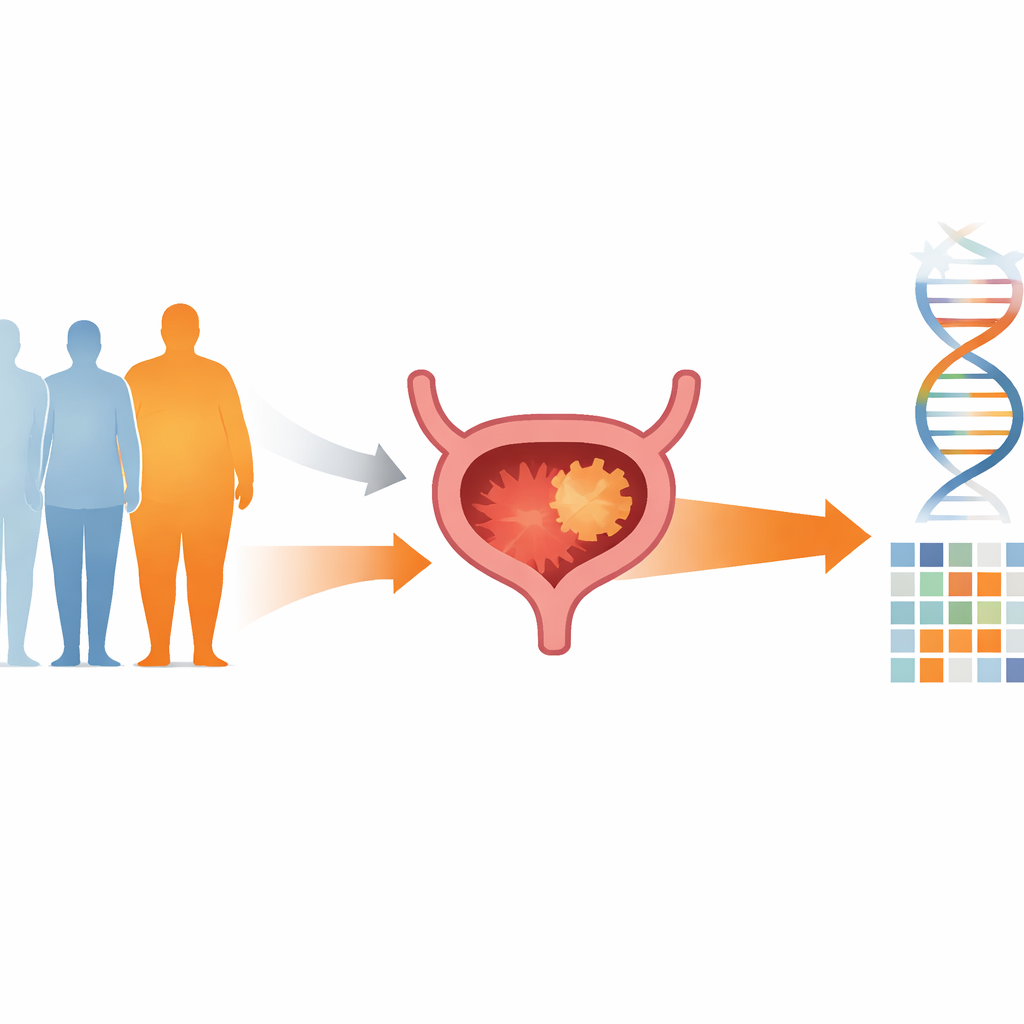
When they compared gene mutations to BMI across all 14 cancer types, bladder cancer emerged as the most strongly linked to excess body weight. In these bladder tumors, the researchers identified 86 genes whose mutation patterns were significantly associated with BMI. Most of these genes were more frequently mutated in patients who were overweight or obese (BMI 25 or higher). From this list, they singled out ten genes for closer study, including well-known DNA repair genes like BRCA2 and ELP1, as well as others involved in cell communication and the tumor’s surrounding environment. Even after adjusting for age, sex, and the overall mutation load of each tumor, these ten genes remained tightly connected to higher BMI.
Different Mutation Patterns in Heavier Patients
Digging deeper, the researchers looked not just at whether a gene was mutated, but exactly where within the gene the mistakes occurred. They compared patients with BMI below 25 to those at or above 25 and found that heavier patients often had a greater number of mutated segments within these key genes. Some exons—stretches of DNA that code directly for protein—were commonly mutated in both weight groups, but many others showed distinct, non-overlapping patterns between normal-weight and overweight/obese patients. Computer tools that predict how harmful a mutation might be suggested that patients with higher BMI carried more changes likely to damage protein function. In some cases, tumors from heavier patients had multiple harmful mutations across several of the candidate genes at once, hinting at a more complex and potentially aggressive genetic landscape.
Clues from the Tumor’s Surroundings
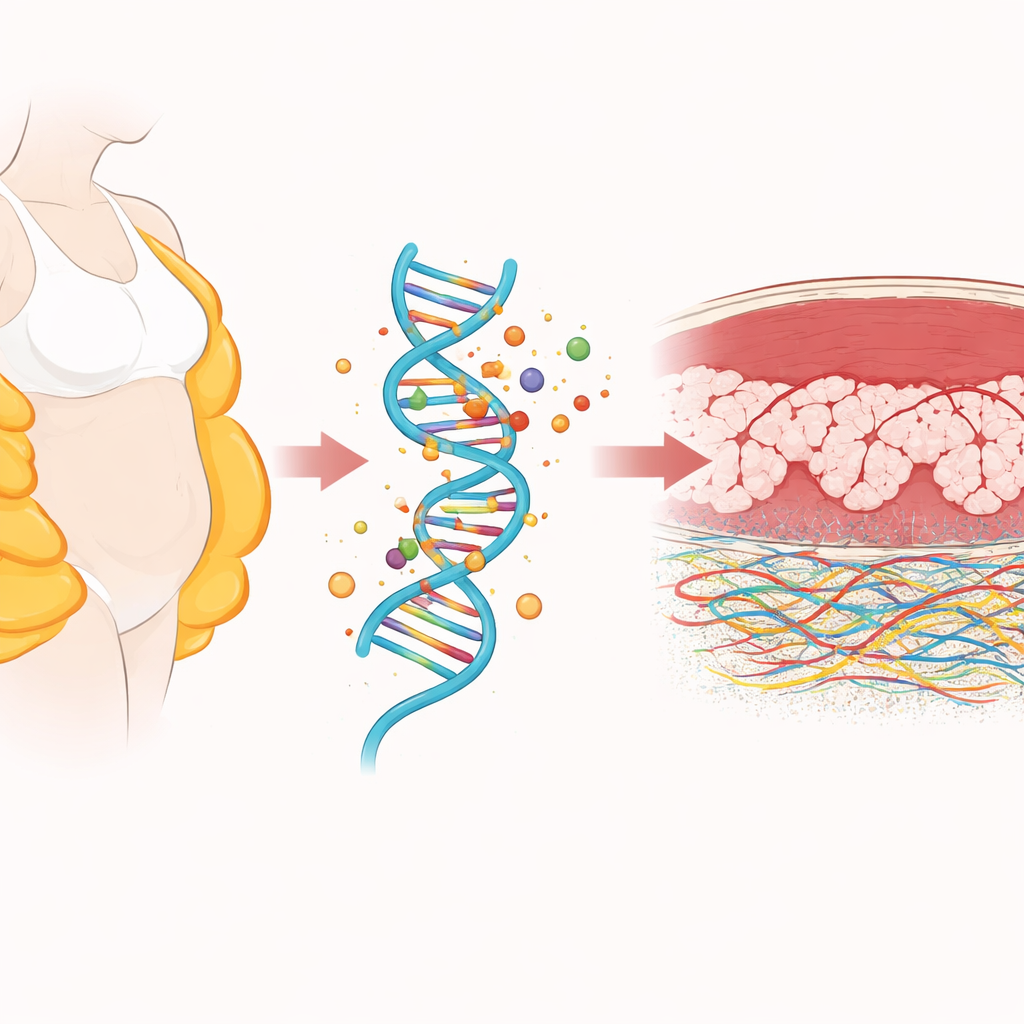
To understand what these BMI-linked gene changes might mean for how tumors behave, the team examined what kinds of biological processes these genes influence. Many of them were tied to the structure and remodeling of the extracellular matrix—the mesh-like scaffold of proteins that supports cells and tissues. Earlier work has shown that when this matrix becomes disorganized in bladder cancer, tumors are more likely to invade nearby tissue and are associated with poorer survival. The new findings suggest that obesity-related mutations may help disrupt this supporting framework, making it easier for bladder cancer cells to grow, move, and spread.
What This Means for Patients
Overall, the study supports the idea that excess body weight is not only a general risk factor for cancer but can help shape the genetic blueprint of tumors, at least in bladder cancer. Even people who are “only” overweight, not strictly obese, may show distinct mutation patterns in their cancers. While this research cannot prove that high BMI directly causes these DNA changes, it points to a lasting “molecular memory” of long-term extra weight. In the future, tracking a person’s weight history and the obesity-linked mutations in their tumors could help doctors better predict cancer behavior and tailor treatments, reinforcing the importance of maintaining a healthy weight over the course of life.
Citation: Porcelli, G., Brancaccio, R.N., Di Bella, S. et al. Obesity-associated gene mutations across cancer types: a pan-cancer analysis of TCGA data. BJC Rep 4, 13 (2026). https://doi.org/10.1038/s44276-026-00214-0
Keywords: obesity and cancer, bladder cancer, tumor gene mutations, body mass index, extracellular matrix