Clear Sky Science · en
Diverse groups look more moral in loose (but not tight) cultural contexts
Why this matters for everyday life
When you see a group of people on the news or in a company photo, you might quickly notice whether they look diverse or not and form a gut feeling about how fair or trustworthy they are. This article explores when diverse groups actually look more moral to outside observers, and how the unwritten rules of a society can change those snap judgments.
How group diversity shapes first impressions
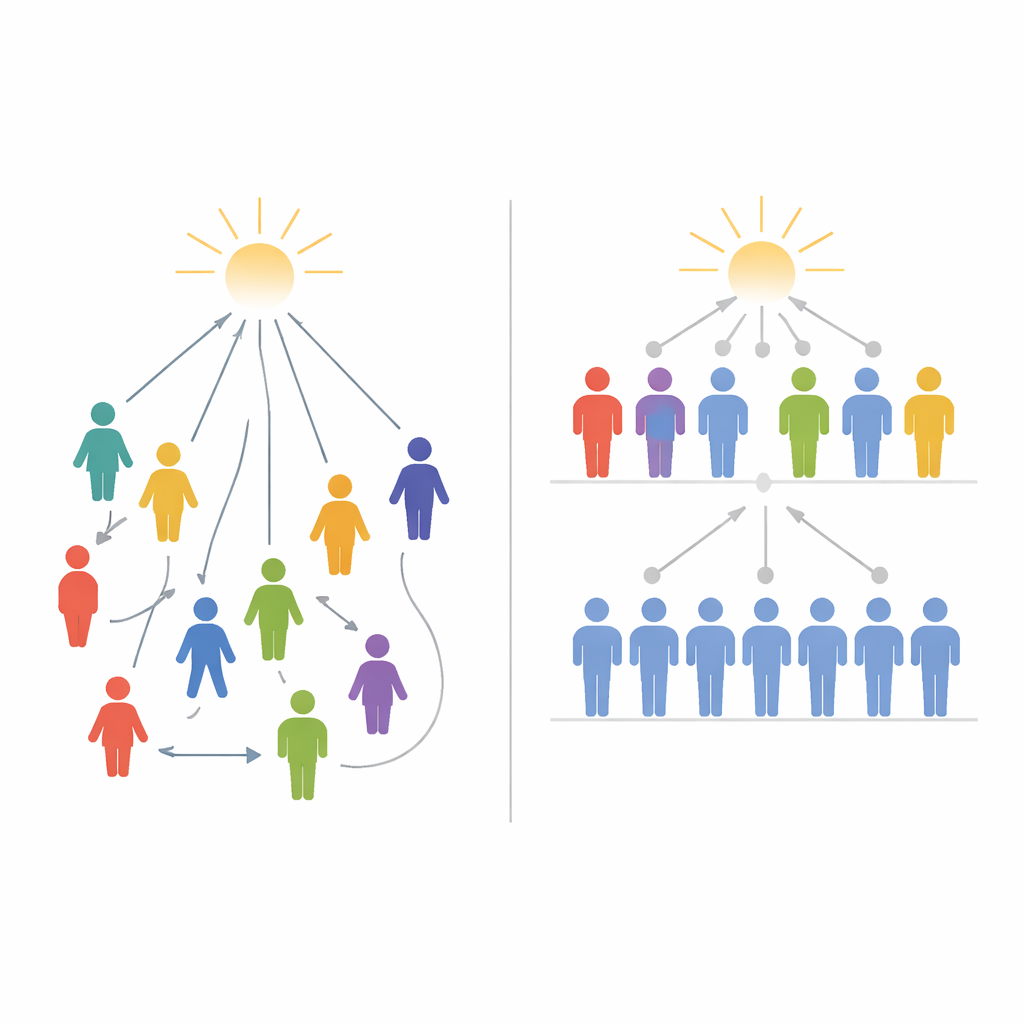
Previous research in Western countries suggested that diverse groups are often judged as more moral than groups whose members all look alike. Observers assume that people who come from different backgrounds are more likely to listen to one another and consider different viewpoints. That mental picture of richer perspective-taking then spills over into seeing the group as more honest, ethical, and trustworthy, and even more appealing to buy from or support.
The hidden effect of a culture’s rules
This new study asked whether that “diverse groups look more moral” pattern holds everywhere, or whether it depends on how strict a culture is about following social rules. The authors focused on cultural tightness and looseness, which describes how strongly a society insists on conforming to shared norms. Loose cultures tolerate a wider range of behavior, while tight cultures expect people to stay within clear boundaries. The team ran five large online experiments with 3,659 adults in the United States, United Kingdom, Singapore, and Turkey, and also directly nudged some participants to think of their own culture as either loose or tight.
What the experiments revealed
In the United States and United Kingdom, both commonly viewed as loose cultures, the earlier finding held up. When participants saw a diverse work team, they thought its members were better at taking one another’s perspectives, and therefore judged the team as more moral. This was true in stories involving alleged wrongdoing, like biased reporting or unfair labor practices, and in more neutral business scenarios. Diversity signaled richer internal discussion, which in turn boosted moral impressions and even willingness to use the team’s products or services.
When diversity no longer gives an edge
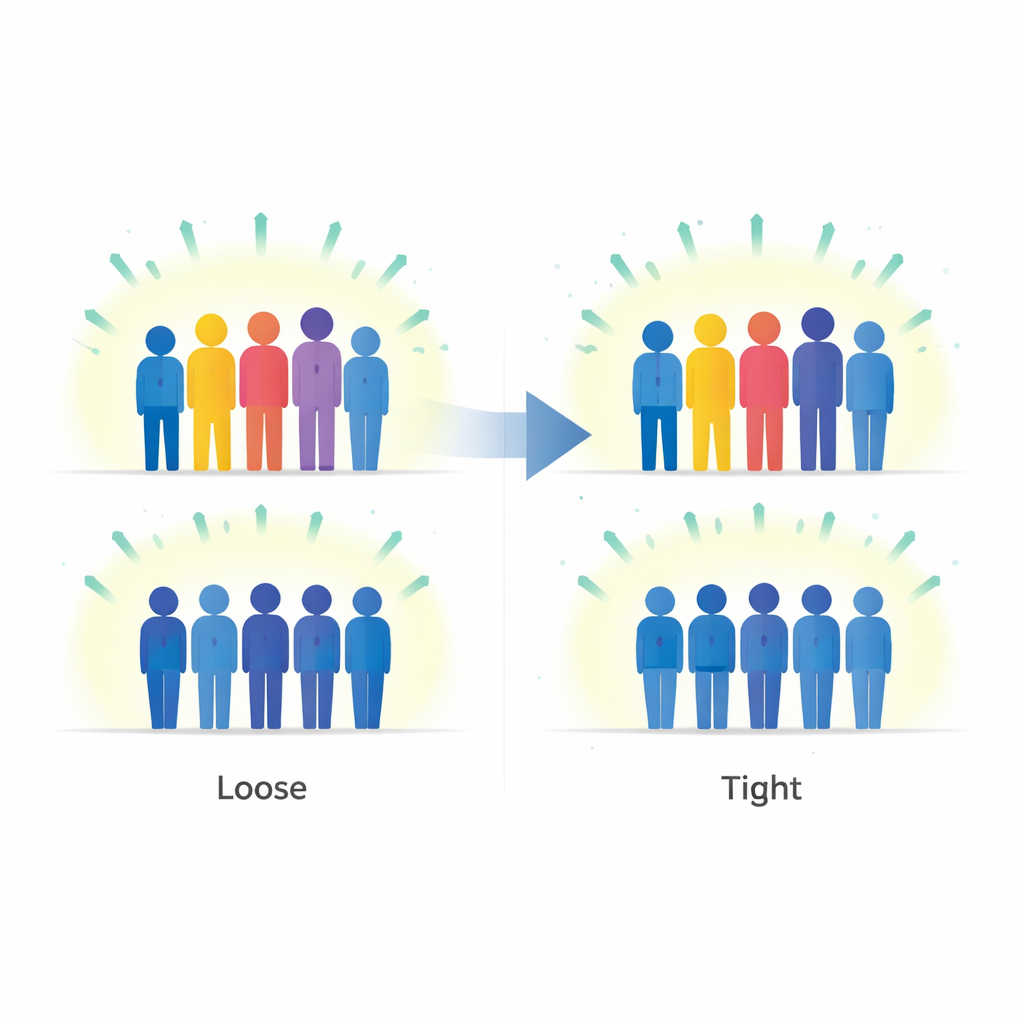
The picture changed in Singapore and Turkey, countries generally seen as tighter, with stronger everyday expectations about proper behavior. There, diverse groups were not judged as more moral than non-diverse groups. Statistical tests suggested that people saw both kinds of groups as equally capable of listening to others’ viewpoints. In a final study, the researchers showed that this pattern was not just about national background. When Americans were briefly encouraged to think of their own society in tight terms, they also started to see non-diverse groups as just as perspective-taking and moral as diverse ones, erasing the usual advantage of diversity.
What this means for views of fairness
To put it simply, diverse groups look more moral than non-diverse groups mainly in societies, or moments, where people feel that norms are loose and perspective-taking is not taken for granted. In tighter cultural settings, observers already expect groups to pay close attention to others’ expectations, so diversity alone does not change moral impressions. This suggests that public debates and corporate messaging about diversity will land differently across cultures, and even among individuals in the same country, depending on how strict they feel their social world is. Understanding those cultural lenses can help explain why the same group photograph can send very different moral signals to different audiences.
Citation: Karataş, M., Chin, SC.D. Diverse groups look more moral in loose (but not tight) cultural contexts. Commun Psychol 4, 76 (2026). https://doi.org/10.1038/s44271-026-00435-6
Keywords: group diversity, moral judgment, cultural tightness, social norms, perspective taking