Clear Sky Science · en
Synthetic microbial communities for sustainable hydroponic tomato production
Helping City Tomatoes Stay Healthy
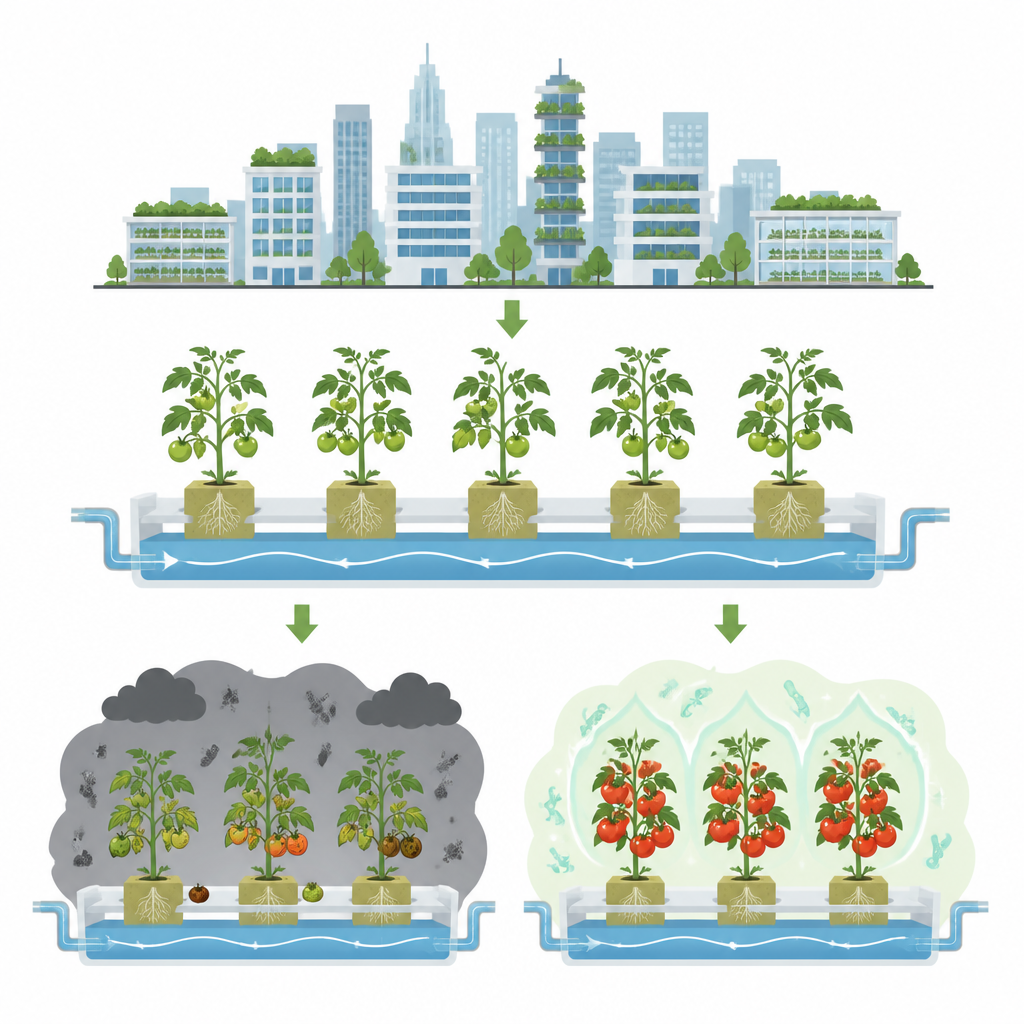
As more people move into cities, growers are turning to hydroponic greenhouses to produce tomatoes close to where we live. These soilless systems can deliver high yields in small spaces, but the warm, wet conditions also make diseases spread quickly. This study asks whether helpful microbes, added as a simple seed treatment, can help protect hydroponic tomatoes from disease without sacrificing the amount or quality of fruit produced.
Why Hydroponic Tomatoes Need Extra Care
Hydroponic systems grow plants in nutrient-rich water supported by materials such as stone wool instead of soil. The researchers showed that tomatoes grown in stone wool were much more prone to a common leaf disease than those grown in soil or compost, even when the plants were similar in size. In soil, a rich community of microbes often helps plants fend off attackers. In clean stone wool, those natural bodyguards are missing, leaving young plants especially exposed to disease that can spread quickly through shared water lines.
Recruiting Friendly Microbes as Bodyguards
The team tested a range of beneficial fungi and bacteria that are already used in agriculture or have a track record of helping plants in soil. They looked for microbes that could trigger a whole-plant immune response, known as induced resistance, and that might also boost growth. One fungus, Clonostachys rosea J1446, clearly reduced disease on tomato leaves and tended to make seedlings larger, while another microbe reduced disease but slowed growth. Building on these results, the researchers designed two small three-member “synthetic communities,” each a precise mix of fungi and bacteria chosen to combine different strengths.
Putting Microbial Teams to the Test
In controlled lab experiments, both microbial mixes reliably lowered levels of disease on tomato leaves, even though the microbes were only applied once at sowing. The mixes sometimes promoted early growth and sometimes did not, but their ability to reduce infection was consistent. The researchers then moved to a commercial-scale greenhouse, using a modern tomato variety grown on stone wool slabs under real production conditions. Here, both microbial mixes slowed seed germination and made young plants smaller and slightly shorter in the early weeks. However, pollination by bumble bees, total fruit yield, and key quality traits such as size, sweetness, acidity, color, and texture were all essentially unchanged compared with untreated plants.
Invisible Changes Beneath the Plants
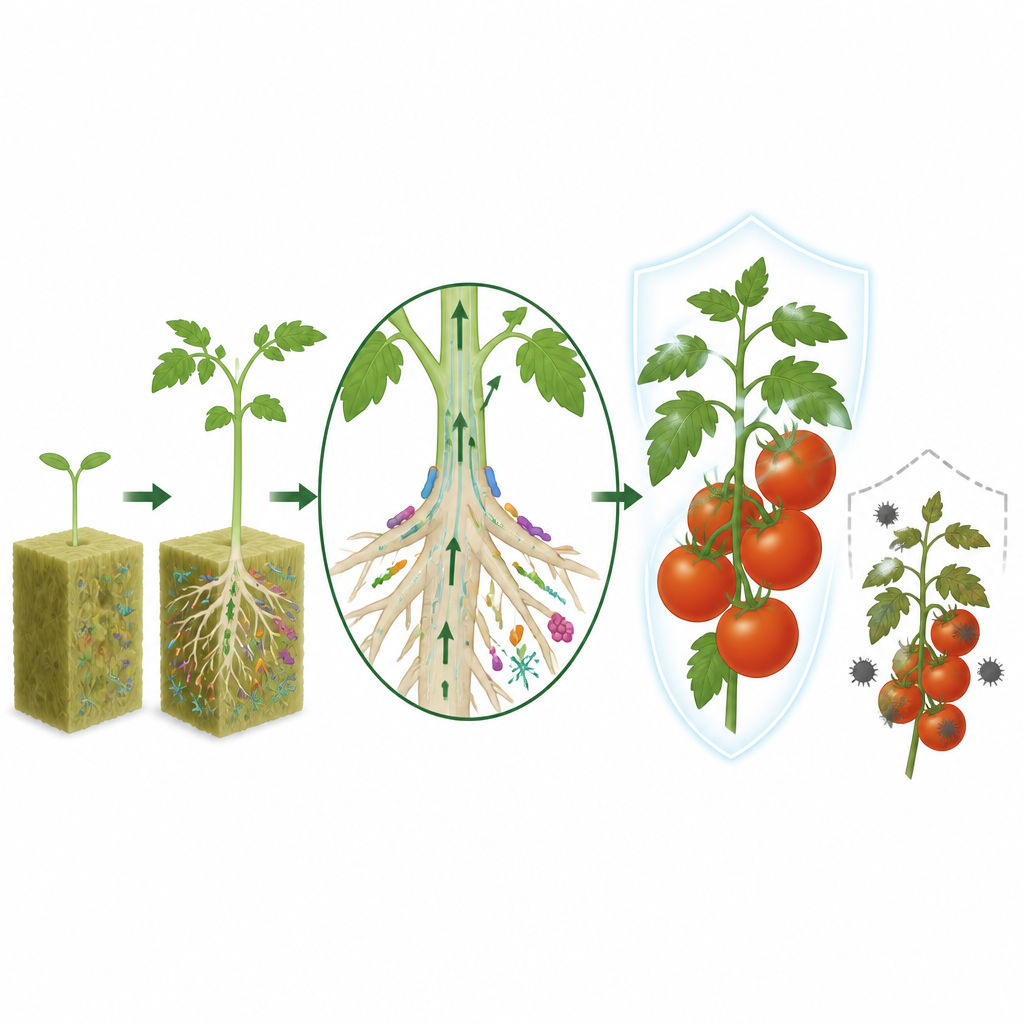
To find out what happened to the added microbes over time, the team sampled stone wool blocks after six months and used DNA-based methods to profile the microbial community. Only one of the introduced bacteria, a strain of Pseudomonas, was still clearly detectable in several samples near the plant stems; other introduced strains were rare or absent. Yet the early addition of these communities left a clear long-lasting fingerprint. Dozens of other bacterial types were more or less abundant in treated systems than in untreated ones, showing that a brief early intervention can steer how the hydroponic microbiome develops, even if the original helpers do not remain dominant.
What This Means for Future Tomatoes
For growers, the key message is that carefully selected mixes of beneficial microbes can make vulnerable young hydroponic tomatoes less susceptible to disease without cutting overall yield or spoiling fruit quality. The microbial communities behaved like a starter culture, nudging the developing root environment into a healthier state that supports plant defenses. While more work is needed to test performance under constant disease pressure and to fine-tune microbe combinations, this study shows that “designer” microbial teams are a realistic, sustainable tool to help keep hydroponic tomatoes productive and resilient in the long term.
Citation: Wilkinson, S.W., Wright, H.C., Cotton, T.E.A. et al. Synthetic microbial communities for sustainable hydroponic tomato production. npj Sustain. Agric. 4, 42 (2026). https://doi.org/10.1038/s44264-026-00147-8
Keywords: hydroponic tomatoes, beneficial microbes, synthetic microbial communities, plant disease resistance, controlled environment agriculture