Clear Sky Science · en
Integrating regional transportation and ecological factors into anaerobic digestion siting decisions
Turning Trash into Power and Protecting Our Waters
Every day, huge amounts of edible food in the United States end up in the trash. When this wasted food is buried in landfills, it breaks down and releases powerful greenhouse gases. Anaerobic digestion, a process that turns organic waste into biogas and a liquid fertilizer, promises to turn this problem into an opportunity. But deciding where to build these facilities is not as simple as just finding empty land. This study shows how combining maps of transportation, farms, and water quality can guide smarter choices so that wasted food becomes clean energy without polluting nearby lakes and rivers. 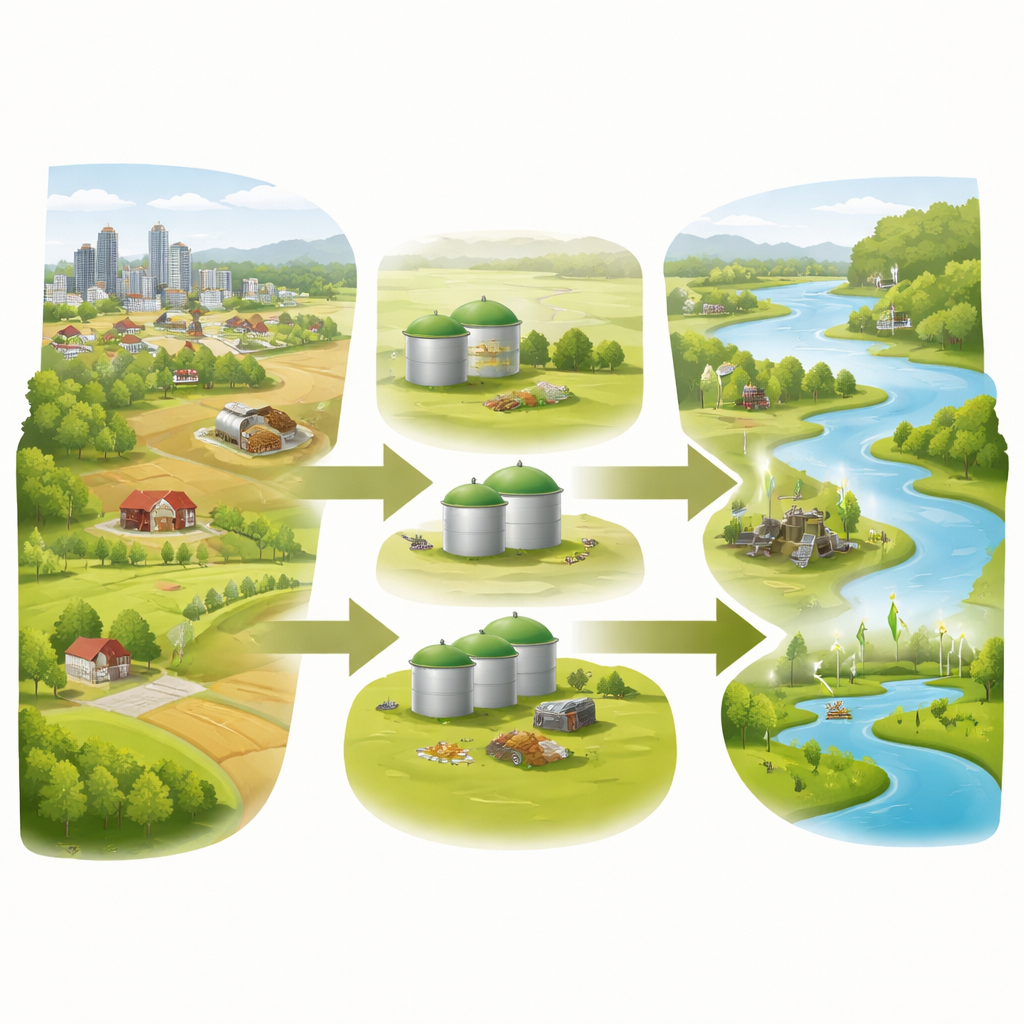
Why Where We Put Digesters Matters
The authors focus on Western New York, a region with cities that generate lots of wasted food and nearby farmland that could use extra nutrients. They note that food waste laws are pushing businesses to divert organic scraps away from landfills, creating a growing need for treatment options such as anaerobic digestion. However, digesters must be close enough to food waste sources to keep hauling costs reasonable, near power lines to sell electricity, and near farms that can safely use the nutrient-rich liquid by-product called digestate. They also must avoid homes, schools, protected lands, and other sensitive areas. When all these filters are applied across New York State, only about one-tenth of the land turns out to be suitable on paper.
Matching Waste to Farmland Capacity
A key challenge is that digestate is mostly water and therefore expensive to move. Farmers can use it as a fertilizer because it is rich in phosphorus, a nutrient that crops need in modest amounts. The team mapped where wasted food and dairy manure are produced and converted these flows into their phosphorus content. They then compared this to how much phosphorus nearby crops such as corn and hay can actually use without being overfed. Their analysis shows that if digestate can be hauled up to about 15 to 20 kilometers from a digester, many fields together can absorb large amounts of nutrients. But if haulers are limited to shorter trips, the land area shrinks quickly and some digesters would create more phosphorus than surrounding fields can responsibly take up.
Hidden Risks to Rivers and Lakes
Even when fields appear able to absorb the nutrients on paper, not all land carries the same environmental risk. Using a watershed runoff model, the researchers examined how soil type, slope, and crop cover affect the tendency of phosphorus to wash off fields into nearby streams. They compared two extreme siting examples: one where a digester is placed to capture the most wasted food, and another where it is placed where farmland has the greatest remaining capacity to accept phosphorus. Although both locations could technically take the digestate, the high–food waste site sits in a landscape where most fields have a strong tendency to shed runoff. Model results suggest this option could almost double the phosphorus reaching waterways compared with the high–capacity site, raising the risk of algae blooms and poor water quality.
Co-Digestion or Food Waste Only?
Many existing digesters mix wasted food with dairy manure to keep the process stable, but this practice greatly increases the volume of digestate that must be stored and spread. In areas already rich in large dairy operations, fields can quickly reach their phosphorus limits, leaving little room for additional material from new food-waste projects. The study shows that, if technology can reliably handle food waste alone, smaller and more scattered digesters located away from major livestock centers could ease pressure on local fields. Such facilities would produce less liquid to manage, reduce truck travel distances for food waste, and lower the chances of overloading nearby soils with nutrients. 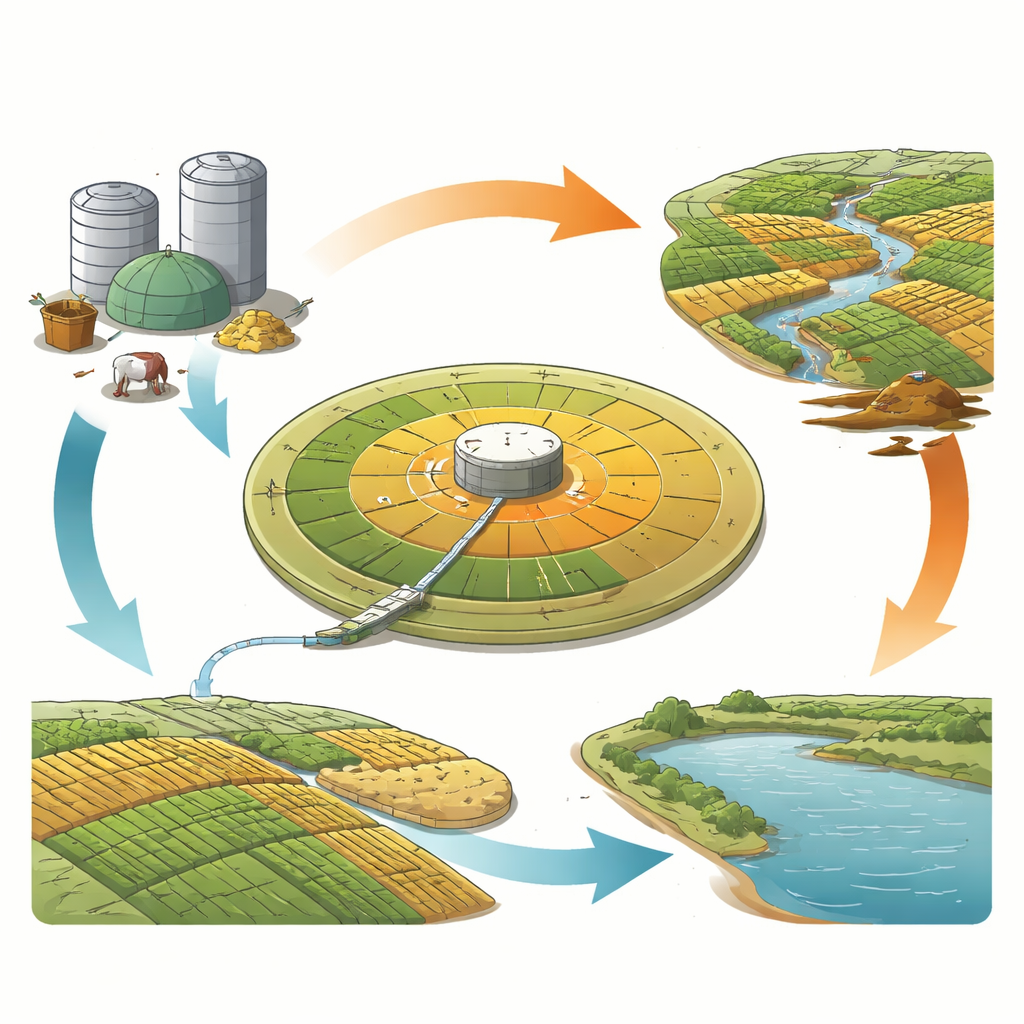
Designing Smarter Waste-to-Energy Systems
Overall, the work demonstrates that successful food-waste digestion requires thinking beyond the plant fence line. It is not enough to capture biogas and keep scraps out of landfills; planners must also ask where the digestate will go, how far it will travel, whether local crops truly need the nutrients, and how vulnerable nearby waters are to runoff. By combining maps of suitable land, waste supply, farm demand, and runoff risk, the authors show that only a modest share of the region can host digesters without creating new environmental problems. Their approach offers a blueprint for cities and states seeking to expand climate-friendly waste treatment while still safeguarding rivers, lakes, and the communities that depend on them.
Citation: Armington, W.R., Shrestha, S., Tomaszewski, B. et al. Integrating regional transportation and ecological factors into anaerobic digestion siting decisions. npj Sustain. Agric. 4, 31 (2026). https://doi.org/10.1038/s44264-026-00140-1
Keywords: anaerobic digestion, food waste, digestate, phosphorus runoff, sustainable agriculture