Clear Sky Science · en
Gene expression plasticity under multiple stresses drives higher tolerance to a macrolide in saline and warmer environments
Why tiny river dwellers matter to us
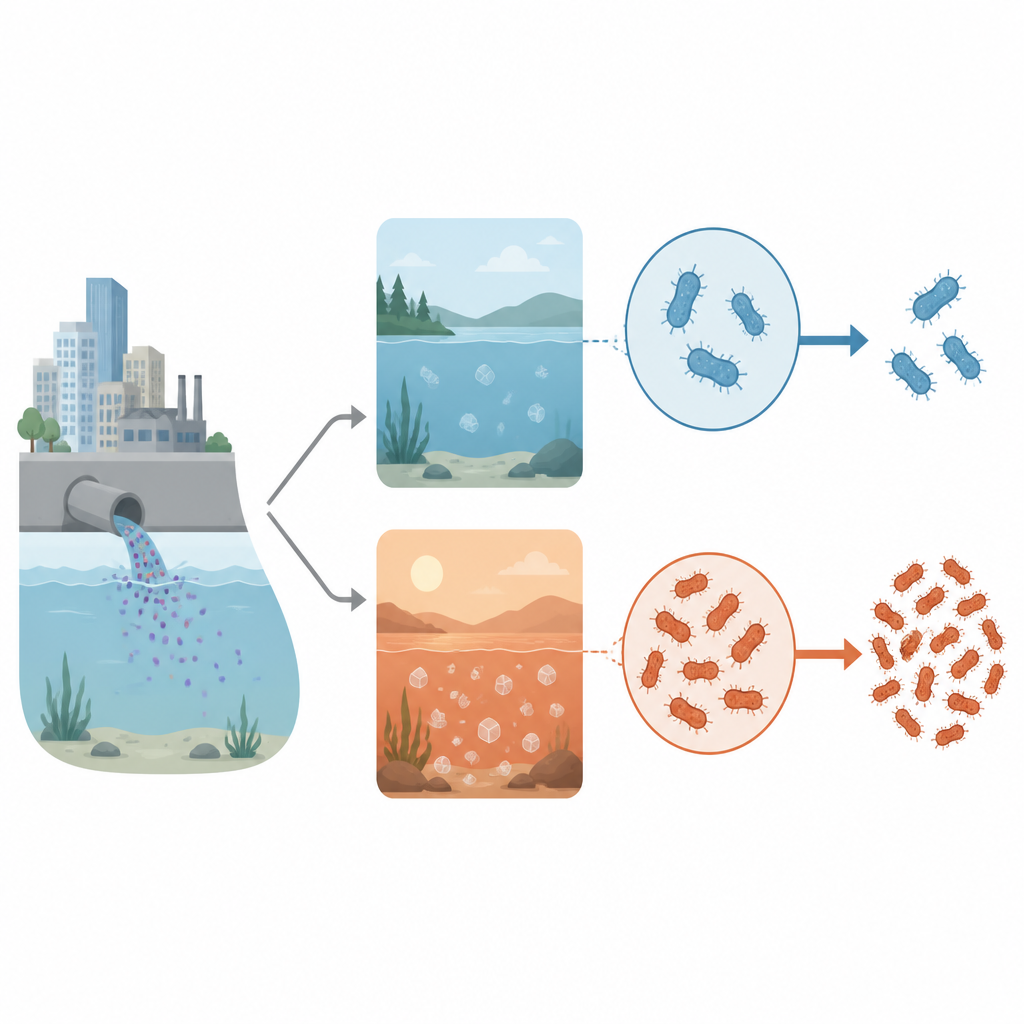
Antibiotics that help us fight infections often end up in rivers, lakes, and coastal waters at low doses. There they meet huge numbers of bacteria along with changing temperature and salt levels. This study looks at how these everyday conditions shape the way common gut bacteria respond to the drug azithromycin, and how that response could change the future spread of antibiotic resistance that can ultimately affect human health.
Everyday waters mixed with medicine
The researchers focused on Escherichia coli, a well known model bacterium, and exposed it to azithromycin at near inhibitory levels under combinations of warmer or cooler temperatures and low or high salt. These conditions mimic wastewater and coastal environments where antibiotic traces are common. They tracked how quickly bacterial populations grew and then examined which genes were turned on or off a few hours after exposure. This allowed them to connect broad survival patterns with the detailed internal responses of the cells.
How bacteria adjust their inner workings
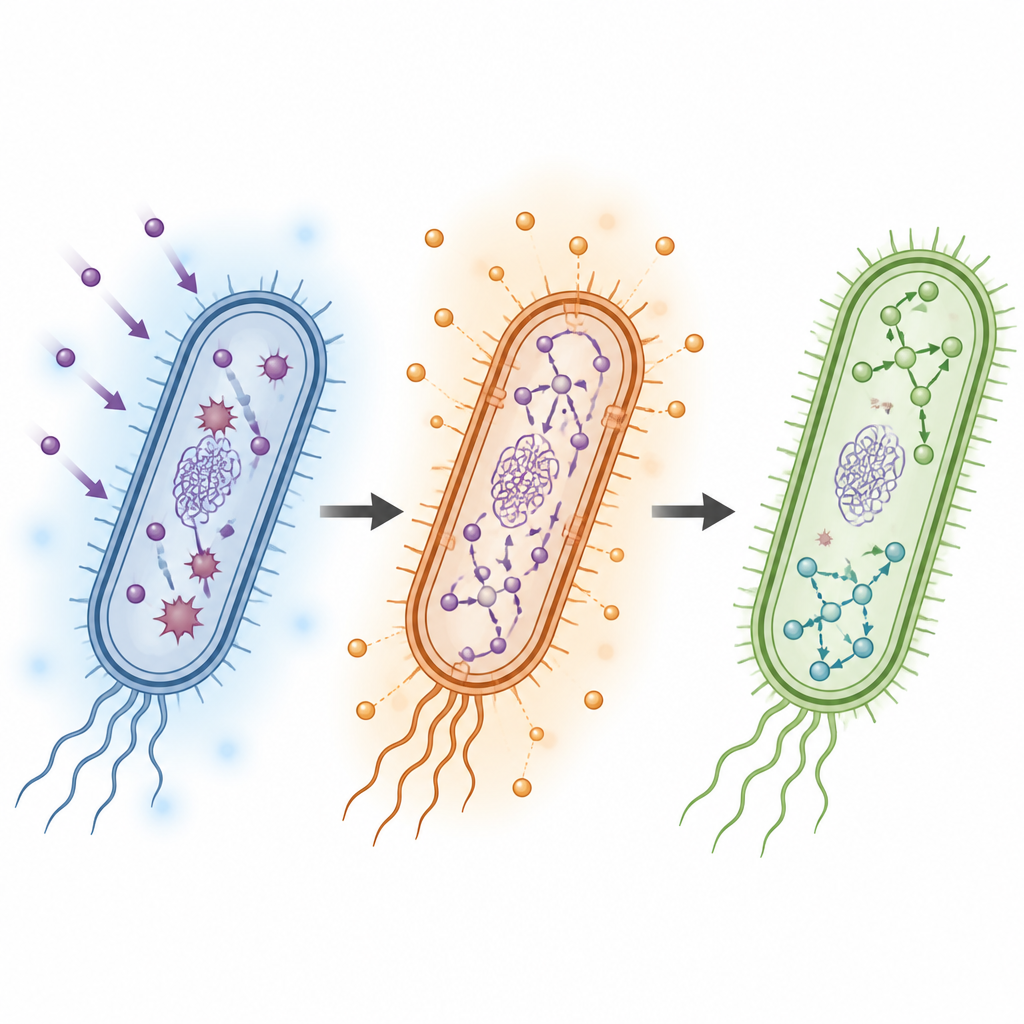
Azithromycin alone caused sweeping changes inside the cells, altering the activity of roughly one third of their genes. The drug pushed bacteria to invest more in protein making and in systems that help them cope with misfolded proteins, a known side effect of this antibiotic. It also boosted iron handling and some defense pathways linked to resistance. At the same time, azithromycin dialed down many routes that let cells import and burn sugars, shifting the balance of how they use carbon and nitrogen and generally slowing their basic metabolism.
When salt and warmth soften the blow
Salt and temperature did not simply add to the effect of the drug; instead, they often reshaped it. High salt reduced growth when no antibiotic was present but, interestingly, made E. coli about one hundred times more tolerant to azithromycin. At the gene level, salty conditions mimicked the drug by further lowering sugar metabolism, yet also revived stress response and sulfur based pathways that the drug had suppressed. These sulfur routes help protect cells from reactive forms of oxygen, which are part of how many antibiotics inflict damage. In contrast, cooler temperatures weakened bacterial growth and erased much of salt’s protective effect, in part by boosting sugar use and counteracting the metabolic slowdown seen with the drug and salt together.
Complex signals with simple patterns
To understand how different influences combined, the team grouped gene responses into patterns such as buffering, canceling, or de novo effects that only appear when stressors act together. They found that many genes ignored individual stressors but reacted strongly to certain pairs, especially azithromycin with salt. Most combinations did not push gene activity to extremes but instead softened or erased the effect of one factor with another. Only a small set of genes responded to three way combinations of drug, salt, and temperature, and the number of affected genes dropped sharply as interactions became more complex. This suggests that in real waters, where many stresses coincide, only relatively simple combinations may matter most for how bacteria adjust their gene activity.
What this means for resistance in the real world
Taken together, the findings show that ordinary environmental features such as salt content and warmth can greatly change how bacteria cope with low levels of antibiotics. By redirecting metabolism and stress defenses, these conditions shift which genes are active, how strongly selection acts on them, and therefore which resistance mutations are most likely to appear and spread. In some settings, increased tolerance could help sensitive bacteria survive long enough for resistance traits to arise, while in others it might reduce the advantage of already resistant strains. Understanding these subtle gene level responses offers a clearer picture of how human medicines and changing environments jointly influence the long term risk of antibiotic resistance.
Citation: Rescan, M., Dachs Rojo, M. & Borrego, C.M. Gene expression plasticity under multiple stresses drives higher tolerance to a macrolide in saline and warmer environments. npj Antimicrob Resist 4, 41 (2026). https://doi.org/10.1038/s44259-026-00214-7
Keywords: antibiotic resistance, environmental stress, gene expression, azithromycin, Escherichia coli