Clear Sky Science · en
Overcoming Trypanosoma cruzi persistence with a mechanistically distinct drug combination
A New Hope Against a Silent Heart Killer
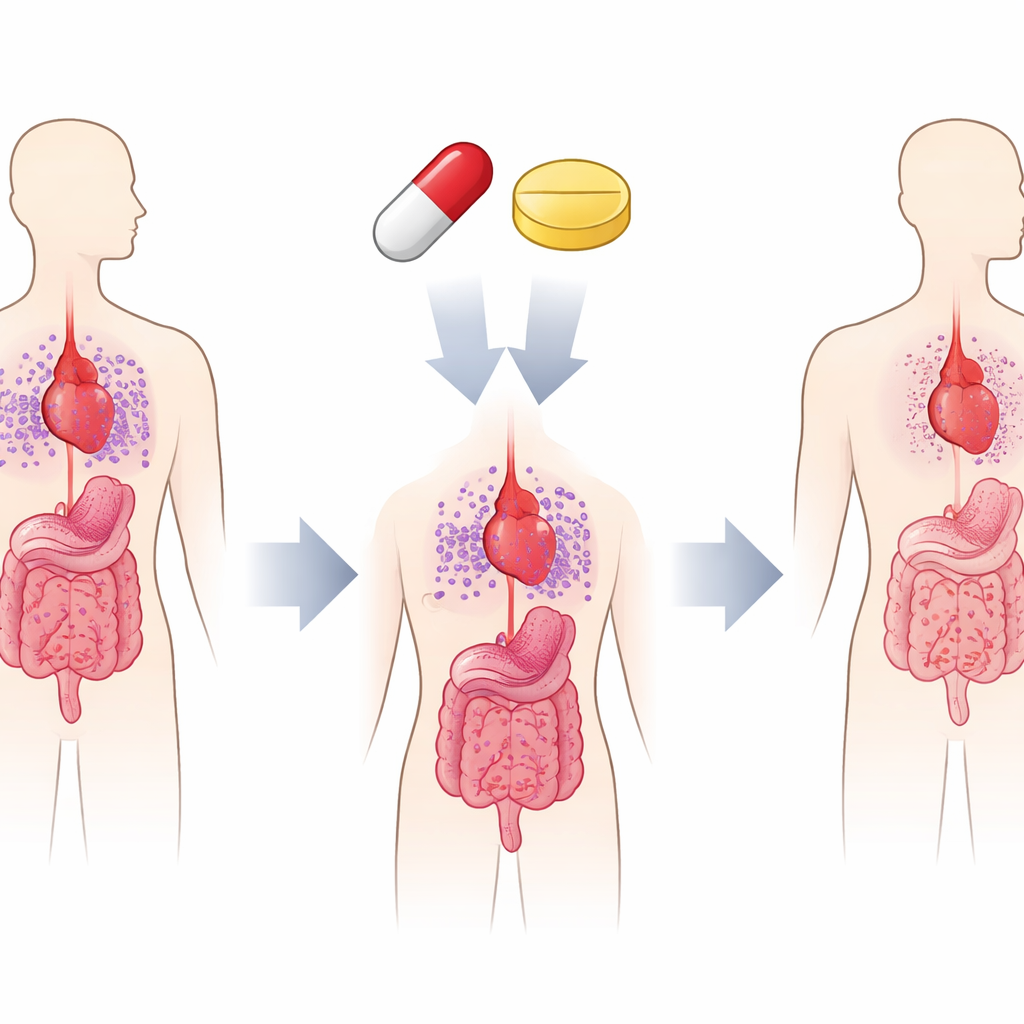
Chagas disease, a parasitic infection common in Latin America and increasingly seen worldwide, often hides quietly in the body for years before causing serious heart and digestive problems. Current medicines are old, hard to tolerate, and do not always wipe out the infection completely. This study explores a fresh strategy: using two very different drugs together, at lower and safer doses, to fully clear the parasite that causes Chagas disease, Trypanosoma cruzi, in an experimental mouse model.
Why Chagas Disease Is So Hard to Cure
Once T. cruzi enters the body, it settles inside human or animal cells and can remain there for life. The standard drug, benznidazole, can damage the parasite’s DNA, fats, and proteins, but treatment must be taken for two to three months and often causes side effects. Even then, a tiny number of parasites can survive by entering a slow, non-growing state inside tissues. These surviving “persister” parasites can restart infection when treatment stops, leading to relapse and long-term damage to the heart and gut. Because of this, researchers are urgently looking for new ways to kill these last few parasites without making patients sicker.
A Two-Drug Strategy With Different Strengths
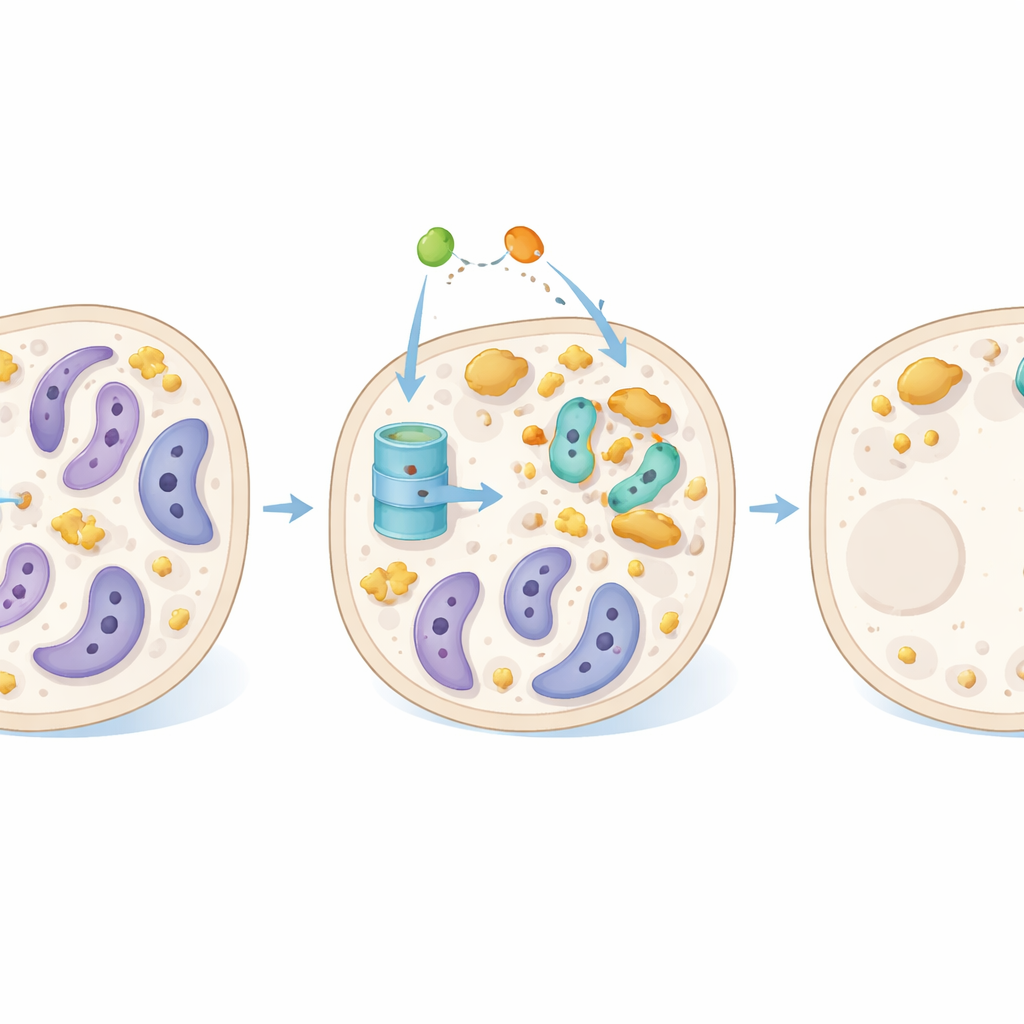
The team focused on pairing benznidazole with a second drug, GNF6702, that attacks the parasite in a completely different way. GNF6702 blocks the parasite’s proteasome, a cellular shredder that clears away damaged or misfolded proteins and is essential for survival. On its own, benznidazole needs high doses and long exposure to bring infection down, and GNF6702 alone leaves behind a stubborn minority of parasites, even when given at strong doses. The researchers reasoned that using a drug that creates damaged proteins (benznidazole) together with one that blocks the parasite’s clean-up system (GNF6702) might overwhelm even the toughest persisters.
How the Combo Performs in Cells and Parasites
In laboratory dishes, the scientists infected human cells with T. cruzi and tested each drug alone or in combination. High concentrations of benznidazole alone could reduce infection to less than one percent of cells, but only after several days. GNF6702 alone sharply lowered the number of infected cells, yet a small fraction of parasites always survived, no matter how much drug was used. When both drugs were given together at lower doses, the number of infected cells fell much more efficiently, and in some conditions the infection disappeared entirely and did not return even 20 days after the drugs were removed. GNF6702 also blocked the parasite’s transition from its growing form inside cells to the bloodstream form that spreads infection, keeping parasites trapped in the stage that is most vulnerable to benznidazole.
Clearing Chronic Infection in Mice
To test whether this approach could cure long-standing infection, the researchers treated mice with chronic T. cruzi using short, 10-day courses of the drugs. Using highly sensitive bioluminescence imaging, they tracked parasites deep in the animals’ tissues. GNF6702 alone lowered parasite numbers but never cleared them completely, even at exposures above levels that are strongly active in cell culture. Benznidazole alone cured only some mice and only at higher doses. In striking contrast, when GNF6702 was combined with relatively low doses of benznidazole, every treated mouse showed complete clearance of parasites. This was confirmed by later weakening the immune system and painstakingly checking organs and tissues; no hidden pockets of infection were found.
What This Could Mean for Patients
The study shows that pairing two drugs with distinct actions can wipe out even the most stubborn T. cruzi parasites in a well-established model of chronic Chagas disease. Instead of relying on long, high-dose treatment with a single toxic drug, a short course of a carefully chosen combination might offer better cures with fewer side effects. While this work was done in mice and GNF6702 itself would still need to be fully developed for human use, it points toward a promising path: smart combinations that exploit the parasite’s weak points, finally offering a realistic chance to cure this long-neglected disease more safely and reliably.
Citation: Francisco, A.F., Olmo, F., Escudié, F. et al. Overcoming Trypanosoma cruzi persistence with a mechanistically distinct drug combination. npj Antimicrob Resist 4, 30 (2026). https://doi.org/10.1038/s44259-026-00205-8
Keywords: Chagas disease, Trypanosoma cruzi, drug combination, benznidazole, proteasome inhibitor