Clear Sky Science · en
Fate of the resistance profile of drinking water biofilm exposed to a sub-minimum inhibitory concentration of ciprofloxacin
Why tiny drug traces in tap water matter
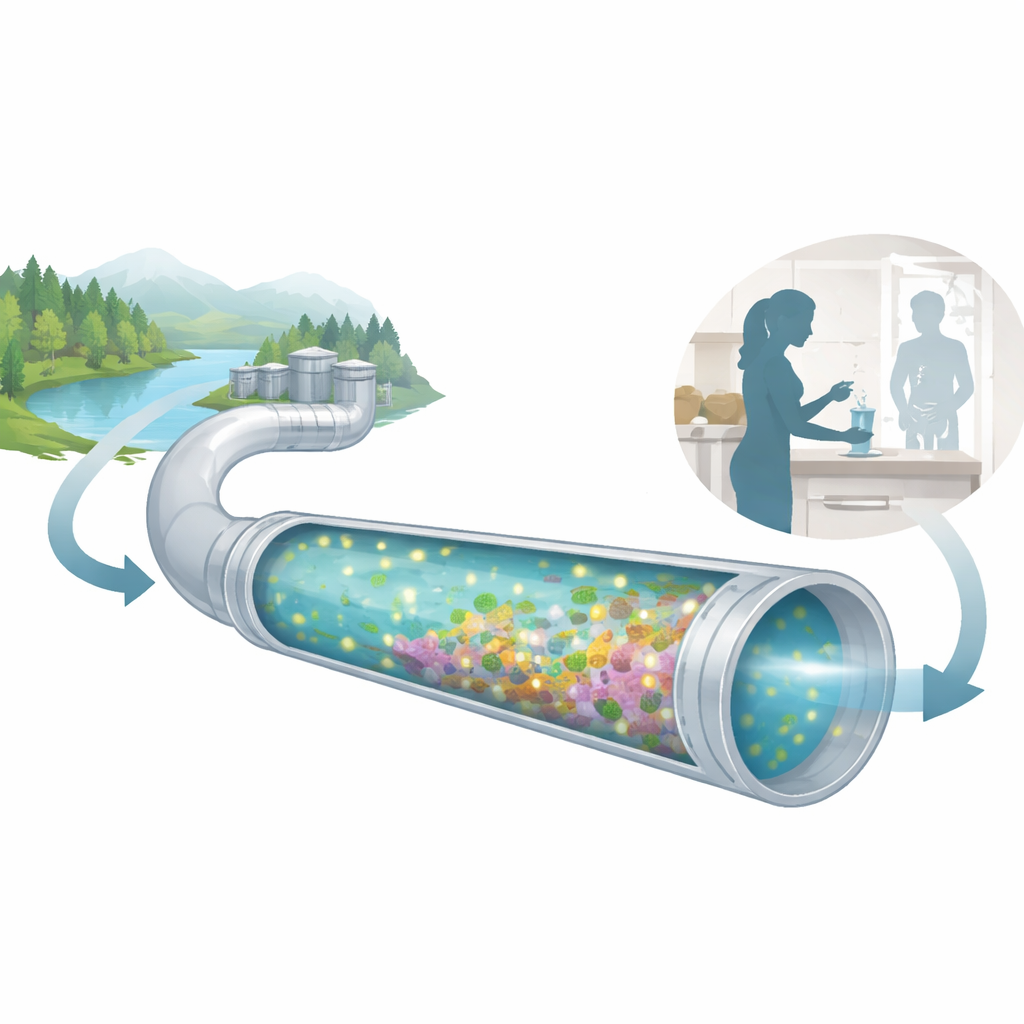
Most of us assume that once water leaves a treatment plant, it is both clean and safe. But traces of medicines we use, especially antibiotics, can slip through into drinking water. This study asks a troubling question: when low levels of a common antibiotic flow through plastic water pipes, do the slimy bacterial layers inside those pipes become better at withstanding our drugs, even if people are not directly harmed by the small doses?
The hidden world inside water pipes
Drinking water pipes are lined with biofilms—thin, sticky layers of many kinds of bacteria living together on the pipe surface. These communities are not always bad; some can even help keep water clear. But they can also shelter harmful bacteria and share genetic tricks that make them tough to kill. The authors focused on polyvinyl chloride (PVC) pipe, which is widely used to replace old pipes in North America. They wanted to know whether a very low, non-lethal concentration of the antibiotic ciprofloxacin—a level that has been found in real-world water systems—could nudge these pipe-dwelling communities toward stronger antimicrobial resistance.
A miniature water network in the lab
To explore this, the team built a bench-scale water distribution reactor that mimicked real plumbing. Four looping PVC pipe systems were fed with treated drinking water sourced from Lake Ontario and enriched with natural bacteria, then run for 12 weeks so rich, multi-species biofilms could form. After this growth period, three systems were exposed to a low dose of ciprofloxacin for 12 days, while a fourth system served as a drug-free control. The researchers tracked how many cells were in the biofilms over time and used DNA and RNA tools to measure specific antibiotic resistance genes, including genes that help bacteria resist sulfonamide drugs and a gene called intI1 that is linked to moving resistance traits between bacteria.
More cells, shifting genes, and community ties
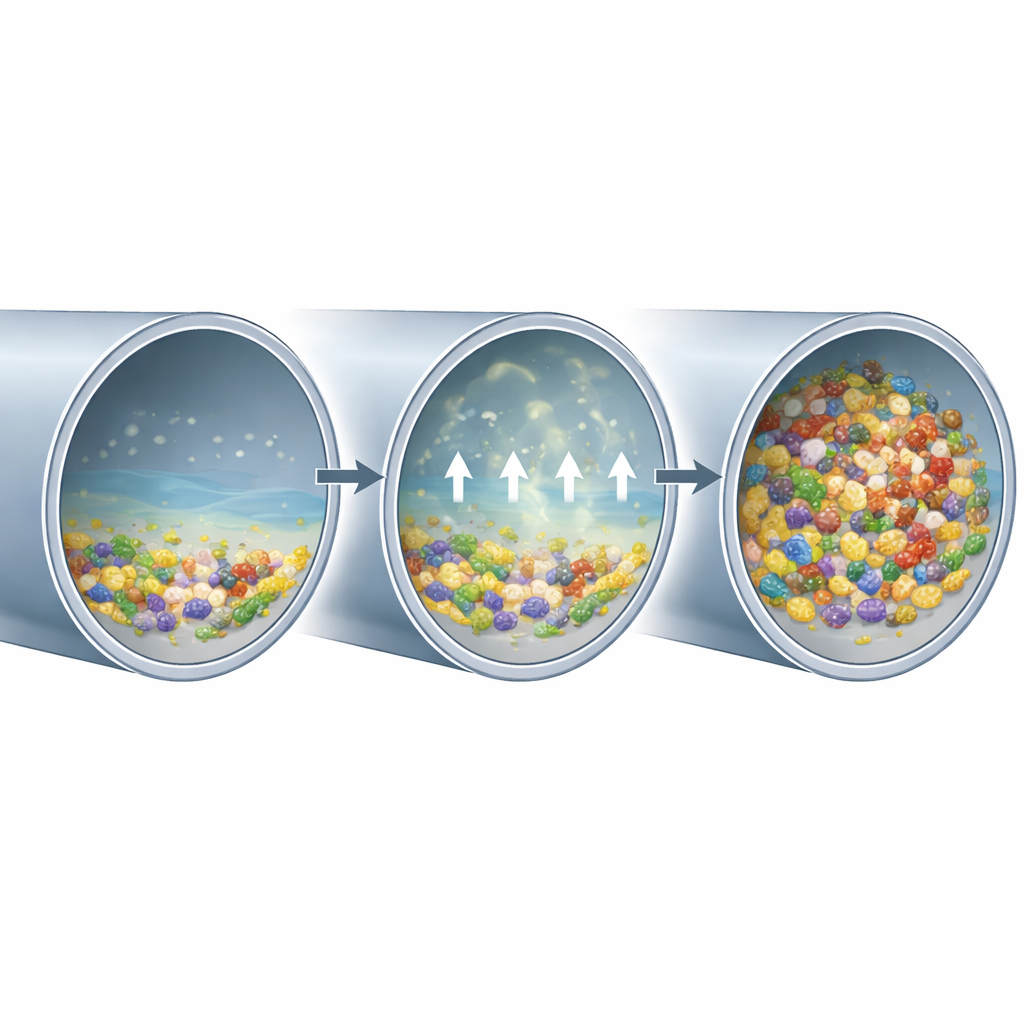
When ciprofloxacin was added to the water, its concentration in the flowing water quickly dropped but stayed bound within the biofilm on the pipe walls. In the antibiotic-exposed pipes, total cell counts in the biofilm rose significantly, while the control pipes did not show the same increase. This suggests that instead of being wiped out, the bacterial communities responded to the low-level stress by growing denser, a pattern consistent with early stages of antimicrobial resistance. The team detected three resistance-related genes—intI1, sul1, and sul2—in the biofilms, although not at every time point. The presence and occasional activity of intI1 was especially worrisome because it is known to help bundle and spread many different resistance genes.
Community makeup and the risk of resistance
Beyond simply counting genes, the researchers examined how the mix of bacterial genera in the biofilm was linked to these resistance markers. They identified 98 different genera in total, with some groups, such as Dechloromonas and Pseudomonas, often dominating. Statistical tests showed that intI1 and sul1 tended to appear when overall diversity in the biofilm was lower, and they were negatively associated with many common genera. One less abundant genus, Asinibacterium, stood out for showing a strong positive link with intI1, hinting that even rare community members may be important hubs for resistance traits. Overall, the study suggests that who is present in the biofilm—and how evenly species share space—can influence whether resistance genes take hold and spread under low antibiotic exposure.
What this means for our drinking water
For individual drinkers, the measured antibiotic levels might look harmless when judged only by direct exposure. But this work shows that such low doses can still reshape the living films inside pipes, encouraging denser growth and maintaining key resistance genes that could later flare up under stronger drug pressures. The authors conclude that protecting public health will require more than just keeping antibiotic concentrations below a human safety threshold. Water utilities and regulators may also need to watch the makeup and diversity of pipe biofilms and limit both residual antibiotics and bacteria that are likely to carry resistance genes, so that the hidden ecosystems in our plumbing do not become long-term reservoirs of antimicrobial resistance.
Citation: Rilstone, V., Filion, Y. & Champagne, P. Fate of the resistance profile of drinking water biofilm exposed to a sub-minimum inhibitory concentration of ciprofloxacin. npj Antimicrob Resist 4, 19 (2026). https://doi.org/10.1038/s44259-026-00190-y
Keywords: drinking water biofilms, antimicrobial resistance, ciprofloxacin, resistance genes, PVC water pipes