Clear Sky Science · en
The role of biofouling and microbial colonization in shaping macroplastic fate in freshwaters
Why river plastics do not just float away
When we picture plastic pollution, we often imagine bottles and bags drifting out to sea. Yet many of these items never make it that far. In lakes, ponds and slow rivers, plastic can turn into a tiny living island for microbes. This hidden growth can decide whether a cup, bag or lid keeps floating, sinks to the bottom or breaks apart, shaping where plastic builds up and how it affects water life.
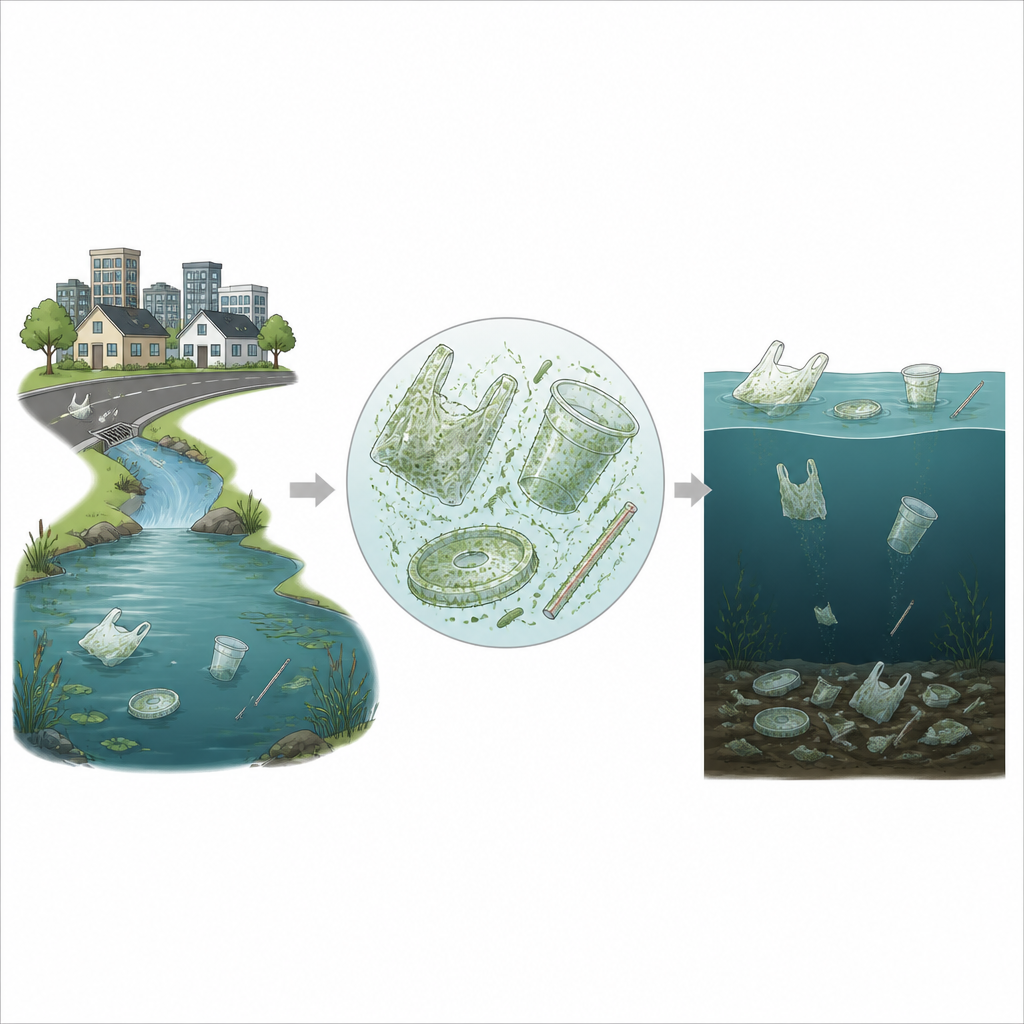
Everyday litter in a test pond
To explore what happens to common plastic items in fresh water, researchers set up large indoor tanks that mimicked an urban pond from autumn into early winter. Each tank received one type of intact macroplastic, like shopping bags, drink cups, coffee cup lids or straws, similar to the litter often seen along riverbanks. Over 12 weeks, they tracked how slimy coatings called biofilms formed on each plastic, how the mix of microbes changed and whether the pieces stayed afloat or sank.
A living skin that changes buoyancy
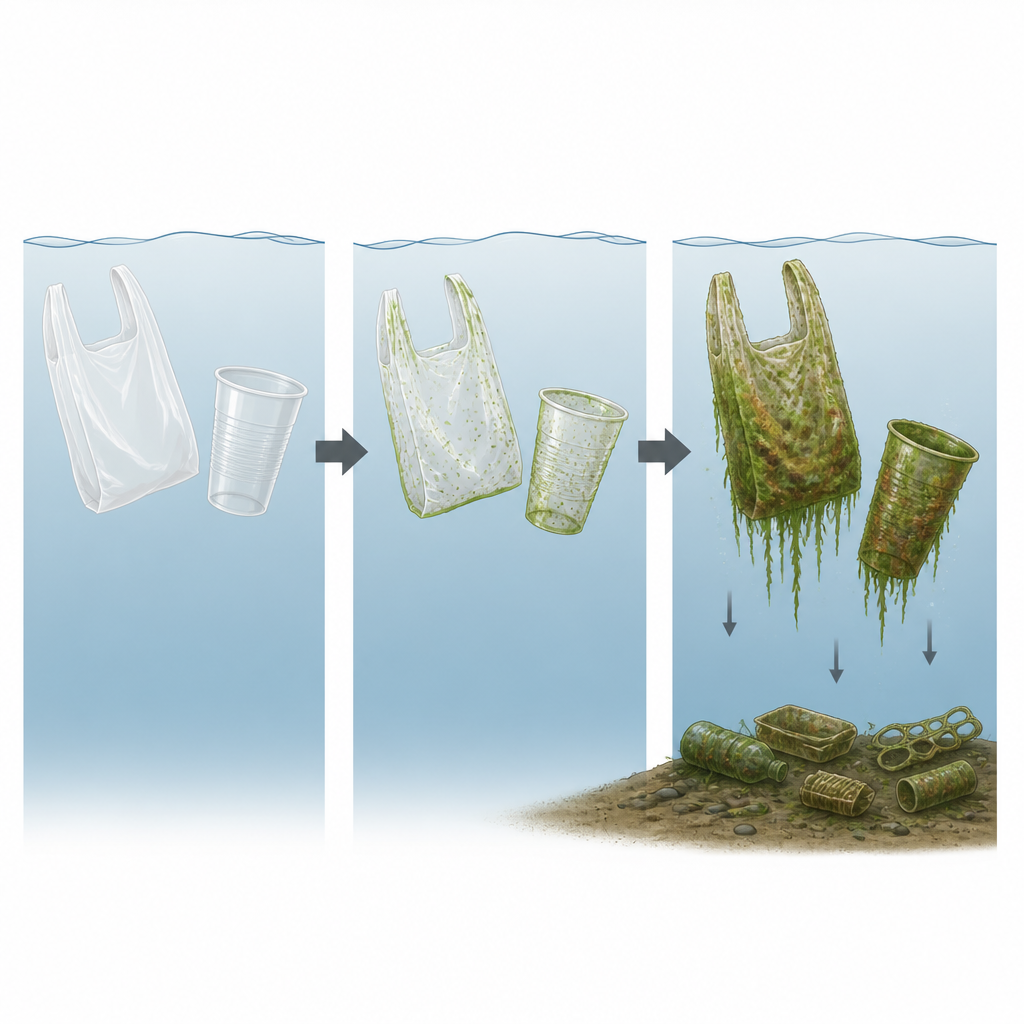
Across all items, bacteria and algae quickly colonized the plastic and then grew into thicker layers. Rougher surfaces, such as certain high density bags and polystyrene cup lids, supported especially dense growth. For most plastics the biofilm reached a peak around week eight before leveling off or declining. Although bacteria and cyanobacteria were numerous, algae made up about 99 percent of the biofilm’s thickness, forming a green coating that added noticeable weight. As this living skin thickened, many items that had floated at first began to sink. Thin, light bags were most affected, because even a modest amount of added mass could tip the balance and pull them down, while heavier cups and lids were less easily pushed under.
Who moves in on plastic surfaces
The microscopic community on the plastic shifted over time. Early on, a few groups of bacteria known for sticking to surfaces and sometimes for breaking down plastics were dominant. As weeks passed, the community became more diverse and algae and other late arriving bacteria took over. These changes were driven more by water conditions, such as oxygen levels, light and nutrients, than by the type of plastic. Biodegradable and conventional plastics hosted surprisingly similar sets of microbes. While potential plastic eating bacteria appeared in the early stages, their presence declined, suggesting that under realistic pond like conditions they are not yet able to break down large items quickly.
Water quality steers the plastisphere
Using statistical tools, the team showed that shifts in water quality explained more of the differences between microbial communities than the choice of plastic alone. Falling light and cooling temperatures over the season, along with changing nutrient levels, steered which microbes thrived on the plastic. At the same time, the plastics and their biofilms altered the water around them, for example by affecting oxygen levels. This two way interaction means that plastic is both shaped by, and helps to shape, the tiny life in freshwaters.
What this means for hidden plastic sinks
By the end of the experiment, six of the eight tested plastic items had sunk, revealing that many pieces of litter in real lakes and ponds may end up on the bottom rather than drifting away. The study shows that the roughness, shape and weight of an object, together with algae rich biofilms and local water conditions, decide its path. Because these large items can later fragment into smaller, more easily eaten particles, understanding this early settling stage is key. For the public, it means that plastics thrown into a canal or pond may not simply wash out to sea but can quietly build up in nearby sediments, affecting water quality and the organisms that live there.
Citation: Gebreyohanes Belay, B.M., Koelmans, A.A. & de Senerpont Domis, L.N. The role of biofouling and microbial colonization in shaping macroplastic fate in freshwaters. Nat Water 4, 610–620 (2026). https://doi.org/10.1038/s44221-026-00629-6
Keywords: freshwater plastic pollution, biofilm, macroplastics, microbial communities, plastic sinking