Clear Sky Science · en
Mapping histamine pathway networks in the human brain across cognition and psychiatric disorders
Why brain allergy chemicals matter to the mind
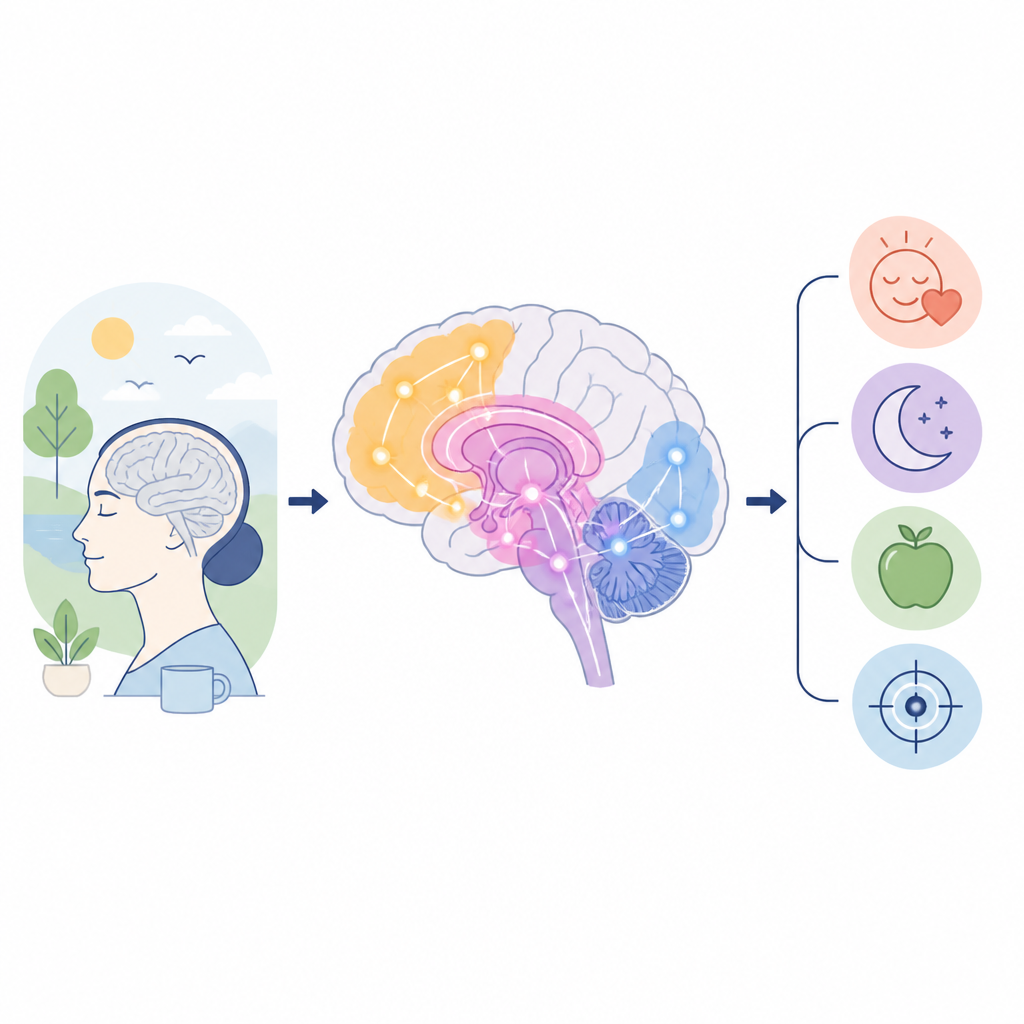
Most people meet histamine when they reach for an antihistamine during allergy season. Yet histamine is far more than a runny nose culprit. Inside the brain it acts as a powerful messenger that helps control wakefulness, attention, emotion, appetite and how flexibly we respond to change. This study pulls together many kinds of human brain data to map where and how histamine works, and how its patterns may relate to common mental health conditions.
Tracing histamine’s footprint in brain cells
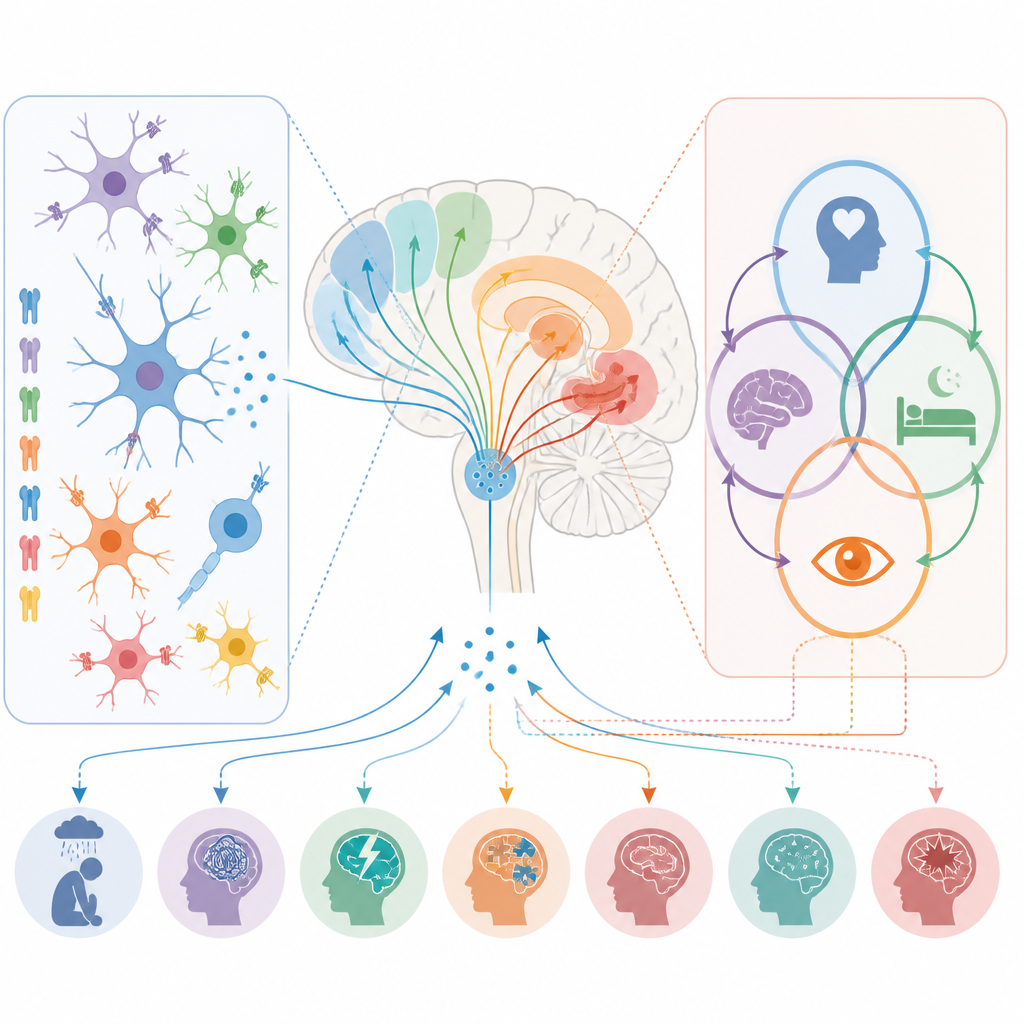
The researchers began by asking which brain cells carry the machinery to respond to histamine. Using single-cell gene maps from donated human brain tissue, they looked at genes for four histamine receptors and several enzymes that make or break down histamine. They found that two receptors, often linked to alertness and arousal, were most common in excitatory nerve cells that drive activity. A third receptor, known for acting as a brake on histamine release, showed up mainly in inhibitory cells that quiet down circuits. Enzymes that clear histamine were spread more widely across cell types, suggesting that many cells help fine tune how long histamine signals last.
Where histamine is strongest in the brain
Next, the team examined where these histamine-related genes are expressed across the whole brain. By combining tissue samples with a standard brain map, they showed that histamine-related genes are not evenly spread. Instead, a shared pattern emerged with higher expression in frontal and deep limbic regions involved in planning, motivation and emotion, and lower expression in back-of-the-brain visual areas. A single underlying gradient captured much of this variation. Crucially, this genetic pattern closely matched brain scans measuring the binding of one histamine receptor in living volunteers, suggesting that gene activity is a good stand-in for actual receptor presence.
Links to other brain chemicals and mental functions
Histamine does not work alone. By comparing their histamine map with brain scans of other neurotransmitter receptors, the authors found systematic alignments and contrasts. Regions rich in histamine-related genes tended to overlap with areas high in certain serotonin and opioid receptors while showing the opposite pattern to several other serotonin, dopamine, acetylcholine and glutamate targets. This mix of positive and negative relationships hints that histamine may help balance other chemical systems rather than simply marching in step with them. When the team overlaid their histamine gradient onto thousands of functional brain imaging studies, regions with stronger histamine signatures were most often active during tasks involving emotion, stress, fear, impulse control, reward, sleep and memory. Regions with weaker signatures were more tied to vision, attention to external sights and reading.
Histamine across development and in psychiatric illness
The study also tracked how histamine-related genes change from before birth through adulthood using a developmental brain atlas. The enzyme that makes histamine peaked late in pregnancy and soon after birth, pointing to an early role in wiring up brain circuits. In contrast, the key feedback receptor gradually increased from childhood into adulthood, echoing the slow maturation of frontal networks that support self-control. Finally, the authors compared their histamine map with large international datasets describing subtle brain structure differences in attention deficit hyperactivity disorder, major depression, schizophrenia and anorexia nervosa. Regions with high histamine signatures tended to show different patterns of thinning or surface change in these disorders, especially in attention, mood and eating conditions, suggesting that histamine-rich circuits may be particularly sensitive in certain forms of mental ill health.
What this means for everyday brain health
Taken together, this work paints histamine as a central organizer rather than a bit player in the human brain. It shapes the balance between excitation and inhibition, talks to many other chemical messengers and is strongly tied to regions that handle emotion, motivation, sleep and flexible thinking. The study does not prove cause and effect, but it offers a detailed atlas showing where histamine is likely to matter most and how its networks align with common psychiatric conditions. This map can guide future experiments and drug studies that test whether carefully adjusting brain histamine could help relieve problems with attention, mood, appetite and other aspects of mental health.
Citation: Martins, D., Veronese, M., van Wamelen, D. et al. Mapping histamine pathway networks in the human brain across cognition and psychiatric disorders. Nat. Mental Health 4, 816–828 (2026). https://doi.org/10.1038/s44220-026-00637-1
Keywords: brain histamine, neurotransmitters, cognition, psychiatric disorders, gene expression