Clear Sky Science · en
Childhood attention deficit hyperactivity disorder traits, societal exclusion and midlife psychological distress
Why early life traits can echo across decades
Many families know that attention deficit hyperactivity disorder (ADHD) can shape a child’s school days and friendships. But what happens decades later, when that child is in their forties? This study follows thousands of people born in Britain in 1970 to explore how signs of ADHD in childhood relate to emotional well-being in midlife, and how everyday barriers in health care, work, and relationships may help explain who ends up struggling most.
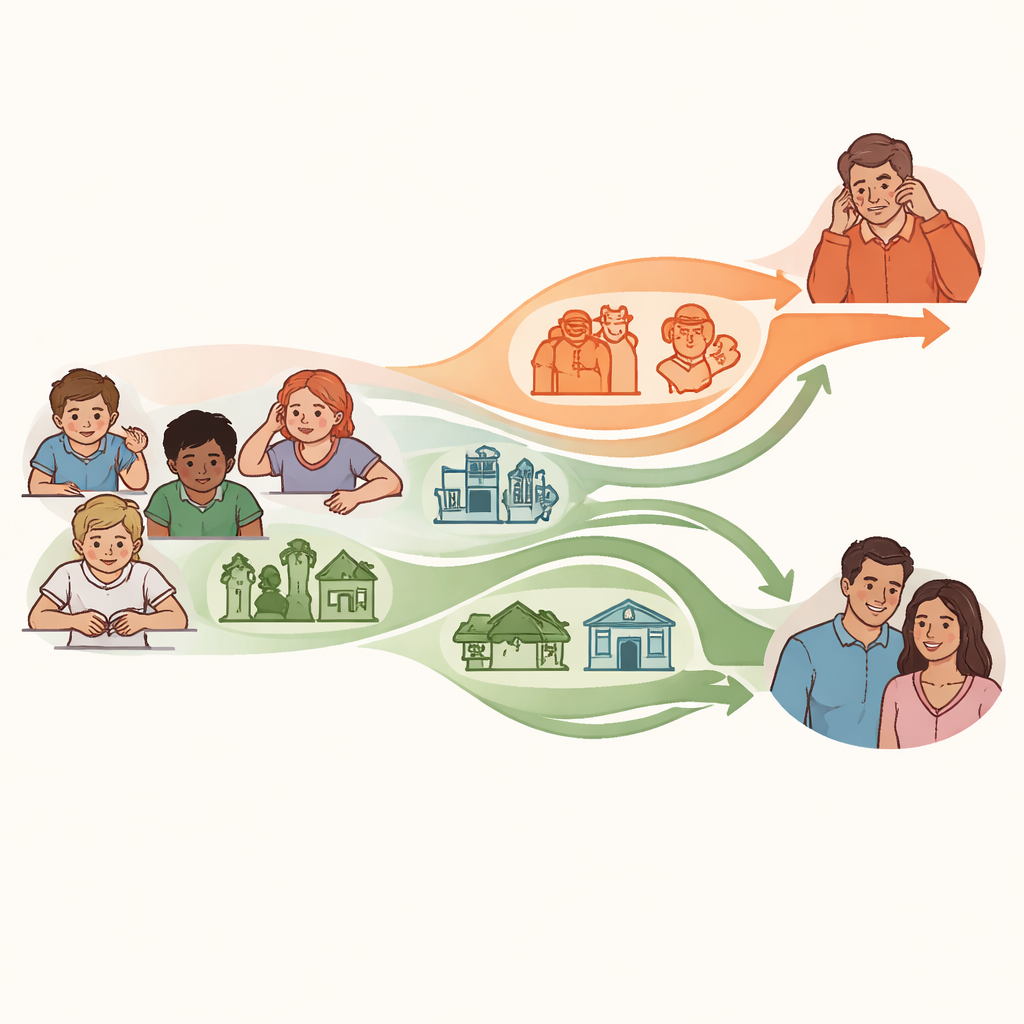
Following a generation from childhood to midlife
The researchers drew on the 1970 British Cohort Study, which has tracked more than 17,000 people from birth into their forties. When participants were ten years old, parents and teachers completed standard behaviour questionnaires. From these, the team built a reliable score capturing ADHD traits such as restlessness and difficulty concentrating. Later, at ages 26, 30, 34, 42 and 46, participants reported their psychological distress using a brief checklist of common symptoms like low mood and worry. This allowed the researchers to see not just a single snapshot of mental health, but how distress rose or fell across two decades of adulthood.
Different paths of emotional strain over time
Analysing these repeated measures, the team identified four broad patterns of distress. Most people fell into a “low or no distress” group, showing little emotional strain over time. A second group experienced moderate distress that eased as they aged. A third group started out relatively well but saw their distress increase over the years. A smaller group experienced persistently high distress from their twenties into their mid-forties. Children with higher ADHD traits were more likely to follow any of the three more troubled paths, especially the persistently high distress route, even after taking into account sex, ethnicity and childhood social class.
How social barriers shape long-term outcomes
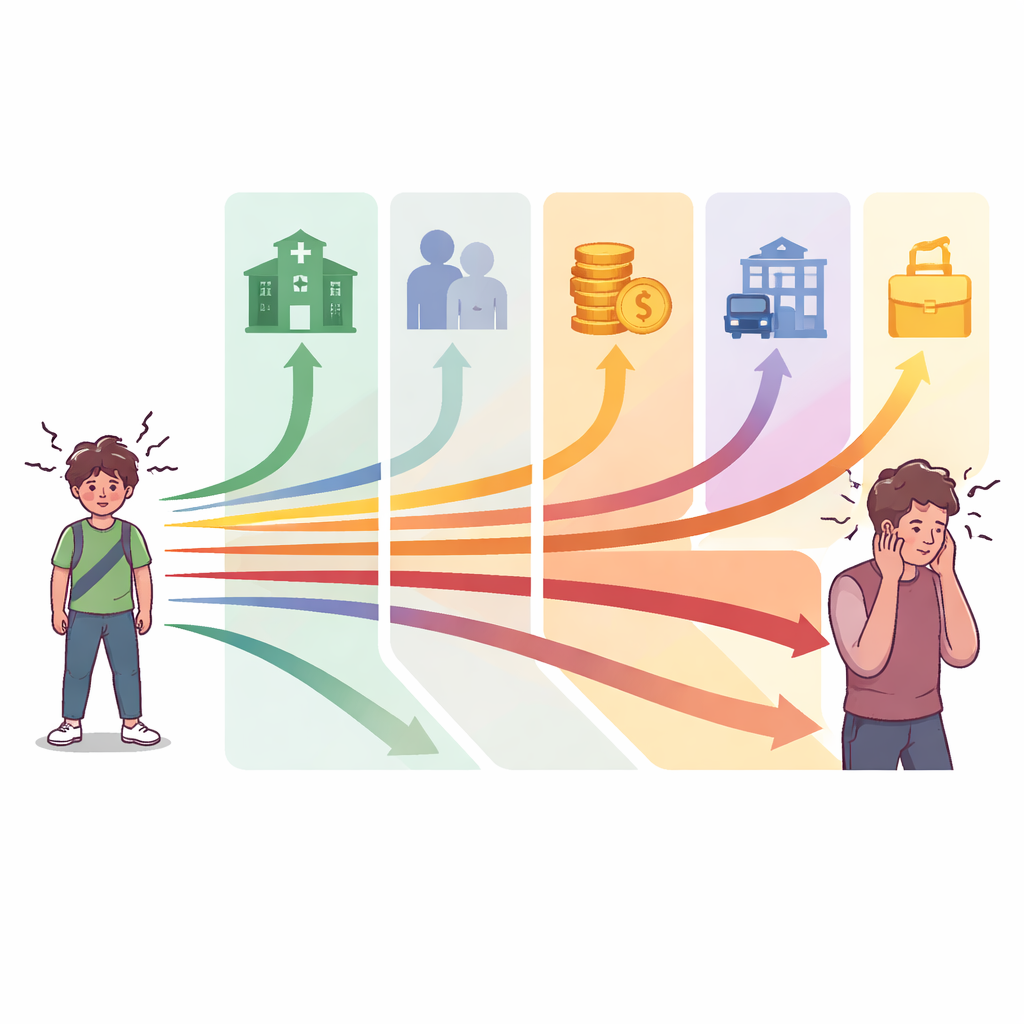
To understand why early ADHD traits might lead to greater distress decades later, the researchers looked at “societal exclusion” at age 34—ways in which people can be held back or left out in adult life. They measured five areas: health (such as poor health and limited control over daily life), relationships (lack of emotional support or close ties), politics (low involvement in civic life), economics (financial hardship or unemployment) and public services (poor local services like transport, education or health care). People with higher childhood ADHD traits were more likely, as adults, to report exclusion in all of these areas. In turn, exclusion in health, relationships, finances and services was linked to higher distress at age 46, suggesting these barriers act as stepping stones between early traits and later mental health. Political exclusion, while more common among those with ADHD traits, did not seem to influence distress in the same way.
Limits of the evidence and what comes next
Like all long-running studies, this work has caveats. ADHD traits and societal exclusion were each measured at only one age, so the researchers could not capture how these factors change over time or influence one another in both directions. The original cohort grew up in the 1970s and 1980s, when ADHD was poorly recognized and support was sparse, so the findings may not fully reflect the experiences of younger generations who receive earlier diagnosis and treatment. The sample also included relatively few people from minoritized ethnic backgrounds, limiting what can be said about how racism and other forms of discrimination intersect with ADHD and exclusion.
What this means for people with ADHD and society
For a child who shows strong ADHD traits, this study suggests that the story does not end with school reports. On average, those children had about a one-in-four chance of experiencing clinically important distress by midlife, compared with roughly one in five among their peers. The researchers argue that this gap is not simply an unavoidable consequence of ADHD itself. Instead, it is partly driven by preventable patterns of exclusion in health care, workplaces, communities and public services. By improving access to diagnosis and support early on, creating inclusive schools and workplaces, and ensuring fair access to good services and stable jobs, society may be able to soften the long-term emotional toll. In short, the paper concludes that supporting neurodivergent children and removing the barriers they face across adulthood could play a powerful role in protecting mental health well into midlife.
Citation: John, A., O’Nions, E., Corrigan, L. et al. Childhood attention deficit hyperactivity disorder traits, societal exclusion and midlife psychological distress. Nat. Mental Health 4, 566–573 (2026). https://doi.org/10.1038/s44220-026-00600-0
Keywords: ADHD across the lifespan, midlife mental health, social exclusion, longitudinal cohort study, neurodiversity and well-being