Clear Sky Science · en
Impaired regional structure-function coupling as novel neurophenotype: mechanistic insights and diagnostic exploration in treatment-resistant depression
Why some depression is harder to treat
Many people with major depression eventually feel better with standard medications. But for a sizeable minority, symptoms stubbornly refuse to lift despite trying several drugs. This form, called treatment‑resistant depression, brings heavy personal suffering and high risk of suicide. The study summarized here asks a simple but profound question: is there something different about how the brains of these patients are wired and working together, and could that difference help doctors spot who needs more intensive care sooner?
Looking at the brain from two angles
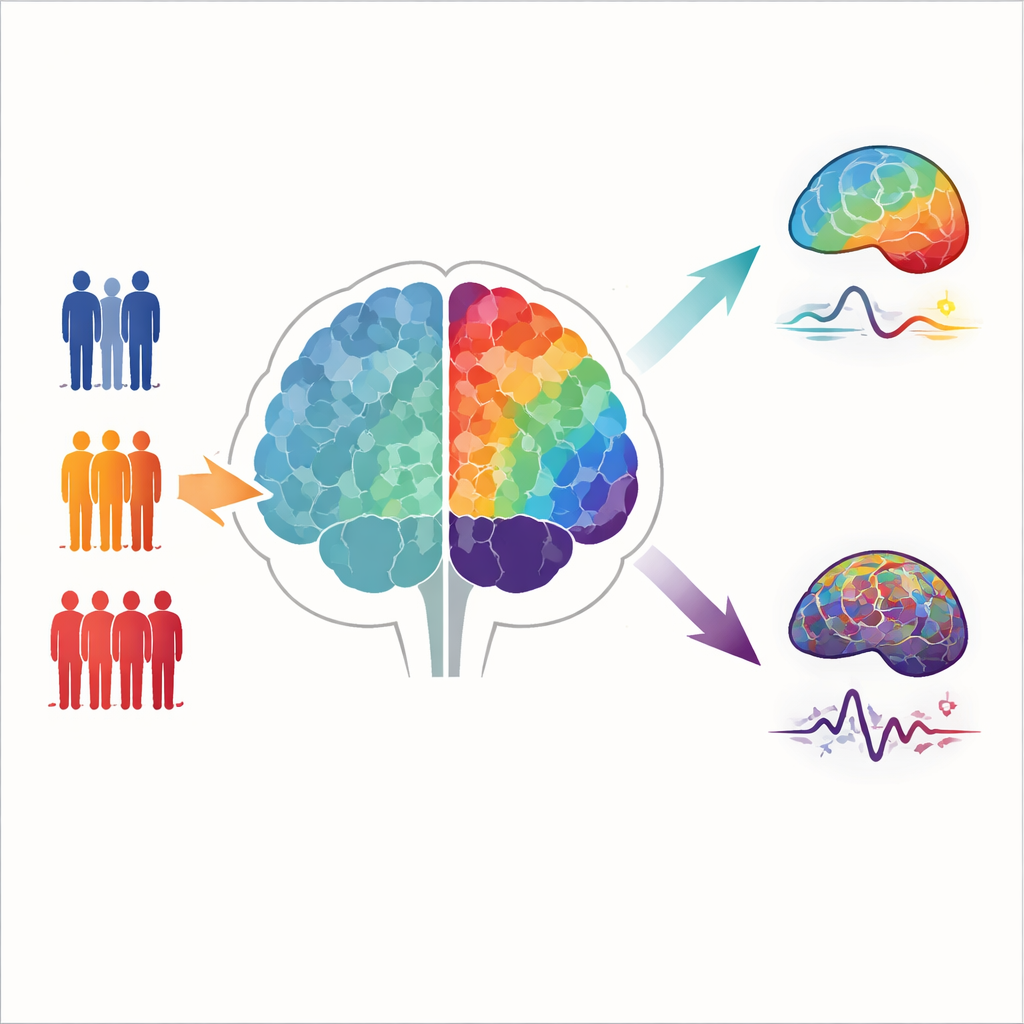
Most brain‑scanning studies of depression look either at brain structure – the physical tissue – or at brain activity – how regions fluctuate together over time. The authors instead focused on how tightly these two aspects are coordinated in each brain region, a property they call structure‑function coupling. In everyday terms, they examined how well the brain’s “hardware” supports its “software.” When hardware and software are in sync, information can flow efficiently. When they fall out of step, mental processes such as thinking clearly, regulating emotions, and controlling impulses may falter.
Who was studied and how
The research team scanned the brains of three groups of adults: people with treatment‑resistant depression, people with depression who had responded to treatment in the past, and healthy volunteers. Using high‑resolution MRI, they measured both the thickness and volume of gray matter in many small brain regions and the strength of slow, spontaneous activity in those same regions while participants rested quietly in the scanner. They then used a mathematical approach to quantify, for each region, how similar the structural and activity patterns were – a numerical score for how well local hardware and software matched.
Where brain coordination breaks down
When the researchers compared the groups, they found that treatment‑resistant patients showed pronounced uncoupling between structure and function in specific areas. These included parts of the front of the brain that help with planning and self‑control, and regions involved in moving the body and processing sounds and sensations. In these zones, the physical wiring and the ongoing activity patterns no longer lined up as well as they did in healthy volunteers and in patients whose depression was not resistant to treatment. This suggests that in hard‑to‑treat depression, key control and sensory systems have lost some of their internal coordination, potentially making it more difficult for people to shift out of painful mood states.
Clues to suicidal thoughts and hidden despair
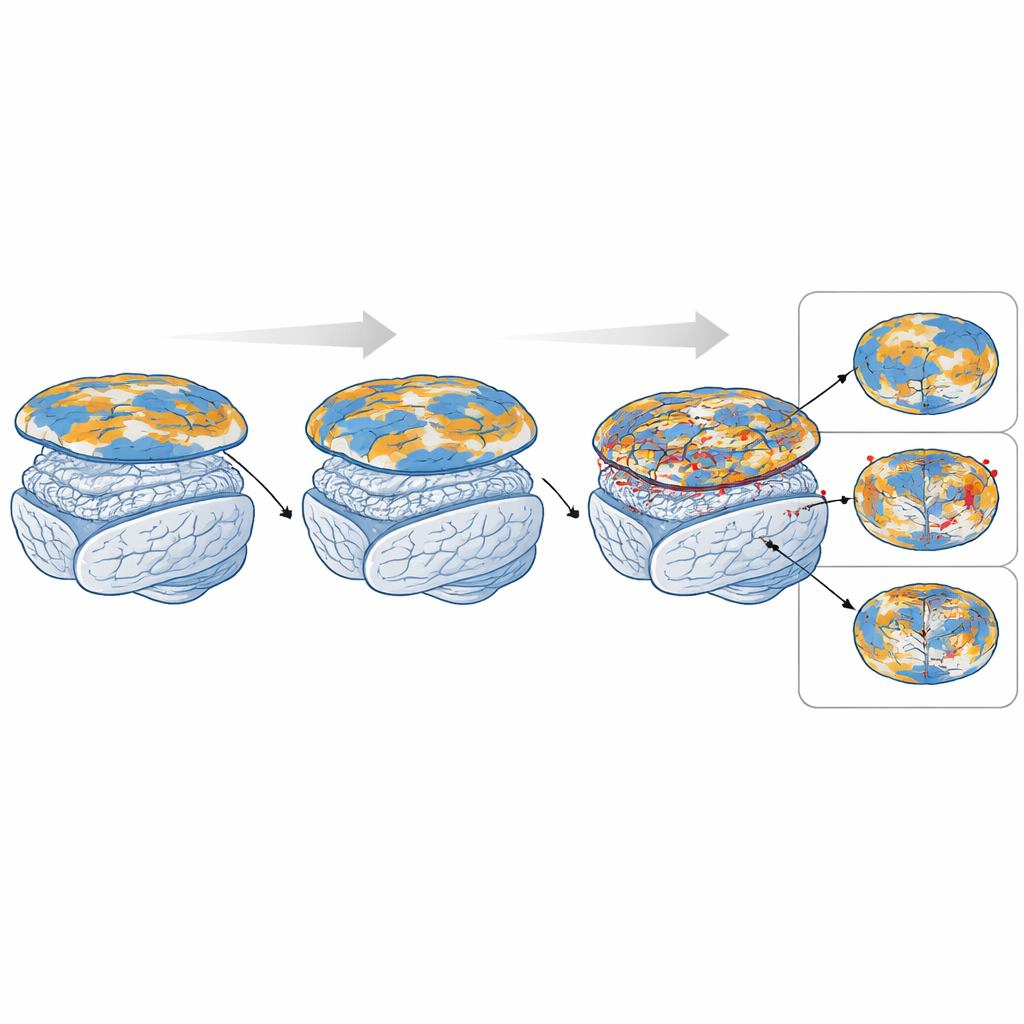
The team also examined how structure‑function coupling related to symptoms. In patients whose depression had not yet become treatment‑resistant, higher coupling in a region of the hippocampus – a structure important for memory and emotional context – was linked to stronger suicidal thoughts and deeper feelings of despair. Interestingly, this relationship disappeared in the treatment‑resistant group. One interpretation is that, earlier in the illness, certain brain circuits may still be mounting a kind of “over‑synchronized” response to emotional distress, whereas in long‑standing, resistant depression, those same circuits may have progressed to a more disorganized or disconnected state.
Teaching computers to spot difficult cases
To test whether these brain coordination patterns could help with diagnosis, the researchers trained computer models to distinguish treatment‑resistant patients from those who had responded to therapy, using only the coupling scores from brain regions that differed between groups. Two types of machine‑learning models, both widely used in medical prediction tasks, were able to tell the groups apart with high accuracy. Importantly, these models performed better than many earlier attempts that relied on a single kind of brain measure or on clinical information alone, suggesting that this combined view of structure and function carries especially useful information.
What this could mean for patients
Taken together, the findings point to disrupted coordination between brain wiring and brain activity as a distinctive fingerprint of treatment‑resistant depression. For patients, this line of work holds two hopeful possibilities. First, it may eventually allow doctors to identify, early on, who is at high risk for difficult‑to‑treat illness or serious suicidal distress, enabling closer monitoring and faster adjustment of therapies. Second, it hints that new treatments – from carefully targeted brain stimulation to novel medications – might work best when they are tailored to restore structure‑function harmony in specific networks, rather than simply dialing brain activity up or down everywhere at once.
Citation: Ye, X., Ye, S., Wei, S. et al. Impaired regional structure-function coupling as novel neurophenotype: mechanistic insights and diagnostic exploration in treatment-resistant depression. npj Mental Health Res 5, 27 (2026). https://doi.org/10.1038/s44184-026-00206-5
Keywords: treatment-resistant depression, brain imaging, structure-function coupling, suicidal ideation, machine learning