Clear Sky Science · en
CAMK2D causes heart failure in mice with RBM20 cardiomyopathy
Why faulty heart genes matter
Heart failure often sounds like a single disease, but it can arise from many different causes hidden in our DNA. One such cause is a gene called RBM20, which, when faulty, leads to an aggressive form of a weakened, enlarged heart that affects even young people and carries a high risk of sudden death. This study uses mice and heart cells to trace how a single broken molecular switch in RBM20 sets off a chain reaction that overstimulates another protein, CAMK2D, and shows that dialing down this overactive switch can rescue heart function. 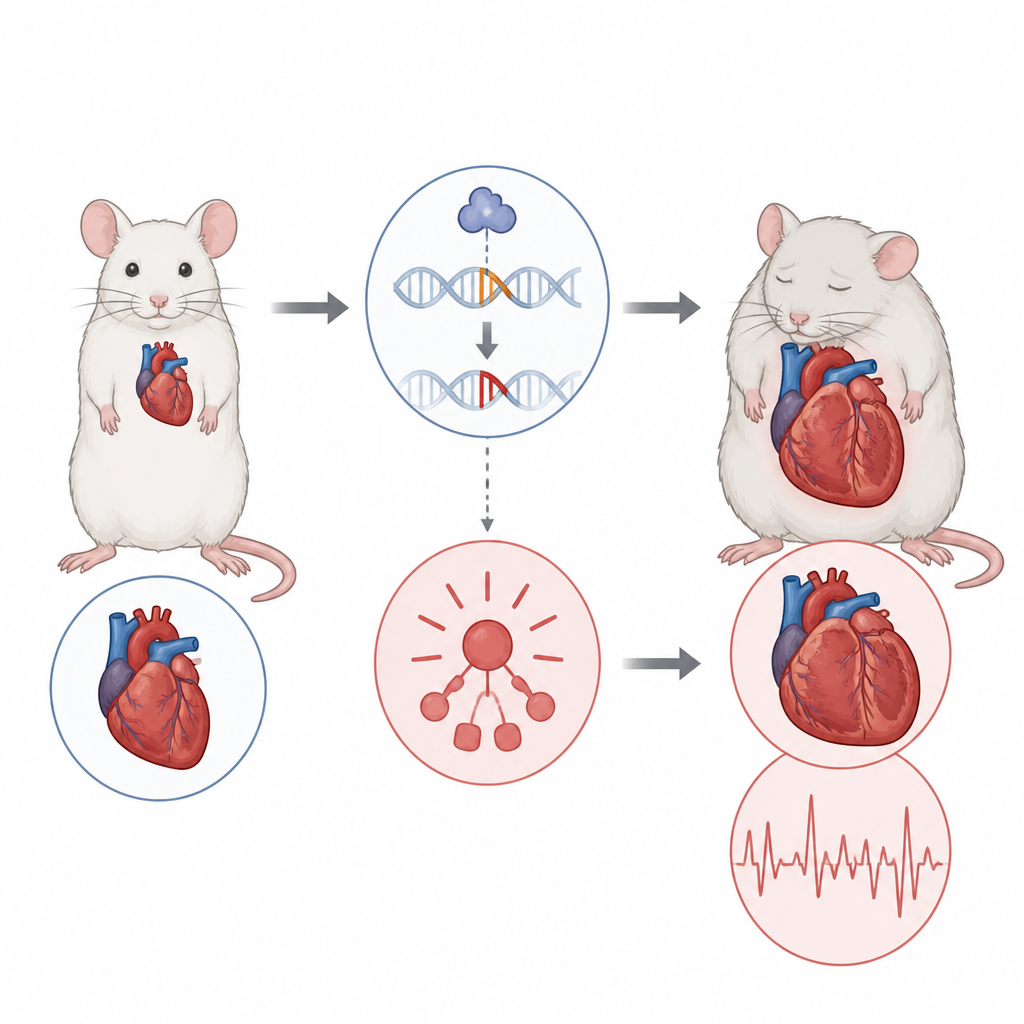
A closer look at a dangerous heart condition
Doctors group many patients under the label dilated cardiomyopathy, a condition where the main pumping chamber of the heart becomes stretched and weak. In about one third of patients, the problem is inherited, and a small but important fraction carry harmful changes in RBM20. This gene normally helps heart cells assemble working versions of many key proteins from raw RNA blueprints. When RBM20 is damaged, these blueprints are cut and pasted incorrectly, and patients develop early heart weakness and serious rhythm problems. Until now, it was unclear which of the many disturbed proteins was truly driving the failure of the heart.
From gene error to overactive heart enzyme
The researchers focused on CAMK2D, a signaling enzyme that reacts to calcium levels inside heart cells and fine-tunes how hard the heart contracts and relaxes. In normal hearts CAMK2D comes in several subtly different forms, but in mice and human heart cells lacking proper RBM20, the mix of forms is shifted and the total activity of CAMK2D is increased. The team showed that hearts from RBM20-deficient mice had higher levels of phosphate tags on known CAMK2D targets, a chemical mark of stronger signaling. At the same time, these mice developed poor pumping function and were much more likely to die after chemically triggered rhythm storms, mirroring the human disease.
Switching CAMK2D off protects the heart
To test whether CAMK2D was merely a bystander or a key culprit, the scientists bred double knockout mice that lacked both RBM20 and CAMK2D. Strikingly, these double mutants kept the same abnormal processing of other RBM20 targets, but their heart pumping was largely preserved and they were less prone to sudden death after rhythm challenges. When the team reintroduced individual forms of CAMK2D into the double knockout hearts using a gene-carrying virus, heart function deteriorated again regardless of which form was added. This showed that the simple overactivity of CAMK2D, rather than the exact pattern of its different forms, is enough to drive heart failure in this setting. 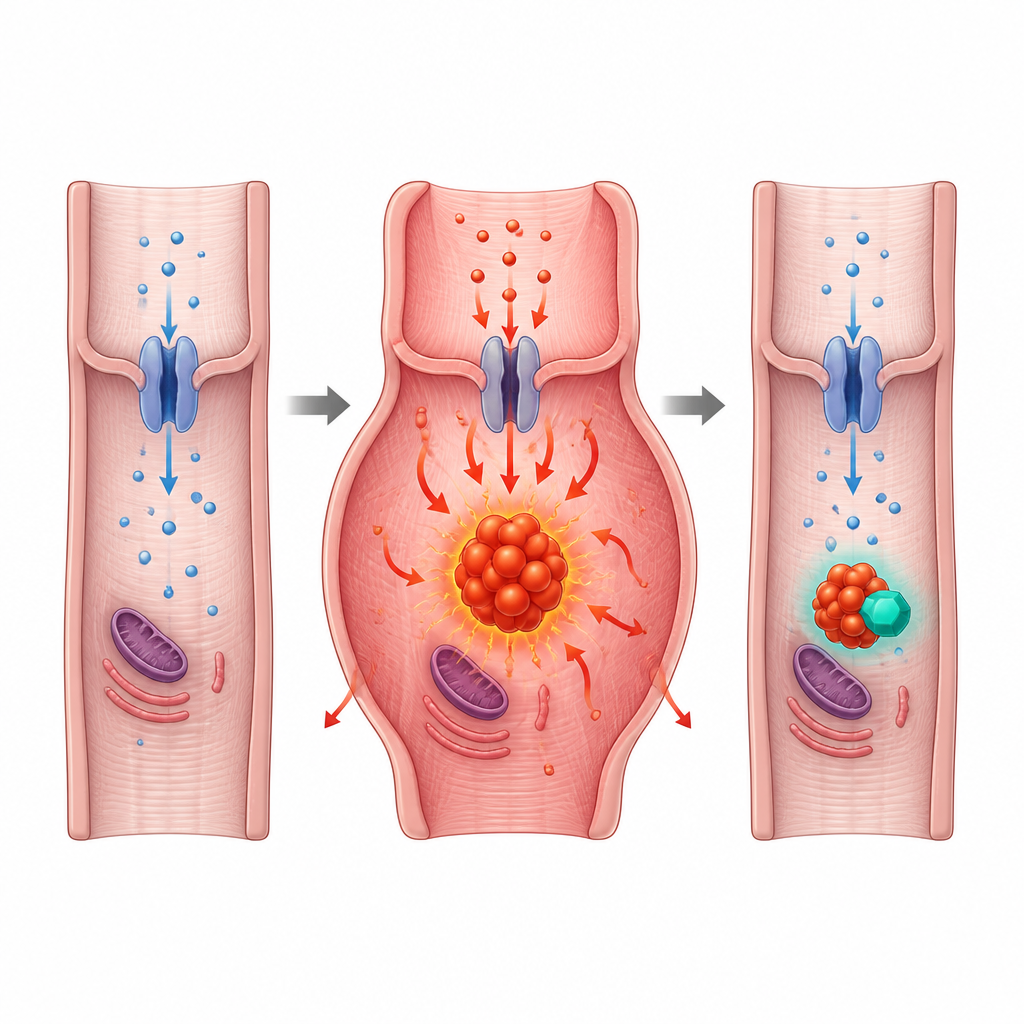
A drug that calms the overactive signal
The study then turned to a more patient-like mouse model that carries a human RBM20 mutation known to cause harmful granules in the cell fluid and severe heart weakness. These animals were treated with hesperadin, a small molecule that blocks the energy site of CAMK2 enzymes. Over four weeks, treated mice showed clear improvement in heart pumping and a trend toward smaller, better-shaped hearts, while the underlying RBM20 mutation and its abnormal clustering in the cell remained unchanged. Detailed protein and phosphate mapping confirmed that CAMK2D-linked signaling was toned down by the drug, affecting hundreds of modified sites across many heart proteins.
What this means for future heart care
Together, these experiments identify CAMK2D overactivation as a central engine of heart failure in RBM20-related disease. Instead of trying to fix each RBM20 mutation one by one, which would require complex gene editing tailored to every family, the work points to a shared downstream target that could be blocked with pills or injections. While hesperadin itself also hits other enzymes and may not be the final medicine, the results strongly support developing selective CAMK2D blockers as cause-directed treatments for patients with RBM20 cardiomyopathy, on top of today’s general heart failure drugs.
Citation: van den Hoogenhof, M.M.G., Duran, J., Britto-Borges, T. et al. CAMK2D causes heart failure in mice with RBM20 cardiomyopathy. Nat Cardiovasc Res 5, 479–491 (2026). https://doi.org/10.1038/s44161-026-00818-2
Keywords: RBM20 cardiomyopathy, CAMK2D, dilated cardiomyopathy, heart failure genetics, targeted heart therapy