Clear Sky Science · en
Polygenic risk score and 20-year prostate cancer-specific mortality and survival
Why Your Genes Matter for Prostate Cancer
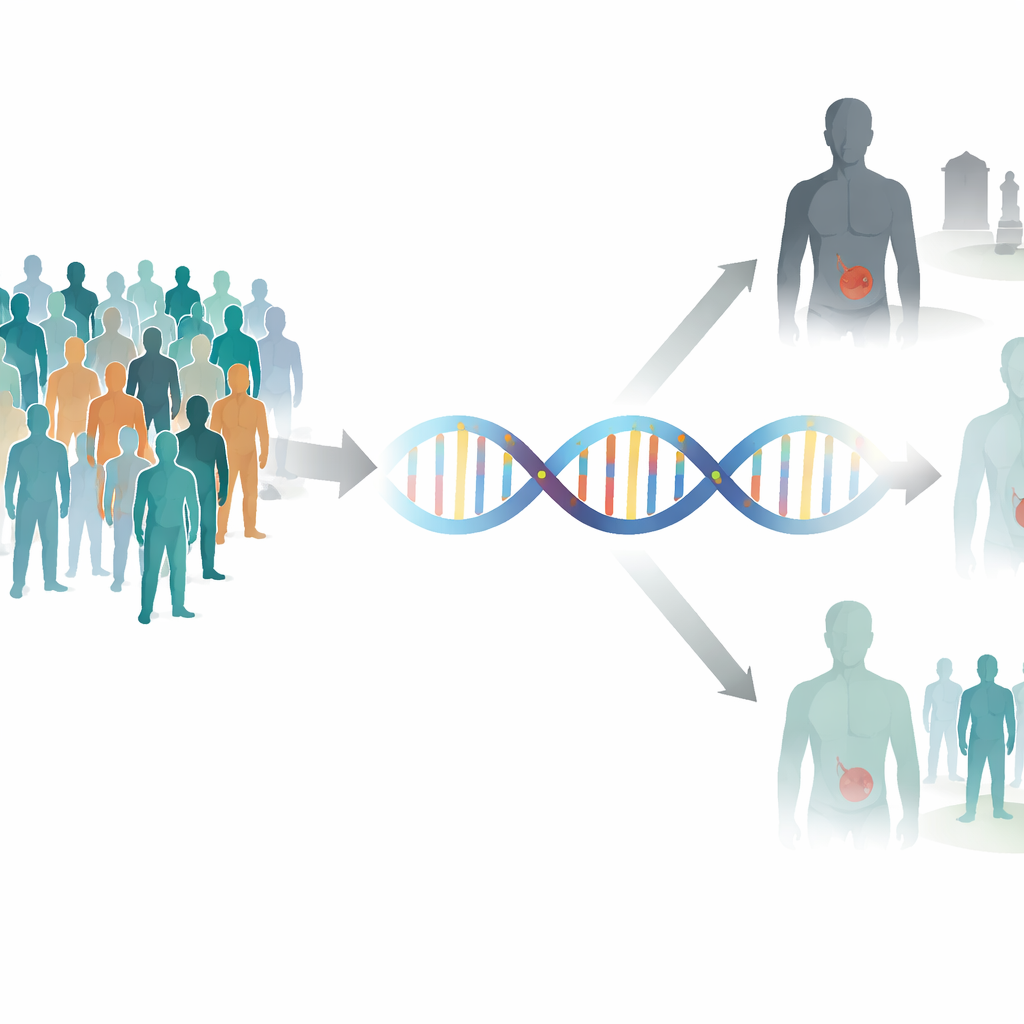
Many men know that prostate cancer runs in families, but few realize how complex that inherited risk can be. This study asks a question with direct relevance for patients and their families: if your genes put you at higher risk of getting prostate cancer, do those same genes also make you more likely to die from it once it appears? Using long-term data from nearly 20,000 men, researchers explored whether a combined “genetic risk score” can help predict not only who gets prostate cancer, but who is most likely to die from the disease over 20 years.
A Combined Score for Inherited Risk
Instead of focusing on a single “cancer gene,” the researchers used a polygenic risk score—a summary of 451 common genetic variants, each nudging prostate cancer risk up or down by a small amount. These variants were discovered in large genetic studies across many ancestry groups. For each man, the team added up the effects of all available variants to calculate a single score. They then followed men in two long-running health studies in Sweden and the United States, most of whom did not have widespread prostate-specific antigen (PSA) screening when they first entered the study. Over more than two decades, they tracked who developed prostate cancer and who eventually died from it.
Genes, Cancer Risk, and Death
Men whose genetic score was at or above the median had about three times the risk of being diagnosed with prostate cancer compared with men below the median. Strikingly, their risk of dying from prostate cancer was at least as high, and in some analyses slightly higher, than their risk of being diagnosed. This suggests that inherited factors captured by the score are not just pushing up the number of cancers found; they may also be linked to cancers that are more likely to become life-threatening. When the researchers removed genetic variants that are tied to PSA levels—changes that might simply make tumors easier to detect—the relationship between genetic score and risk of death among diagnosed patients became somewhat stronger.
Age Makes the Picture More Complicated
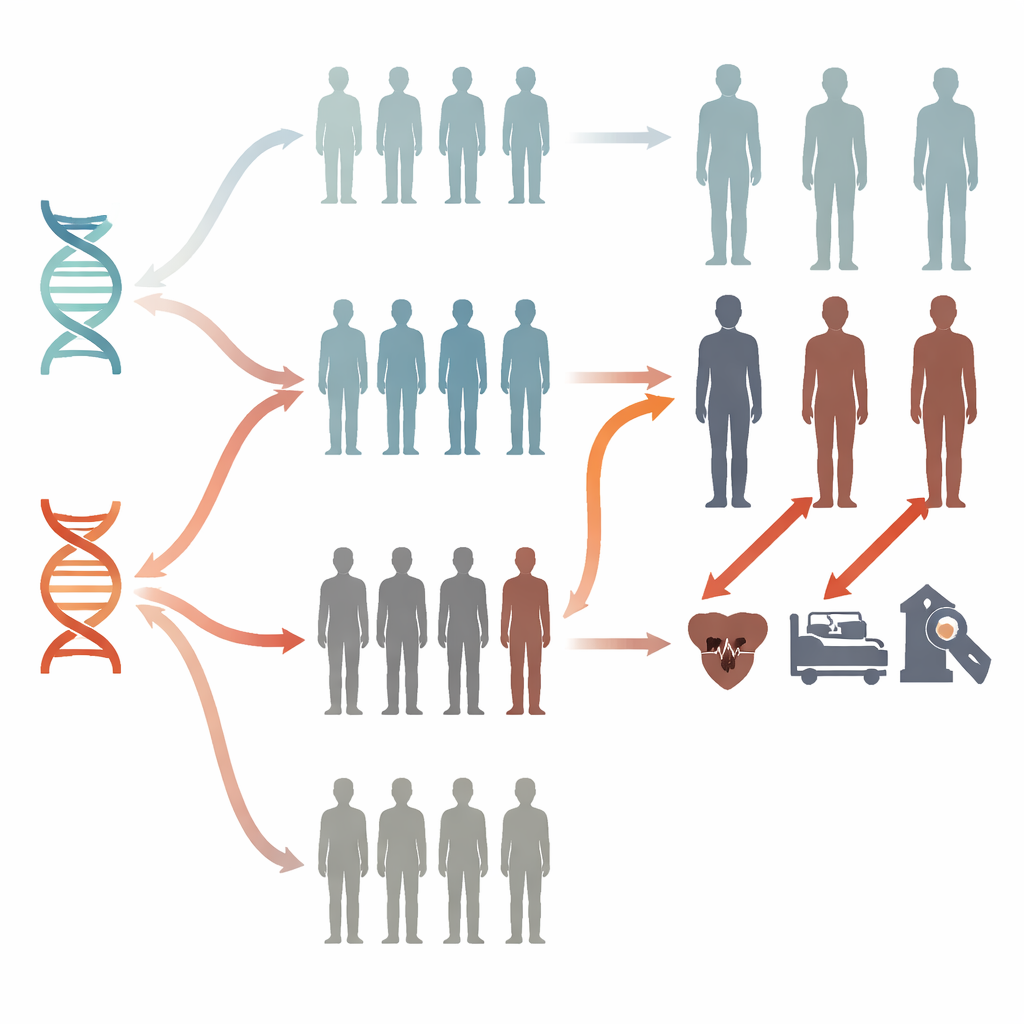
To see how genetic risk relates to survival once cancer has developed, the team examined only men who had already been diagnosed and looked at how long they lived. When all ages were combined, men with higher genetic scores had only a modestly higher risk of dying from prostate cancer. But when the researchers separated men by age at diagnosis, a clearer pattern emerged. Among men diagnosed between ages 65 and 74—a large share of all cases—those with higher scores had up to nearly twice the risk of prostate cancer death over 20 years, even after taking into account tumor features, treatments, smoking, and body weight. In contrast, in younger men, high genetic scores did not clearly predict worse outcomes, possibly because early detection and curative treatment were more common in this group.
Hidden Pitfalls in Survival Studies
The study also highlights statistical traps that can mislead doctors and researchers. When analyses include only people who have already developed cancer, factors that strongly influence who gets the disease—like this genetic score—can distort survival patterns. This kind of selection effect can, paradoxically, make powerful risk factors look weaker or even protective in some age groups. The authors show that such “collider” and related biases are likely shaping the survival results, especially at very young or very old ages, and that full-cohort analyses that begin before diagnosis may provide a more reliable picture of how genes relate to both incidence and death.
Clues from Individual Genetic Changes
Looking more closely at the 451 genetic variants, the researchers identified 16 that seemed particularly tied to prostate cancer death. Some lie in DNA regions already linked to aggressive tumors, while others alter proteins involved in DNA repair or cell growth control. For most of these variants, the link with dying of prostate cancer was stronger than the link with being diagnosed at all, reinforcing the idea that certain inherited changes may help drive more dangerous disease. However, the authors caution that these detailed findings come from relatively small numbers and need confirmation in other studies.
What This Means for Patients
Overall, this work suggests that a man’s inherited genetic profile, summarized in a polygenic risk score, is relevant not only for whether he will develop prostate cancer, but also for how serious the disease may become, particularly if it is diagnosed around his late 60s or early 70s. At the same time, the study warns that standard survival analyses can be skewed when applied to such powerful genetic risk measures. For patients and clinicians, these insights point toward a future in which genetic scores may help tailor screening and follow-up, while underscoring the need for careful methods to ensure that genetic information is interpreted correctly and used safely in medical decisions.
Citation: Plym, A., Wang, A., Stopsack, K.H. et al. Polygenic risk score and 20-year prostate cancer-specific mortality and survival. Commun Med 6, 243 (2026). https://doi.org/10.1038/s43856-026-01603-9
Keywords: prostate cancer, genetic risk, polygenic risk score, cancer survival, personalized screening