Clear Sky Science · en
Characterizing healthcare provider experiences delivering genomic testing in a Federally Qualified Health Center
Why this matters for everyday health care
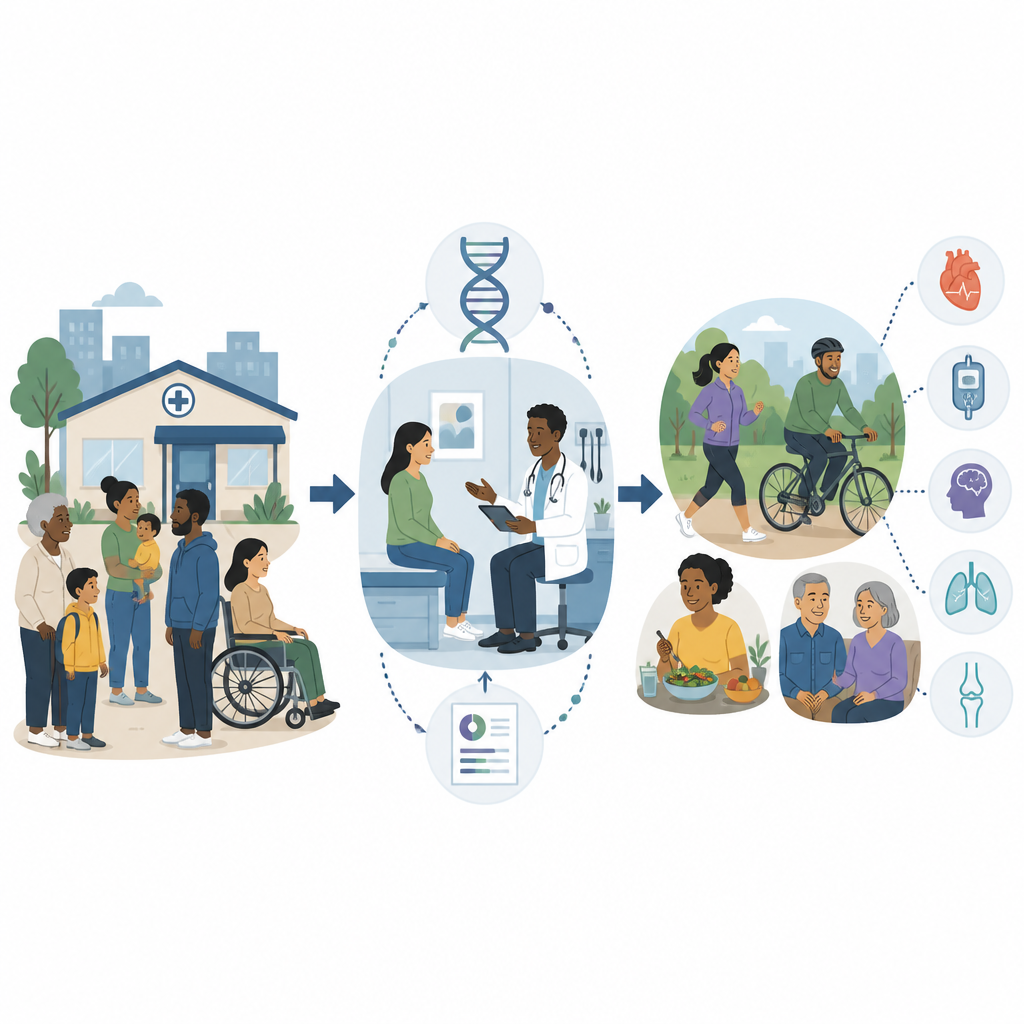
Genetic tests are moving out of research labs and into regular doctors’ offices, but not everyone has the same chance to benefit. This study looks at what happens when advanced genomic testing is offered in a safety net clinic that serves mostly Latino patients with limited resources. By listening closely to the doctors and nurse practitioners doing this work, the researchers reveal both the promise of these tests and the real-world obstacles that could widen or narrow health gaps.
Genetic testing in a safety net clinic
The study took place in a large community health center in Phoenix, Arizona, known as a Federally Qualified Health Center. These clinics care for anyone who walks through the door, regardless of insurance or ability to pay, and many patients face financial strain, language barriers, and low health literacy. As part of a national project called eMERGE IV, 14 providers at this clinic helped deliver two types of genomic testing to their patients: polygenic risk scores, which combine many genetic markers to estimate risk for common conditions such as heart disease and diabetes, and tests for single high-impact gene changes. The research team used surveys and in-depth interviews to understand how these providers experienced using such tests in their everyday practice.
What providers felt confident doing
Survey results showed that most providers felt at least somewhat confident explaining genomic test results and using them to guide health advice. Many said the reports were understandable and useful for their patients’ care. During interviews, several described concrete ways the information helped: uncovering family histories that patients had never mentioned, motivating healthier habits, or reassuring anxious patients when their genetic risk looked lower than feared. In some cases, test results reinforced decisions about screening for conditions like breast or prostate cancer, making shared decisions with patients feel more grounded.
Hidden obstacles inside short visits
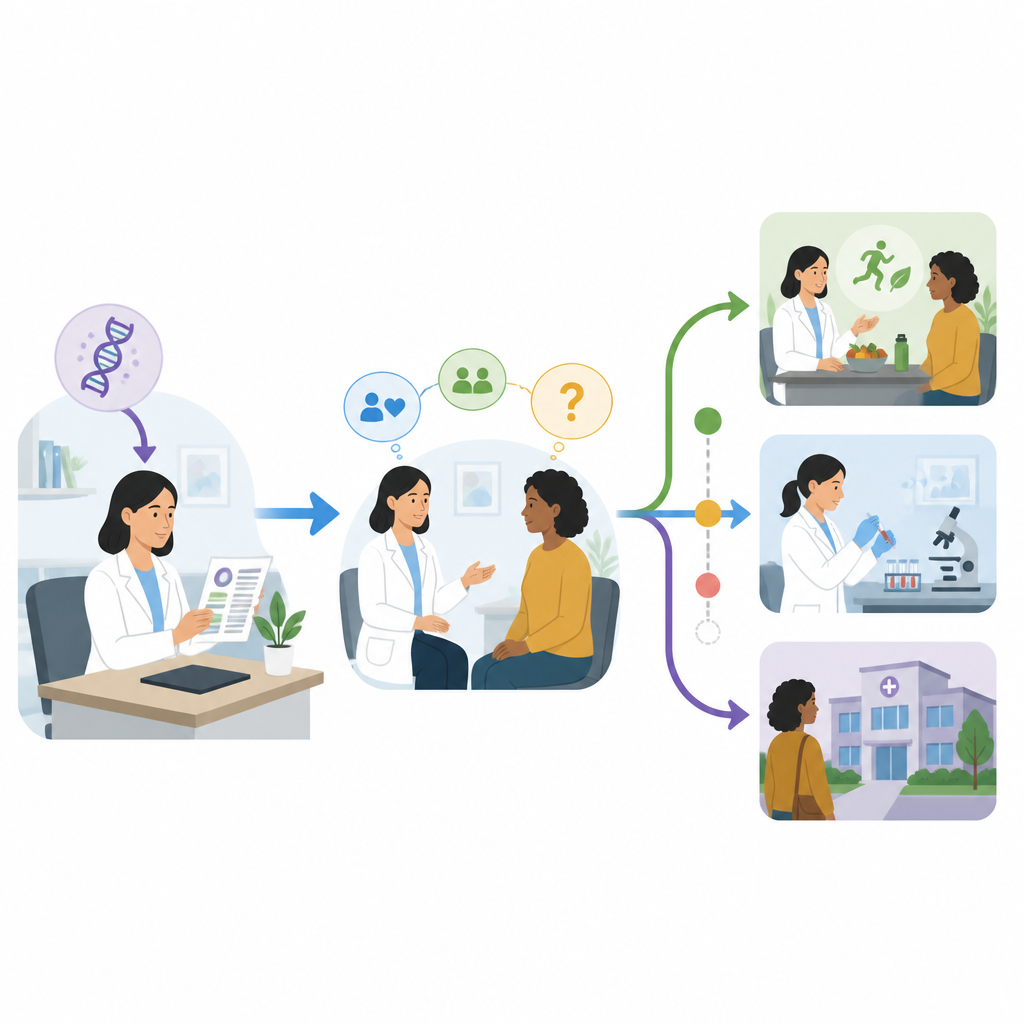
Despite this overall openness, providers repeatedly returned to a simple reality: there is never enough time. Visits in this clinic are already packed with managing chronic illnesses, medications, and social challenges. Adding complex genetic information felt overwhelming, especially when guidance came in long technical documents. Many providers wished for extra human support, such as on-site genetic counselors, to help interpret results and talk with patients. They also had to navigate wide differences in patients’ health literacy. Some patients could not read, yet were curious and even excited about the tests, which pushed providers to find plain-language, culturally tuned ways to explain abstract ideas like genetic risk.
Money, follow-up care, and tough choices
Genomic results often recommended extra tests, specialist visits, or long-term monitoring. For patients with limited insurance coverage or tight budgets, these next steps were not always realistic. Providers worried about sending patients on expensive paths that might not change treatment or outcomes. They described using shared decision making to weigh the value of extra care against financial strain, sometimes choosing smaller steps that could be done within the health center itself. Some questioned ordering such tests at all if they suspected that patients would refuse or be unable to act on the findings, highlighting a tension between offering cutting-edge tools and respecting real-world constraints.
What this means for fair access to genomic medicine
The study concludes that genomic testing can be helpful in community clinics, sparking important conversations and sometimes improving care, but it is not a plug-and-play solution. In under-resourced settings, providers need more time, training, and specialized support, along with systems that address follow-up costs and access to specialists. Without these supports, genetic tests risk adding pressure to already stretched clinics and may deepen rather than lessen health disparities. With careful investment in staff, education, and financial pathways, however, genomic medicine could become a practical tool to improve health for patients who have long been left out of such advances.
Citation: Gur-Arie, R., Quijada, R., Hernandez, V. et al. Characterizing healthcare provider experiences delivering genomic testing in a Federally Qualified Health Center. Commun Med 6, 299 (2026). https://doi.org/10.1038/s43856-026-01579-6
Keywords: genomic testing, primary care, health disparities, Federally Qualified Health Center, Latino patients