Clear Sky Science · en
An integrative molecular map of pediatric B-cell precursor acute lymphoblastic leukemia
Why this childhood cancer study matters
Pediatric B‑cell precursor acute lymphoblastic leukemia (BCP‑ALL) is the most common childhood cancer, and modern treatments cure most children. Yet some still relapse or suffer serious side effects from intensive therapy. This study set out to understand, in unprecedented detail, why children with what looks like the “same” leukemia can have such different journeys. By layering several kinds of molecular measurements from over a thousand young patients, the researchers built an integrated map that links the biology of leukemia cells to how they respond to drugs and, ultimately, to children’s outcomes.
Looking at leukemia from many angles
Traditional studies often zoom in on one kind of information at a time, such as DNA mutations or gene activity. Here, the team combined four layers of data from 1,231 children: changes in single DNA letters, patterns of DNA methylation (a chemical tag that affects how genes work), overall gene activity, and how each child’s leukemia cells responded to ten different chemotherapy drugs in the lab. They used a mathematical method called Multi‑Omics Factor Analysis to distill this huge dataset into ten “cross‑modal elements,” or CMEs. Each CME represents a hidden pattern shared across the different data types and patients, capturing key aspects of leukemia biology in a compact way. 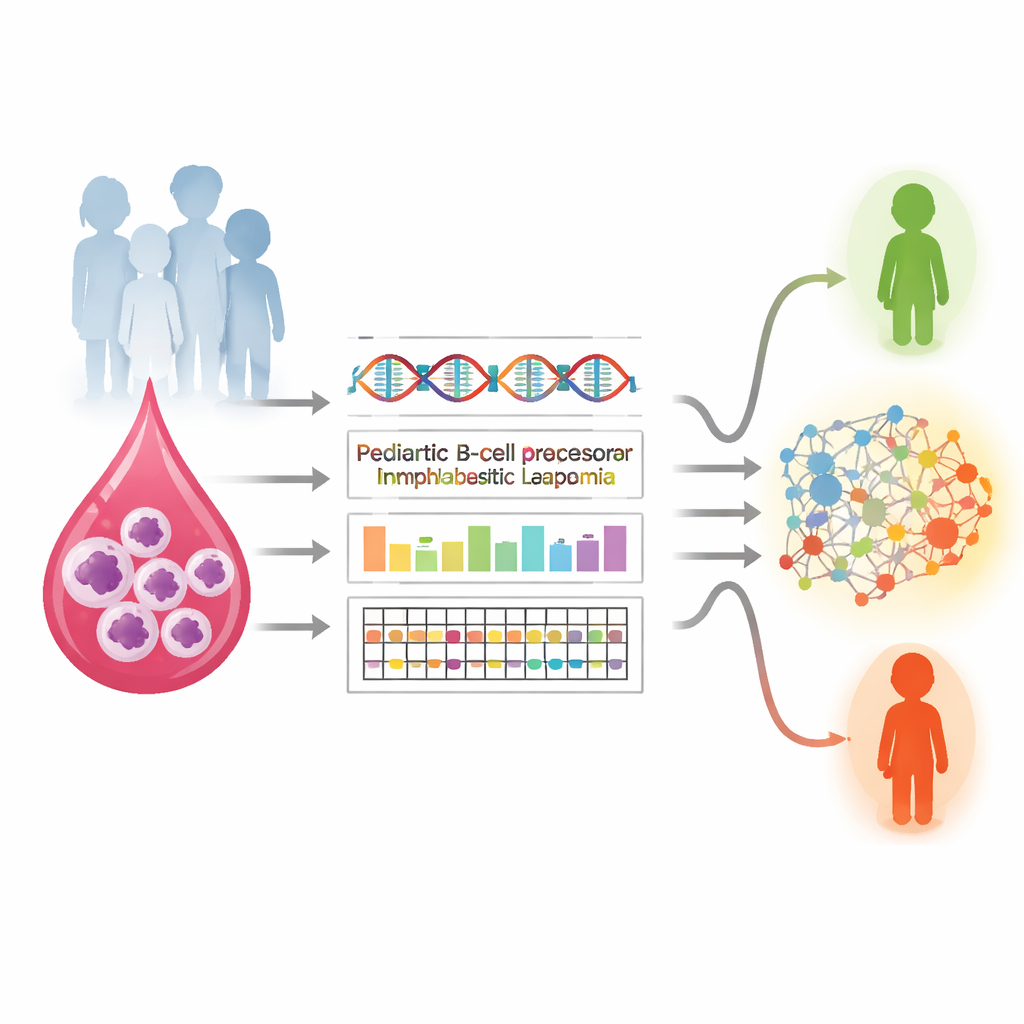
Hidden patterns behind leukemia subtypes and immunity
Some CMEs aligned strongly with familiar clinical categories. For example, the first two CMEs tracked well with well‑known genetic subtypes of BCP‑ALL, such as high‑hyperdiploid leukemia and the ETV6::RUNX1 subtype, which have distinct risks and treatment responses. Other CMEs were enriched for genes involved in immune function, cell division, and how cells process energy. By examining which genes and DNA regions contributed most to each CME, the researchers could connect these abstract mathematical factors to concrete biological processes like B‑cell development, immune signaling, and the machinery that controls whether cells divide or die.
Drug response fingerprints with prognostic power
Crucially, several CMEs tied together molecular features with how leukemia cells responded to chemotherapy drugs tested outside the body. One striking example involved children with high‑hyperdiploid leukemia, a subtype usually considered good‑risk. Within this group, the team found a subgroup whose leukemia cells showed a particular DNA methylation pattern linked to weaker killing by the drug doxorubicin in the lab. Children in this subgroup had a higher chance of relapse, even though standard clinical measures did not flag them as especially high‑risk. Other CMEs revealed links between cell‑division genes and sensitivity to vincristine, and between a set of stress‑response genes and response to topoisomerase‑targeting drugs like doxorubicin and amsacrine. 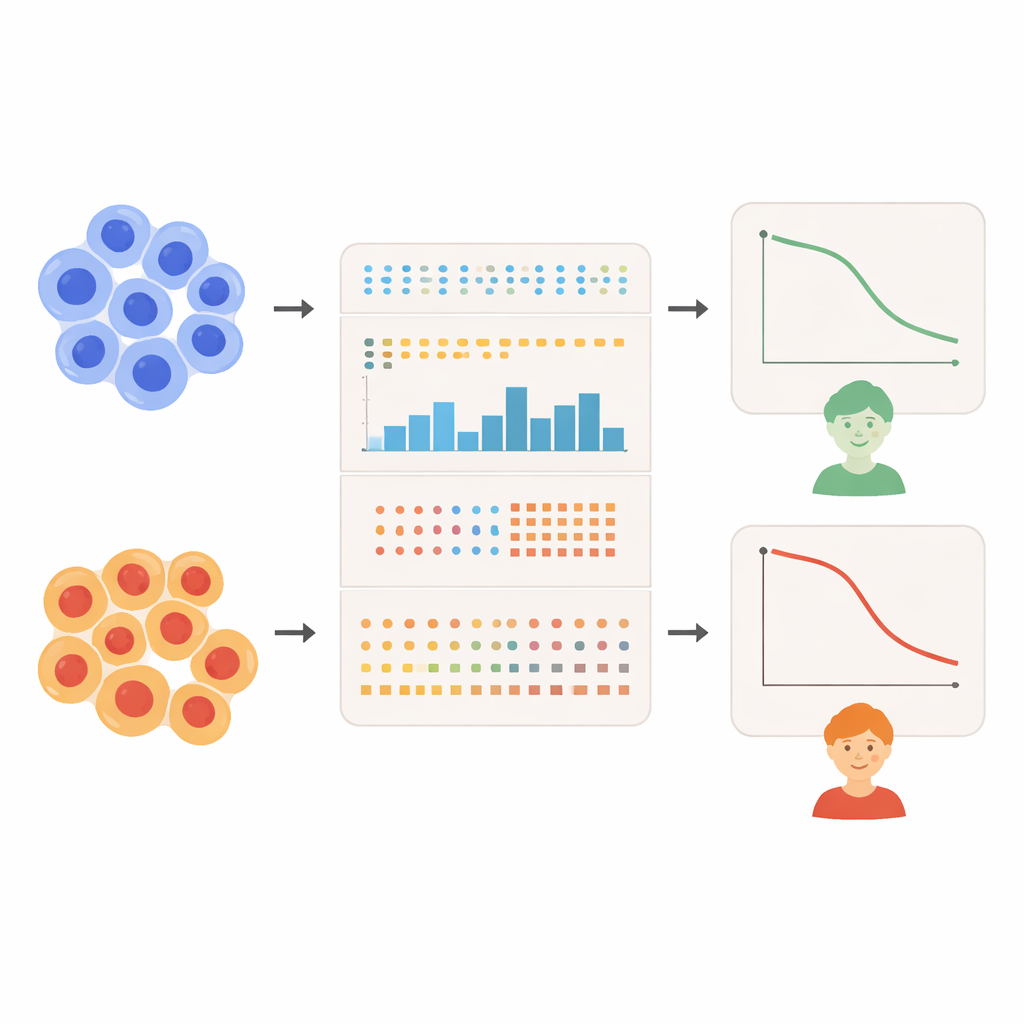
Improving risk prediction beyond standard clinical tools
The team then asked whether these integrated patterns could help predict which children were more likely to experience relapse or other serious events. They built survival models that combined standard clinical risk factors with CME‑derived features, especially the ex vivo drug‑response measures. In several cases, models that included these integrated drug‑response signatures outperformed models based on clinical information alone. This suggests that how a child’s leukemia cells behave when actually exposed to chemotherapy, together with their molecular fingerprints, captures important risk information that is invisible to routine tests.
What this could mean for future patients
In everyday terms, this work shows that childhood leukemias that look similar under the microscope can behave quite differently because of subtle, layered molecular differences. By reading those layers together—DNA marks, gene activity, and direct drug sensitivity—the researchers could uncover “hidden” high‑risk groups within otherwise favorable subtypes and identify biological pathways linked to drug resistance. While the study does not yet change treatment on its own, it provides a roadmap for more precise risk stratification and, eventually, more tailored therapy: sparing some children from unnecessarily harsh treatment while identifying others who may need closer monitoring or alternative drug combinations.
Citation: Krali, O., Enblad, A.P., Sulyaeva, J. et al. An integrative molecular map of pediatric B-cell precursor acute lymphoblastic leukemia. Commun Med 6, 222 (2026). https://doi.org/10.1038/s43856-026-01568-9
Keywords: pediatric leukemia, multiomics, drug response, risk stratification, precision medicine