Clear Sky Science · en
System-level clustering of testosterone-related biomarkers identifies high-risk aging profiles linked to inflammation and renal function
Why this study matters for men’s health
Many men have their testosterone checked, yet a single number on a lab report often raises more questions than answers. This study asks a simple but important question: what if testosterone only makes sense when viewed alongside other routine blood tests, such as markers of inflammation and kidney function? By looking at thousands of men’s lab results all at once, the researchers show that different combinations of these everyday measurements reveal hidden "aging profiles," including one that appears linked to poorer health and higher cancer burden.
Looking at the whole body, not one number
Instead of starting with disease labels, the researchers analyzed blood tests from more than 5,800 Japanese men who had their testosterone measured during routine care. They combined information on hormones, inflammation, metabolism, and kidney function, along with age and body size. Using an unsupervised computer method called clustering, they let the data "self-organize" into groups of men with similar overall patterns, without telling the algorithm anything about diagnoses or outcomes. This systems view treats testosterone as one part of a web of interacting body signals, rather than a stand‑alone gauge of vitality.
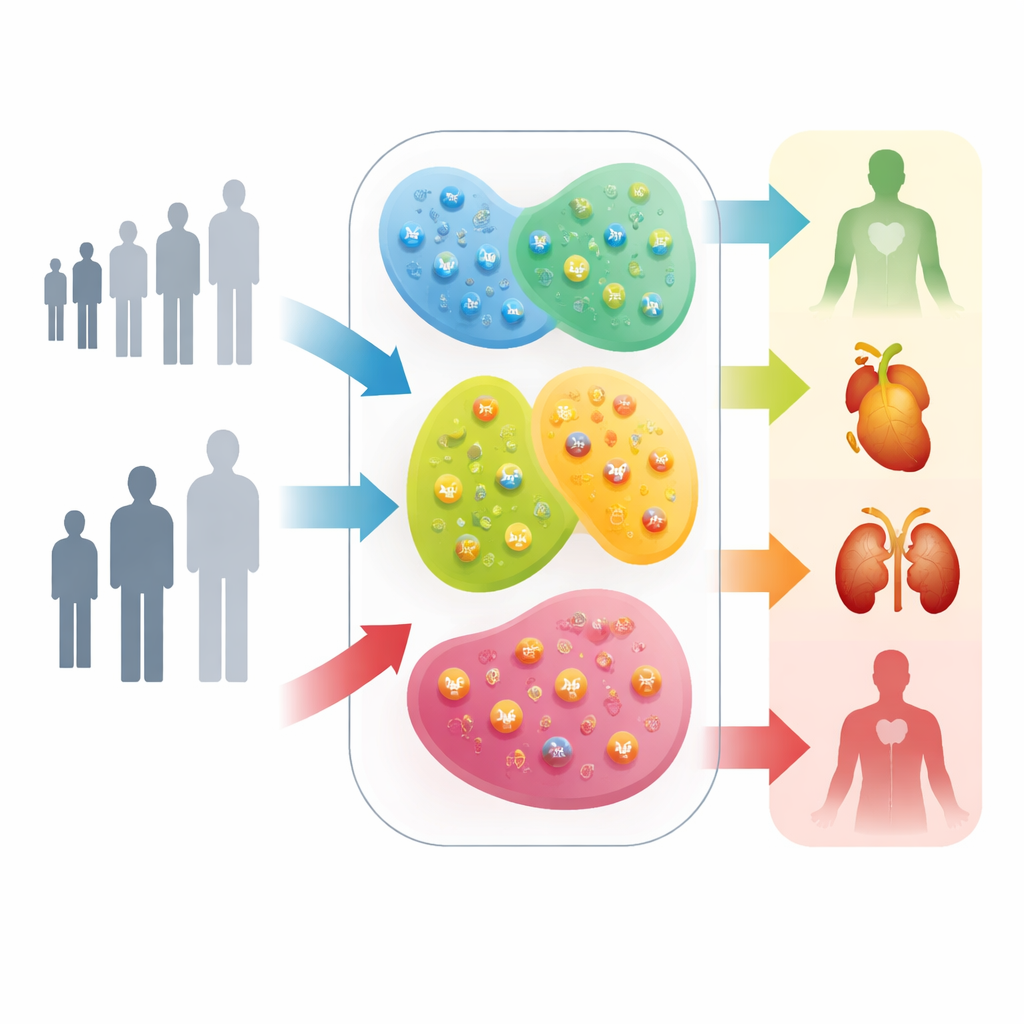
Four hidden health profiles emerge
The analysis revealed four distinct physiological clusters. One group, made up mostly of older, leaner men, showed low testosterone, higher inflammation, poorer kidney function, lower blood protein levels, and more signs of hormonal strain. Another group was similarly old but had less inflammation, better kidney function, and higher testosterone, suggesting relatively preserved resilience despite age. A third, younger group tended to have higher body weight but healthier inflammation and kidney markers, along with comparatively higher testosterone. A single outlier subject formed a fourth exploratory group and was not used for detailed comparisons. These clusters highlight that two men of the same age, and even with similar testosterone levels, can be in very different overall physiological states.
Connections inside each profile
To probe how these measurements move together within each group, the authors turned to correlation networks. In the high‑risk cluster with low testosterone and kidney strain, testosterone and body composition measures sat near the “center” of the network, closely linked to other variables. In other clusters, blood counts or kidney markers played more central roles. Age‑related patterns also differed: across the whole sample, testosterone declined with age, but in the older clusters the drop‑off appeared earlier and tracked more tightly with rising inflammation and subtle shifts in kidney markers. These patterns do not prove cause and effect, but they suggest that testosterone’s role depends heavily on the surrounding biological context.
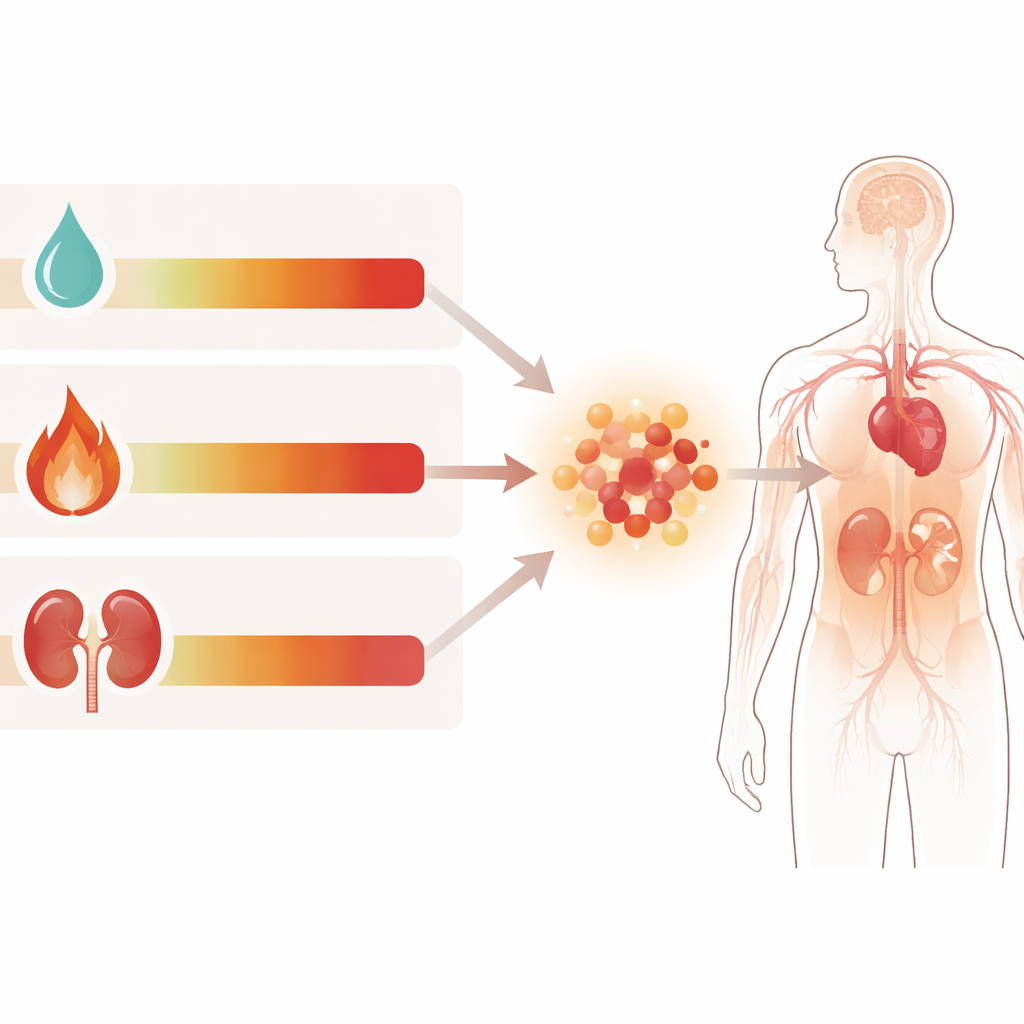
Checking the pattern in another population
The researchers then asked whether similar biomarker combinations matter in a different group of men. Using U.S. National Health and Nutrition Examination Survey data, they defined profiles that mirrored two of their clusters: one with low testosterone, high inflammation, and impaired kidney function, and another with low testosterone and high inflammation but preserved kidneys. Men who fit the first profile had consistently higher overall and recent cancer prevalence than a “healthier” comparison group. The second profile showed a different, less clearly elevated cancer pattern. This external check suggests that the high‑risk cluster identified in the Japanese clinic data reflects a biologically meaningful state, not just a statistical quirk.
What this means for patients and clinicians
For lay readers, the key takeaway is that testosterone is more like a player on a team than a solo performer. A low or borderline value can signal very different realities depending on whether it appears alongside quiet inflammation and healthy kidneys, or together with chronic inflammation and organ strain. This study, while cross‑sectional and not designed to prove causation, shows that simple, familiar blood tests can be combined to uncover distinct patterns of aging in men. In the future, such systems‑level “profiles” could help doctors move beyond treating lab values one by one, towards identifying men who might benefit from closer monitoring or preventive care based on the overall pattern of their biology rather than age alone.
Citation: Okui, N., Horie, S. System-level clustering of testosterone-related biomarkers identifies high-risk aging profiles linked to inflammation and renal function. Commun Med 6, 220 (2026). https://doi.org/10.1038/s43856-026-01556-z
Keywords: testosterone, male aging, biomarkers, inflammation, kidney function