Clear Sky Science · en
Longitudinal plasma nano-proteomics reveals acute systemic responses to radiotherapy and predictive biomarkers of late toxicity
Why blood can tell a deeper story about cancer treatment
Radiotherapy is a mainstay of cancer care, yet patients do not all respond the same way. Some sail through treatment, while others develop lasting bowel or urinary problems. This study asks a simple but powerful question: can a regular blood sample, taken during treatment, reveal how the whole body is reacting to radiation and who is most likely to develop side effects later on?
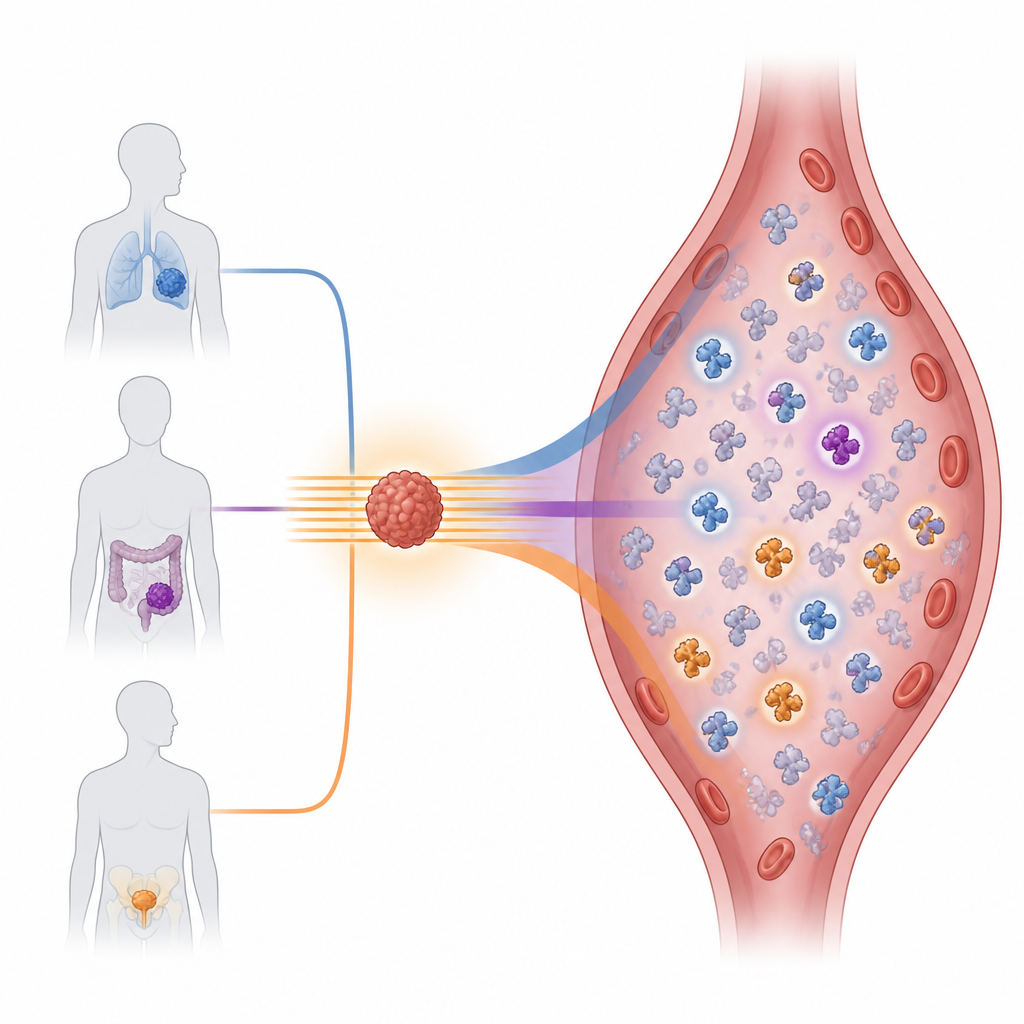
Looking beyond the tumour
The researchers followed 60 people being treated with curative radiotherapy for prostate, bladder, or head and neck cancers. Instead of focusing only on the tumour, they collected blood before treatment and then every week during the radiation course. They used a specialised "nano" method that coats tiny fat-based particles with proteins from the blood, making it easier to detect low level proteins that are usually hidden by more abundant ones. By tracking how these proteins rose or fell over time, the team could map the body’s wider response to radiation.
A bodywide reaction in the first weeks
The clearest changes in blood proteins appeared within the first two weeks of radiotherapy, marking this as a critical window. Across all three cancers, the body followed a similar storyline. Early on, proteins linked to handling fats and repairing cell membranes shifted, hinting at a rapid response to radiation damage. As treatment continued, proteins involved in the immune system and blood vessels became more prominent, reflecting inflammation and tissue stress. Towards the end of the course, protein patterns pointed to clean up and repair, with signals related to clearing dead cells and rebuilding tissue structure.
Shared patterns, different messengers
Although the same broad biological themes appeared in every cancer type, the exact proteins driving them were often different from one group of patients to another. In bladder and head and neck cancer, many changing proteins tended to drop in abundance, while prostate cancer patients more often showed increases. Despite this variety, the study identified a small set of proteins that changed consistently over time in all three cancers. One, called Ficolin 1, steadily declined in every group, marking it as a potential common marker of the body’s reaction to radiotherapy.
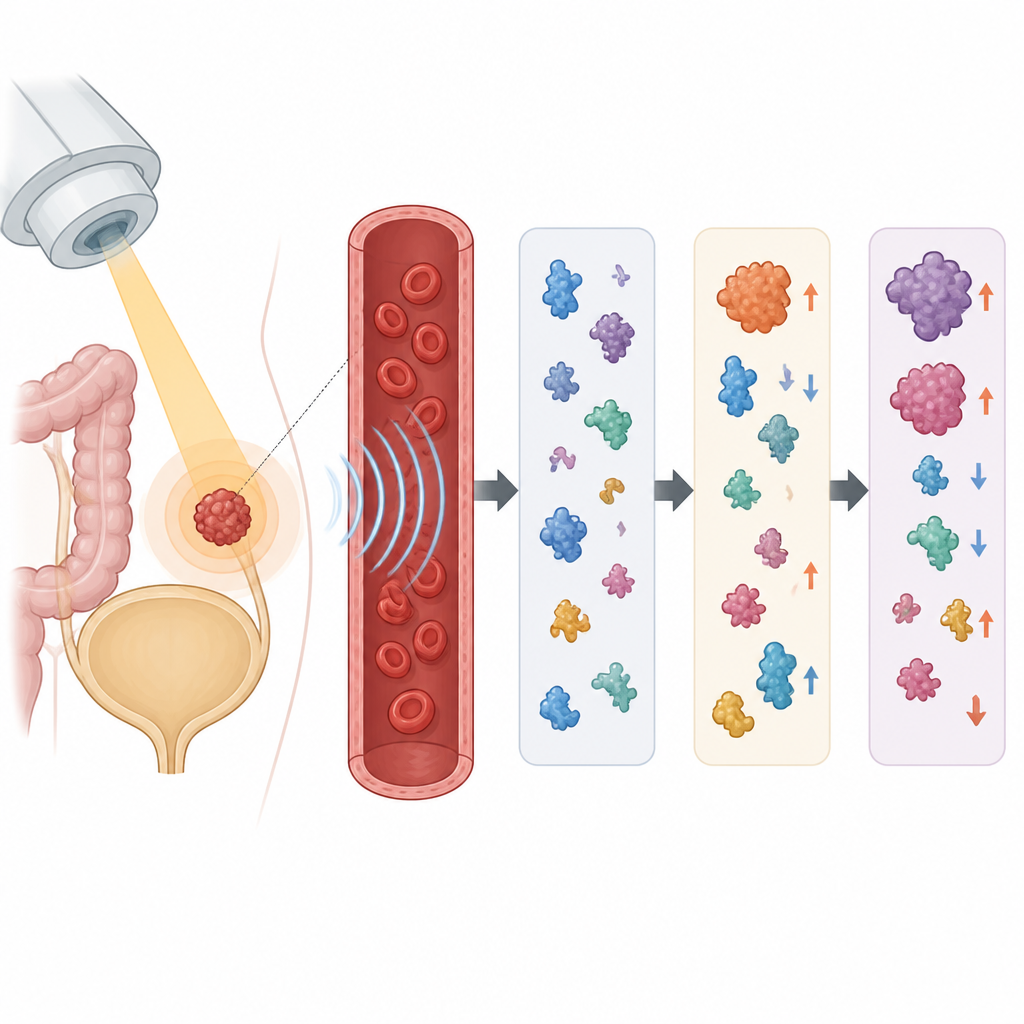
Clues to who will feel the late effects
The team then focused on the prostate cancer group to explore whether early blood patterns could flag patients at risk of later bowel or urinary problems. Using statistical models that look for hidden structure in complex data, they separated patients into two blood-protein “types” and found that these types lined up with who did and did not go on to develop side effects. They pinpointed sets of proteins measured before treatment, after one week, and at the end of radiotherapy that were linked to later toxicity. Many of these proteins are tied to immune activity and blood clotting, hinting that how a person’s immune system and blood vessels react to radiation may influence long term tissue damage.
What this means for future patients
This work shows that radiotherapy does much more than damage tumour cells; it triggers a fast, coordinated response throughout the body that can be read in the blood. By following these protein patterns over time, doctors may one day be able to identify, early in treatment or even before it starts, which patients are more likely to develop lasting side effects. While the findings need to be confirmed in larger studies, they point towards a future in which simple blood tests help tailor radiation doses and schedules to each individual, improving cancer control while protecting quality of life.
Citation: Abumanhal-Masarweh, H., Assi, S.A., Liu, X. et al. Longitudinal plasma nano-proteomics reveals acute systemic responses to radiotherapy and predictive biomarkers of late toxicity. Commun Med 6, 308 (2026). https://doi.org/10.1038/s43856-026-01552-3
Keywords: radiotherapy, plasma proteomics, cancer toxicity, biomarkers, personalised treatment