Clear Sky Science · en
Socioeconomic status and migration background as predictors of complicated lower respiratory tract infections in primary care
Why some chest infections become serious
Chest infections such as bronchitis and pneumonia are common reasons to see a family doctor. Most people recover at home, but a small share end up in the hospital or even die. This study looks beyond age and medical history to ask a simple question with big consequences: do money and living conditions help decide who runs into trouble after a chest infection, even in a country with easy access to healthcare?
Everyday coughs under the microscope
The researchers examined routine records from general practices in three Dutch regions between 2014 and 2023, leaving out the years dominated by COVID-19. They focused on adults who visited their family doctor with new symptoms of lower respiratory tract infection, such as an acute cough, bronchitis, or suspected pneumonia. By linking clinic data to national statistics on income, wealth, and hospital care, they followed what happened to over 185,000 infection episodes in about 145,000 people. The team tracked whether a person was admitted to hospital or died in the 30 days after their doctor visit, treating this as a “complicated” course of illness.

Adding social factors to medical checklists
Family doctors already rely on features like age, existing heart or lung disease, diabetes, recent hospital stays, and signs of pneumonia when deciding who needs closer monitoring, tests, or antibiotics. The study tested whether two additional social factors could sharpen these risk estimates: household socioeconomic status, based on combined income and wealth, and migration background, based on where a person or their parents were born. Using statistical models, the researchers first calculated risk using only the usual medical factors. They then added socioeconomic status, and finally migration background, to see whether predictions improved and which factors remained important when considered together.
Money matters more than birthplace
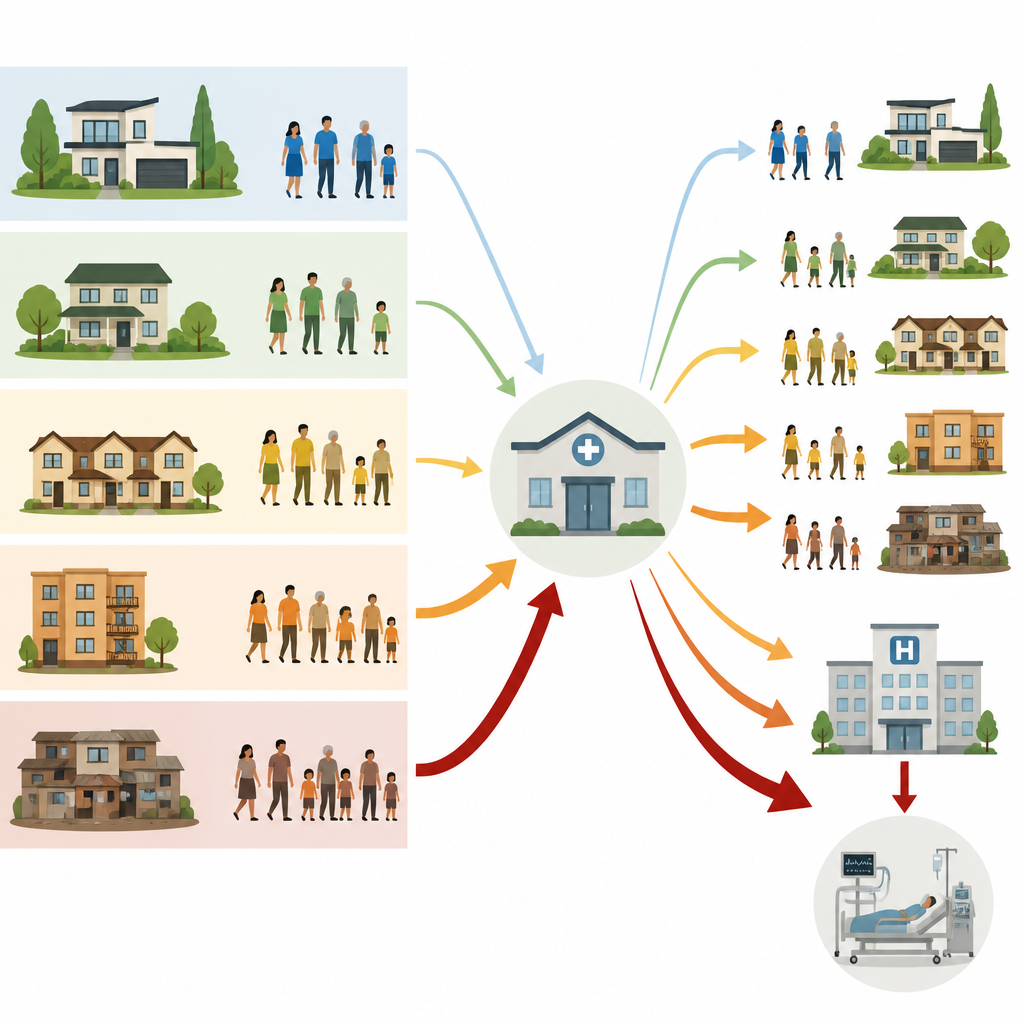
After taking into account age, smoking, chronic illness, medication use, and how sick people appeared at the visit, socioeconomic status still stood out. Compared with people in the highest income and wealth group, those in the lowest group had about one and a half times the odds of landing in hospital or dying within 30 days of their chest infection. This pattern appeared across all guideline-based risk groups, and was especially clear among patients whom doctors had already judged sick enough to have pneumonia. In contrast, once socioeconomic status and other factors were included, migration background added little to the prediction of complications, and did not show a consistent pattern of higher risk.
Hidden vulnerabilities behind the numbers
The findings suggest that socioeconomic status acts as a shortcut for many harder-to-measure influences that shape how infections unfold. These may include crowded or damp housing, exposure to air pollution, physically demanding work, low vaccination uptake, limited health literacy, and other lifestyle and stress factors that are rarely captured in a brief visit. Even in the Netherlands, where basic health insurance is universal and reported barriers to care are low, people with fewer financial resources face a higher chance of serious outcomes from the same type of infection.
What this means for everyday care
For patients, the message is not that a postcode or income replaces good clinical judgement, but that social circumstances quietly shape the stakes when a chest infection strikes. The authors argue that future tools and guidelines for family doctors should explicitly include simple measures of socioeconomic status, such as area-based deprivation scores, alongside age and medical conditions. Doing so could help identify which patients with a cough or pneumonia might need closer follow up, quicker referral, or targeted public health efforts like tailored vaccination outreach. In short, the study shows that to prevent serious complications from common chest infections, healthcare needs to look not only at lungs and lab tests, but also at the living conditions that surround them.
Citation: van Dokkum, E.D., Kraaijenbrink, N., Le Cessie, S. et al. Socioeconomic status and migration background as predictors of complicated lower respiratory tract infections in primary care. Commun Med 6, 297 (2026). https://doi.org/10.1038/s43856-026-01542-5
Keywords: socioeconomic status, lower respiratory infection, primary care, health inequalities, pneumonia risk