Clear Sky Science · en
Maternal metabolic signatures at early gestation associated with birth weight and neurodevelopment in early childhood
How a Mother’s Chemistry Shapes a Child
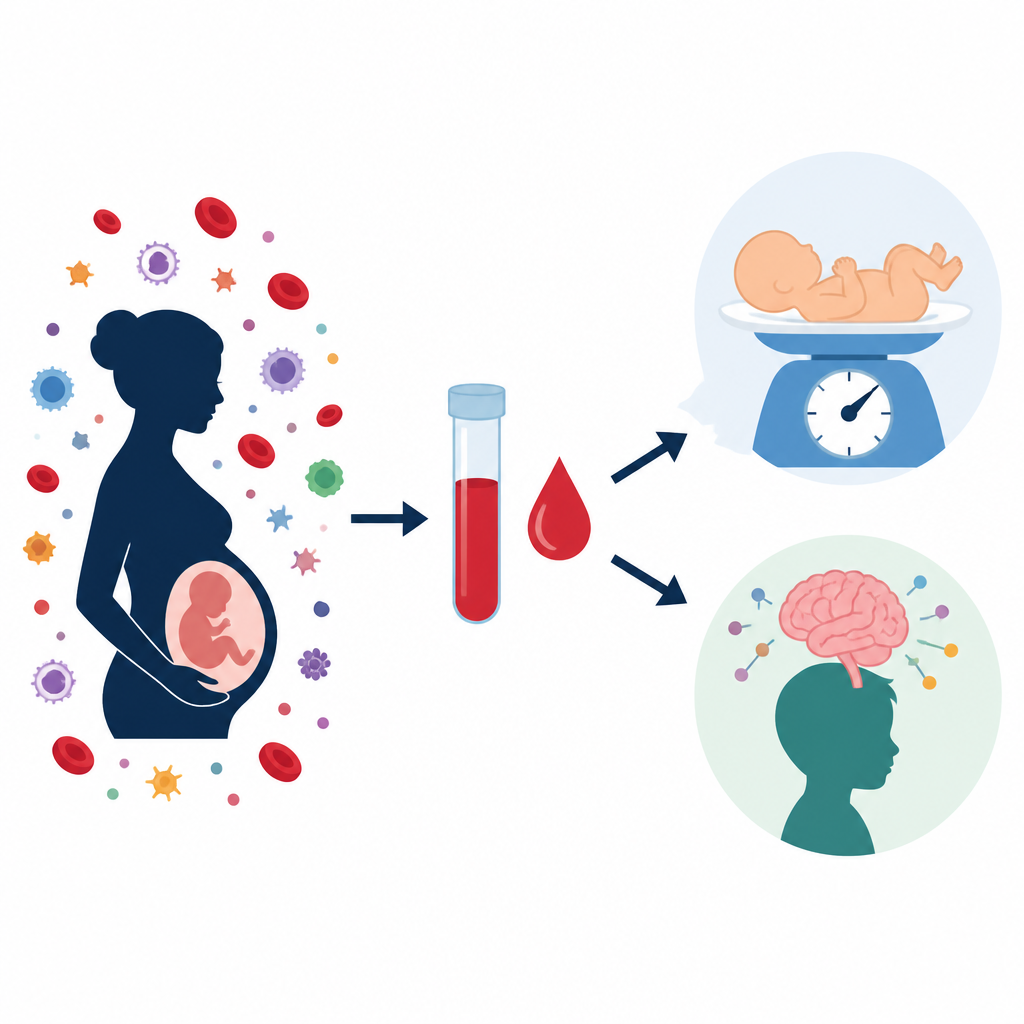
Expectant parents often hear that "what happens in pregnancy can last a lifetime," but the details are usually vague. This study takes a closer look at the tiny molecules circulating in a mother’s blood early in pregnancy and asks how they relate to a baby’s size at birth and a child’s thinking skills at four years old. By following hundreds of families from pregnancy through preschool age, the researchers begin to reveal how a mother’s internal chemistry may help set the stage for growth and learning.
Following Families from Pregnancy to Preschool
The work draws on the Shanghai Birth Cohort, a long-running project that tracks women and their children over time. For this analysis, researchers studied 1158 mother–child pairs. Blood samples were taken from the mothers in the first trimester, when many women are just learning they are pregnant. Using high-resolution instruments, the team measured 499 different substances in the blood, including building blocks of fats and proteins, hormones, and chemicals from the environment. The children’s birth weights were recorded, and at about age four their thinking abilities were tested with a standard set of tasks that measure language, memory, problem-solving, and processing speed.
Signals Linked to Birth Size
The researchers found that a mother’s mix of fatty molecules and related compounds early in pregnancy was closely tied to her baby’s birth weight. Certain fatty acids and components of cell membranes tended to be higher in mothers who delivered heavier babies, and some were also linked to a greater chance of having a very large baby. In contrast, other molecules involved in shuttling fats into cells, such as carnitine, were linked to lower birth weight. The study also showed that a mother’s body mass index before pregnancy was strongly connected to both her blood chemistry and the baby’s size, suggesting that weight and metabolism together influence how much a fetus grows.
Clues to Early Thinking and Learning
When the team turned to children’s thinking skills at age four, they again saw patterns in the mothers’ early-pregnancy chemistry. Several small protein fragments were associated with better scores, particularly in language-related tasks. On the other hand, many fatty acids and a group of fat-like signaling molecules were tied to lower scores. One standout substance was 4-pyridoxic acid, a breakdown product of vitamin B6. Children whose mothers had higher levels of this compound tended to have better language scores, and it appeared to partly explain the link between a mother’s multivitamin use in pregnancy and her child’s verbal abilities.
Boys, Girls, and Different Paths
The study also explored whether these chemical links differed between boys and girls. Baby boys in the cohort were heavier at birth, while girls tended to score higher on several thinking tests at age four. The blood signatures mirrored these differences. More of the measured substances were tied to higher birth weight in boys, whereas more were tied to better thinking scores in girls. Some molecules even showed opposite patterns in boys and girls, hinting that male and female fetuses may respond differently to the same chemical environment in the womb.
Connecting Maternal Health, Diet, and Child Outcomes
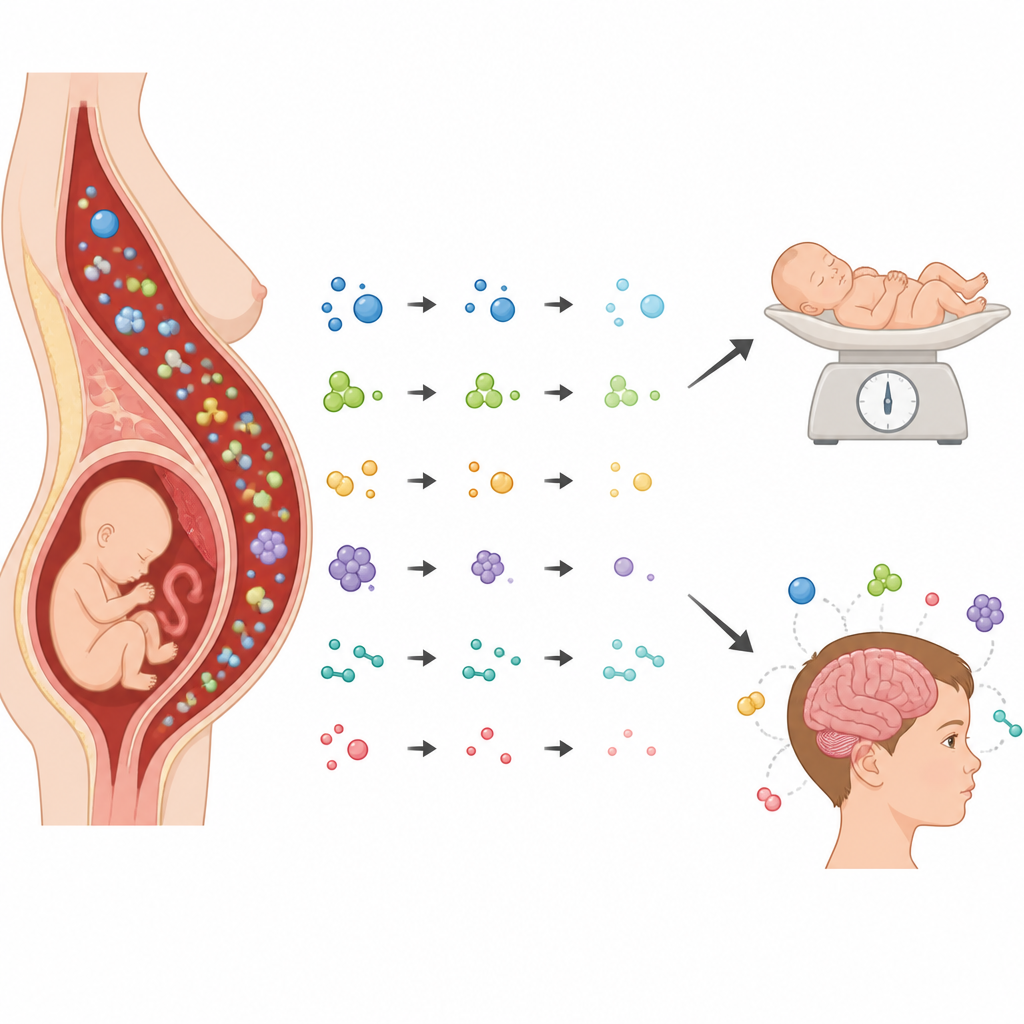
Finally, the researchers asked whether specific blood molecules might serve as bridges between maternal factors and child outcomes. They found that groups of fatty acids and related compounds appeared to carry part of the effect of a mother’s pre-pregnancy weight on both birth size and certain thinking scores. Likewise, vitamin-related molecules seemed to carry part of the benefit of taking multivitamins on a child’s language abilities. These mediation effects were modest but consistent, supporting the idea that a mother’s metabolism links her lifestyle and body size to her child’s early development.
What This Means for Parents and Society
For non-specialists, the key message is that the mix of small molecules circulating in a woman’s blood early in pregnancy is not just a snapshot of her own health. It is also connected to how big her baby will be and how well that child may perform on early tests of thinking and language. The study does not claim that any single nutrient, supplement, or blood marker guarantees a particular outcome, and many other influences, from family life to schooling, shape development. Still, the findings highlight that supporting healthy weight, balanced nutrition, and thoughtful supplement use before and during pregnancy may help create a biochemical environment that favors healthy growth and learning, in ways that may differ for boys and girls.
Citation: Yang, J., Zeng, X., Li, Q. et al. Maternal metabolic signatures at early gestation associated with birth weight and neurodevelopment in early childhood. Commun Med 6, 300 (2026). https://doi.org/10.1038/s43856-026-01539-0
Keywords: maternal metabolism, birth weight, child cognition, pregnancy nutrition, sex differences