Clear Sky Science · en
Modelling the impact of increasing tuberculosis treatment coverage and addressing determinants of risk in men
Why this matters for families and communities
Tuberculosis remains one of the world’s deadliest infectious diseases, and it affects men more than women and children. This imbalance is not just a matter of biology; it is also shaped by work, income, habits like drinking and smoking, and how health services are organized. Understanding how closing this gap for men could protect whole communities helps explain where countries should focus their efforts to reduce TB.
Different risks for men, women, and children
Across the globe, men shoulder most of the TB burden. They are more likely to be exposed to the germ that causes TB, more likely to become sick, and more likely to remain untreated for longer. In many places, men work in crowded or dusty jobs, spend more time in social spaces such as bars, and have higher rates of smoking and heavy alcohol use. Health systems often focus strongly on mothers and children, which can leave men behind. The result is that many men with TB remain undiagnosed, continuing to spread the infection at home, at work, and in the wider community.
Four African countries under the microscope
This study focuses on Kenya, Malawi, Nigeria, and Uganda, all countries with high levels of both TB and HIV. Using detailed country data on population, HIV trends, vaccination, and TB treatment, the researchers built a mathematical model to mimic how TB spreads and who receives care. The model separated people by age, sex, and HIV status, and captured how often different groups mix with one another. This allowed the team to explore how changes aimed at men would ripple through to women and children over time. 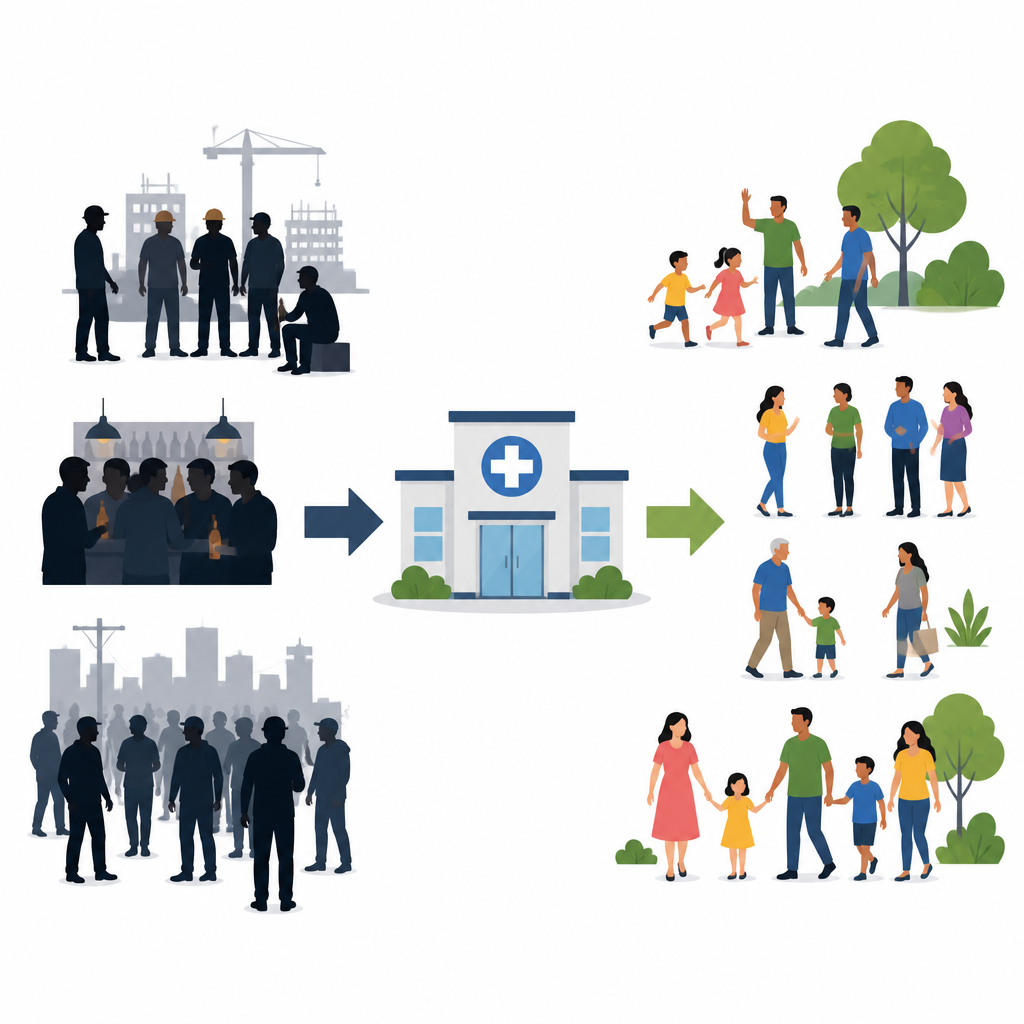
Testing gender-focused strategies
The team looked at three possible strategies, each rolled out gradually from 2025 to 2030. The first strategy raised men’s chances of getting TB treatment so they matched women’s levels by 2030. The second strategy cut men’s extra risk of developing TB in half, representing better control of harmful factors such as smoking, alcohol use, unsafe jobs, and poor living conditions. The third strategy combined both better treatment coverage and lower risk. They then compared future TB cases, deaths, and clinic reports under these strategies with a “business as usual” pathway where current patterns simply continued.
What the model predicts
Improving men’s access to treatment alone produced notable drops in TB illness, especially in Nigeria and Uganda, where gaps between men and women are widest. Reducing men’s extra risk of TB gave particularly large gains in Kenya and also helped in the other countries. When both approaches were combined, the model projected the biggest benefits: by 2035, TB illness could fall by around one seventh in Malawi and by about one third in Uganda, with tens of thousands of deaths prevented in Nigeria and Kenya. Although men were the main target, women and children also saw fewer TB cases, because treating and protecting men reduced the chances of infection for everyone. 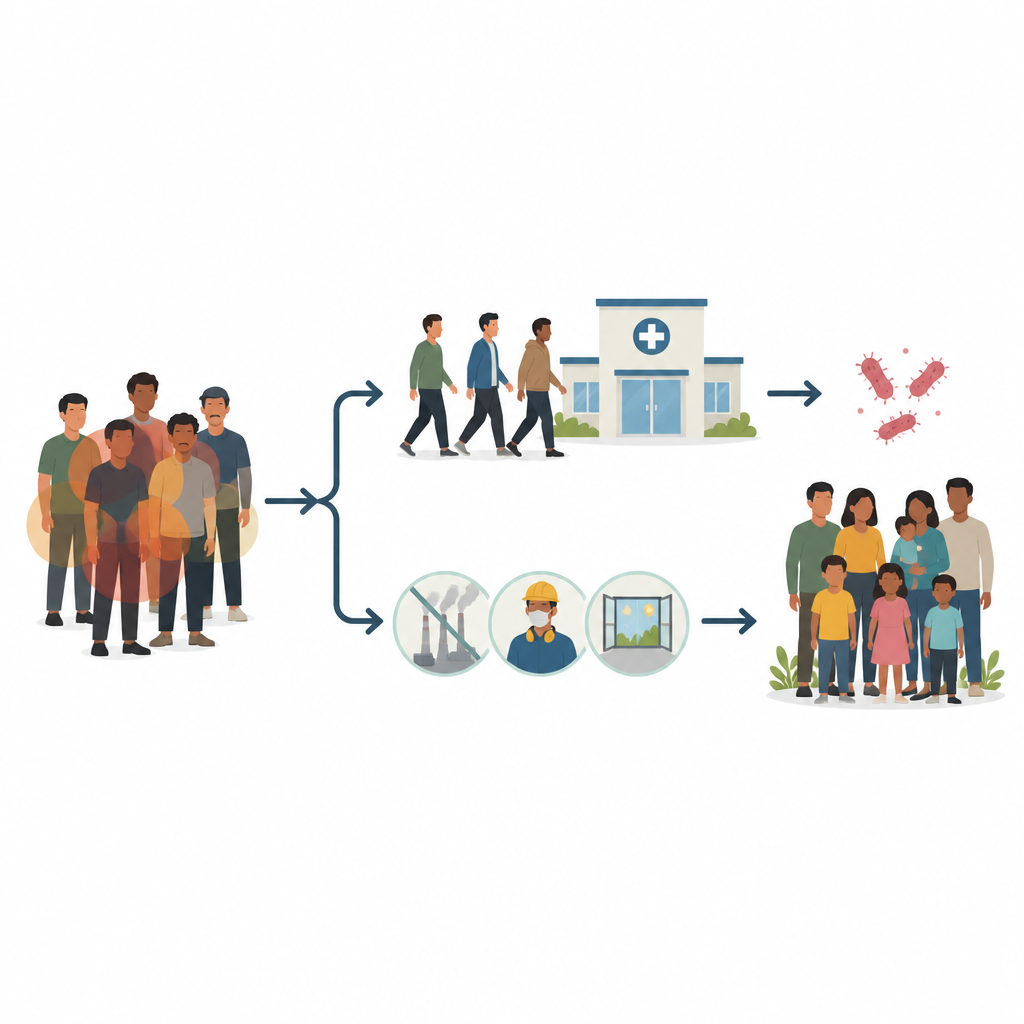
Short-term strain, long-term relief
Raising treatment coverage among men temporarily increased the number of TB cases reported by clinics, because more people who were previously missed were finally found and treated. This surge was especially large in Nigeria and Uganda. However, over the longer term, all the successful strategies led to fewer clinic notifications, reflecting real declines in disease. The model also showed that the benefits continue to grow beyond 2035, as lower levels of infectious TB translate into fewer new infections and less illness in future years.
Looking beyond the clinic door
The study’s discussion highlights that fixing gender gaps will require more than adjusting clinic hours or adding new tests. Men may delay seeking help because of strong expectations to appear tough, avoid missing work, or keep health worries private. Approaches suggested in the countries studied include offering TB services at times and places that suit men, bringing screening into workplaces and prisons, and running community campaigns that address ideas about manhood and illness. Reducing risks such as smoking, heavy alcohol use, poor nutrition, and unsafe jobs will likely demand cooperation across many sectors beyond health alone.
What this means for the fight against TB
By showing how much difference gender-responsive strategies could make, this work suggests that focusing on men is not about taking attention away from women and children, but about protecting them as well. Better access to diagnosis and treatment for men, together with action on the conditions that raise men’s risk, could significantly cut TB cases and deaths across entire populations. While these findings come from four African countries, the underlying message is broader: if we want to end TB, we must address the social patterns and gender norms that shape who gets sick and who gets care.
Citation: Richards, A.S., Phiri, M.D., Nidoi, J. et al. Modelling the impact of increasing tuberculosis treatment coverage and addressing determinants of risk in men. Commun Med 6, 293 (2026). https://doi.org/10.1038/s43856-026-01536-3
Keywords: tuberculosis, gender disparities, men’s health, mathematical modelling, Africa