Clear Sky Science · en
Estimating the risk of anemia associated with PM2.5 exposure in Nepalese women of reproductive age
Why dirty air matters for women’s blood health
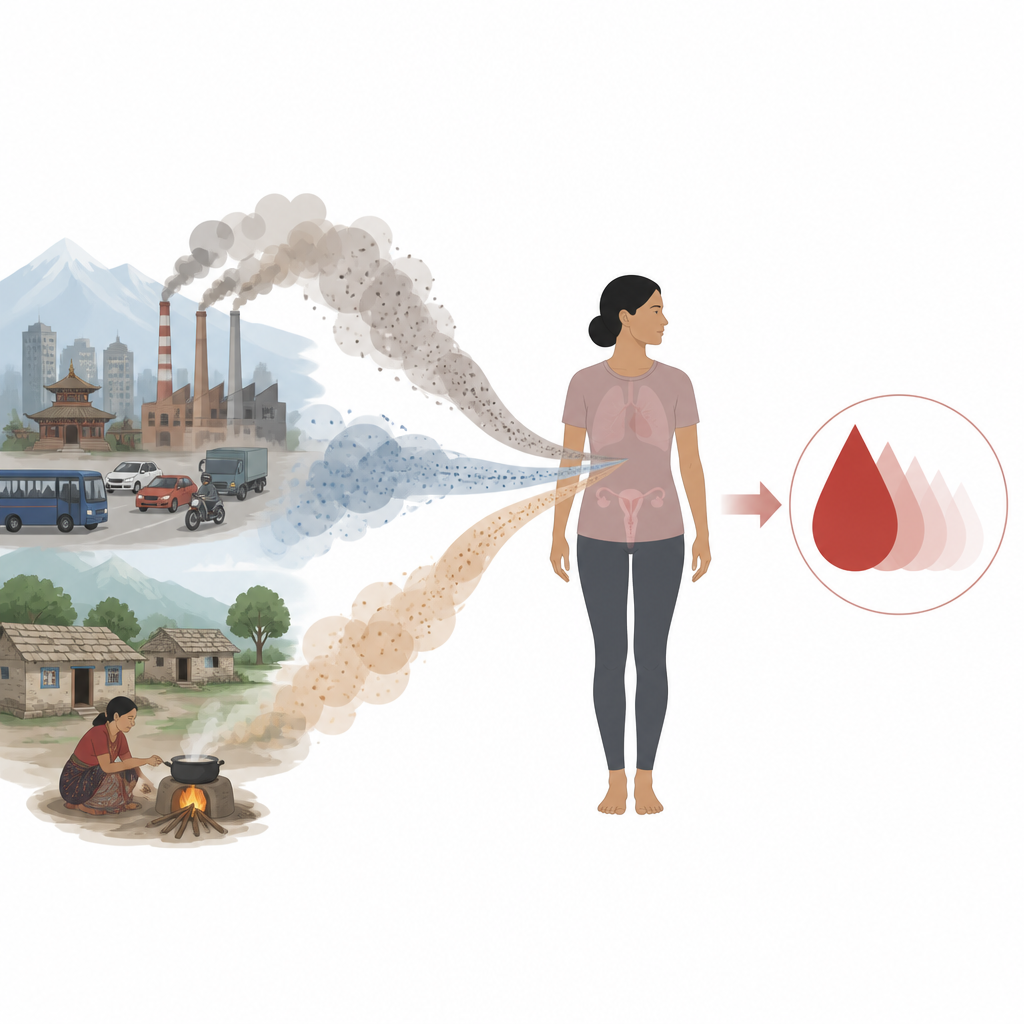
Air pollution is often linked to coughing lungs and burning eyes, but this study from Nepal asks a quieter question: can polluted air also thin the blood of women in their childbearing years? Anemia, a condition where blood cannot carry enough oxygen, already affects about one in three women worldwide. By connecting national health surveys with air quality measurements, the researchers explored whether the fine particles that hang in Nepal’s air might also be quietly draining women’s strength.
Looking at women across Nepal
The researchers drew on data from more than four thousand women aged 15 to 49 who took part in the 2022 Nepal Demographic and Health Survey. Each woman had her blood checked using a simple finger prick to measure hemoglobin, the oxygen-carrying protein in red blood cells. Those with levels below World Health Organization cutoffs were classified as anemic. The team then matched each woman to long-term levels of fine particle pollution, known as PM2.5, based on readings from air monitoring stations in her province over the previous year.
Fine particles and falling blood levels
When the scientists compared air quality with women’s blood results, a clear pattern emerged: higher PM2.5 levels were linked to lower hemoglobin and a higher chance of anemia. Across Nepal, all provinces had particle levels well above World Health Organization guidelines. For every 10 micrograms per cubic meter increase in PM2.5, women’s hemoglobin dropped on average and their odds of anemia rose by about 29 percent, even after accounting for age, pregnancy, body size, wealth, smoking, blood pressure, and local weather. In a country where roughly 35 percent of women were already anemic, this added risk is substantial.
Who is hit hardest
The harmful link between dirty air and anemia did not fall evenly on all women. Those with less schooling were more likely to show the blood changes associated with higher particle levels than women who had stayed longer in school. Education may protect by improving diet, access to health care, and possibilities for cleaner homes and cooking fuels. Geography also mattered. Women living in Nepal’s mountainous regions seemed more vulnerable than those in the hilly areas, possibly because of how the landscape traps pollution, differences in fuel use, or how bodies adapt to living at higher elevations.
How pollution can sap blood strength
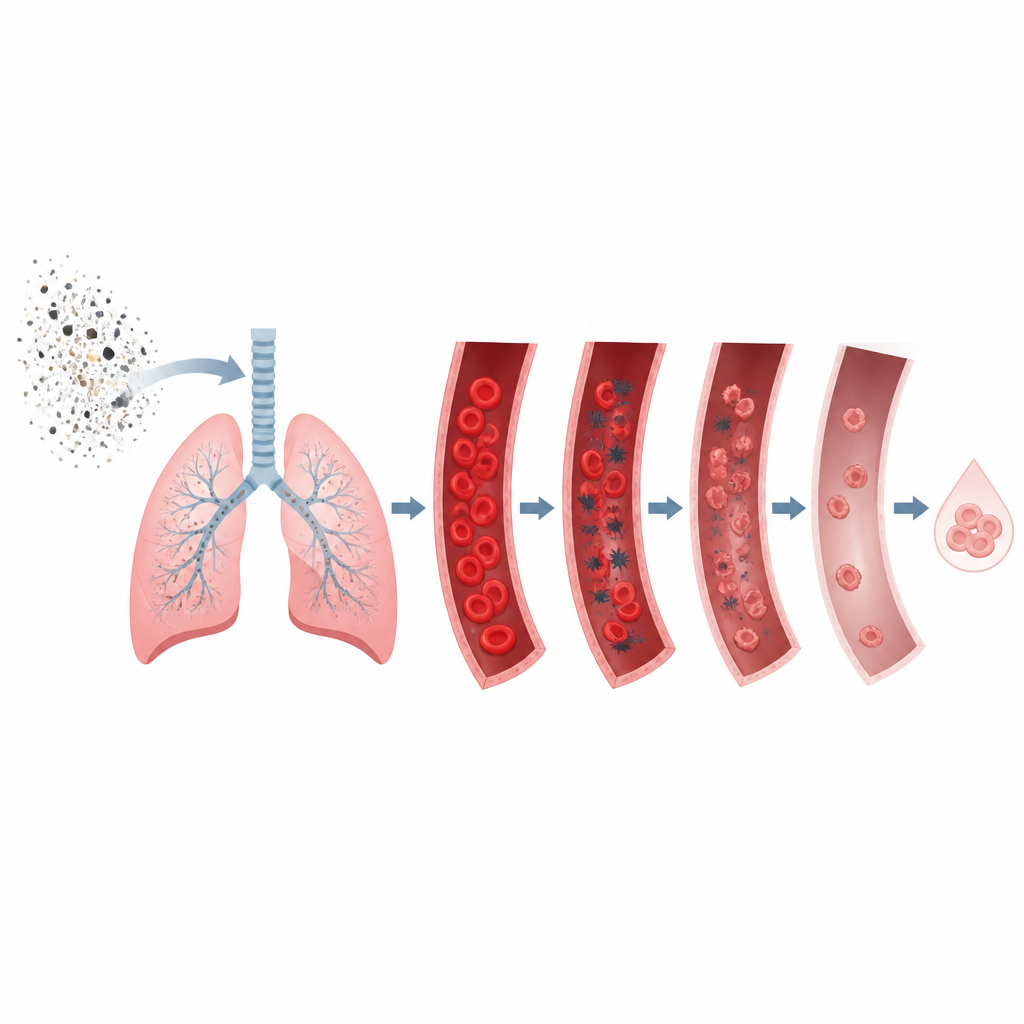
Although this study could not track women over time, its findings match a growing body of work from other countries. Tiny particles breathed into the lungs can enter the bloodstream and spark ongoing inflammation and chemical stress. This can interfere with the kidneys’ ability to signal the bone marrow to make new red blood cells and can disrupt how the body handles iron, a key ingredient in hemoglobin. Over weeks to months, this hidden battle inside the body can gradually lower hemoglobin levels and tip women into anemia, especially when combined with poor diet or other health challenges.
What this means for health and policy
For Nepal, where air pollution is high and anemia stubbornly common, the study suggests that cleaner air should be part of any strategy to protect women’s health and their future children. The authors argue that efforts to improve nutrition and medical care need to be paired with stronger air quality rules, wider pollution monitoring, and practical steps such as cleaner cooking programs, especially in rural and mountainous regions. In simple terms, the work shows that the air women breathe may be quietly weakening their blood, and that tackling pollution could help many of them breathe easier and feel stronger.
Citation: Acharya, S.R., Bhatta, J. Estimating the risk of anemia associated with PM2.5 exposure in Nepalese women of reproductive age. Commun Med 6, 289 (2026). https://doi.org/10.1038/s43856-026-01533-6
Keywords: air pollution, PM2.5, anemia, women’s health, Nepal