Clear Sky Science · en
Patient-reported symptoms in predicting the subsequent progression of chronic health conditions among childhood cancer survivors
Why listening to survivors’ symptoms matters
More children survive cancer today than ever before, but many of these survivors face serious health problems decades after treatment. Doctors usually estimate future risks using medical records about chemotherapy and radiation. This study asks a simple but powerful question for long term survivors of childhood cancer: can the symptoms they report themselves help predict which chronic health problems will worsen later on?
Following survivors over many years
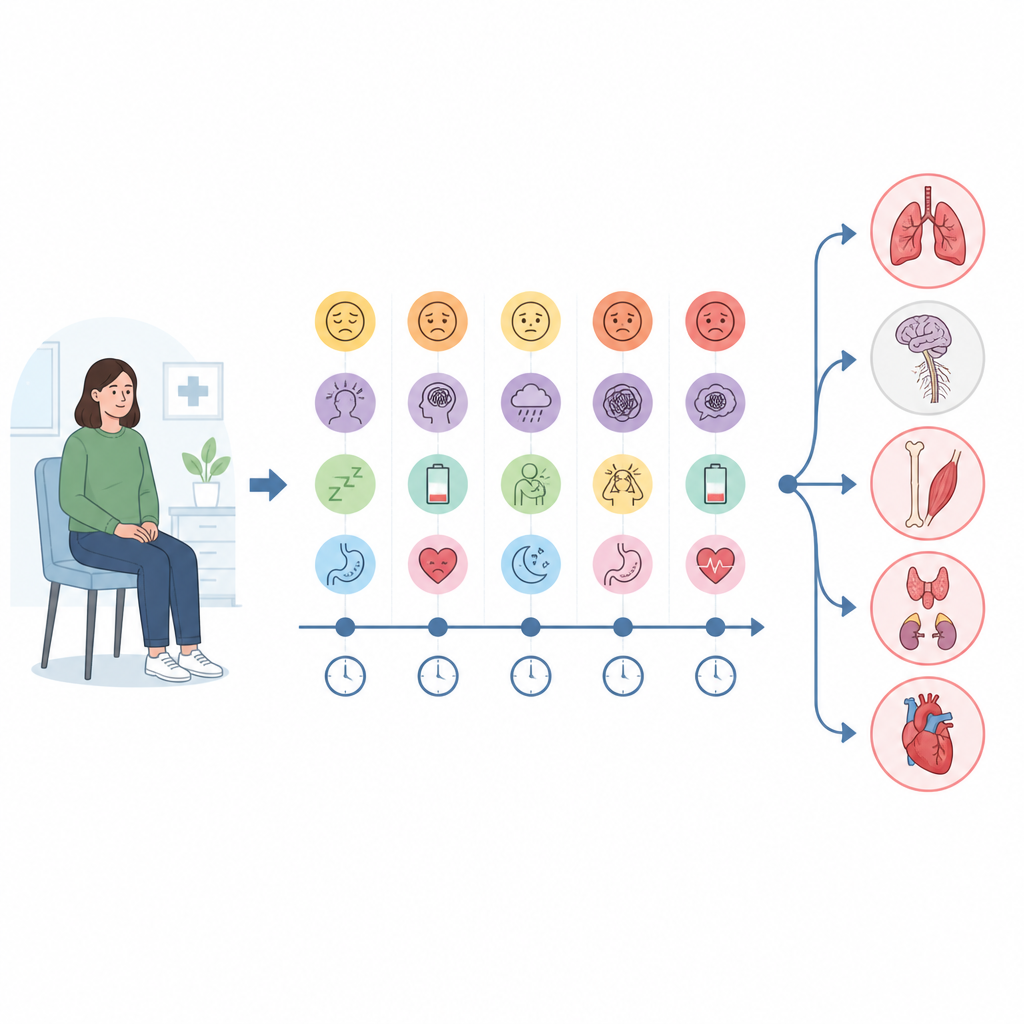
The researchers drew on two large survivor projects that have tracked people treated for cancer in childhood across North America. They focused on 735 adults who had survived at least five years after diagnosis and who filled out three detailed symptom surveys over roughly 25 years, while also returning for regular medical exams. The surveys asked about everyday problems such as shortness of breath, pain, fatigue, numbness, memory trouble, anxiety, and low mood. Doctors, working separately from these surveys, graded 47 different long term health conditions affecting organs such as the heart, lungs, brain, bones, hormones, and reproductive system.
Grouping symptom patterns instead of single complaints
Rather than looking at each complaint one by one, the team grouped the symptoms into two broad dimensions: physical (such as breathing issues, pain, or weakness) and emotional (such as anxiety or depression). Using statistical tools, they sorted survivors into four patterns at each time point: low symptoms in both areas, moderate physical but low emotional symptoms, moderate symptoms in both areas, and high symptoms in both areas. They also tracked how people moved between these patterns over time, labeling them as improved or staying low, staying at a moderate level, or increasing and staying high.
Linking symptom burden to later health decline
When the researchers compared symptom patterns with later medical findings, a clear picture emerged. Survivors who reported high physical and emotional symptoms at the first survey were more likely to see their overall chronic condition burden worsen, even after taking into account age, sex, lifestyle, and cancer treatments. This link was especially strong for problems involving the nerves and brain, muscles and bones, lungs, and hormone producing glands. Survivors who started with moderate physical symptoms, even if their emotional symptoms were low, also faced higher risks for certain organ problems, particularly in the nervous and musculoskeletal systems.
Changes in symptoms send warning signals
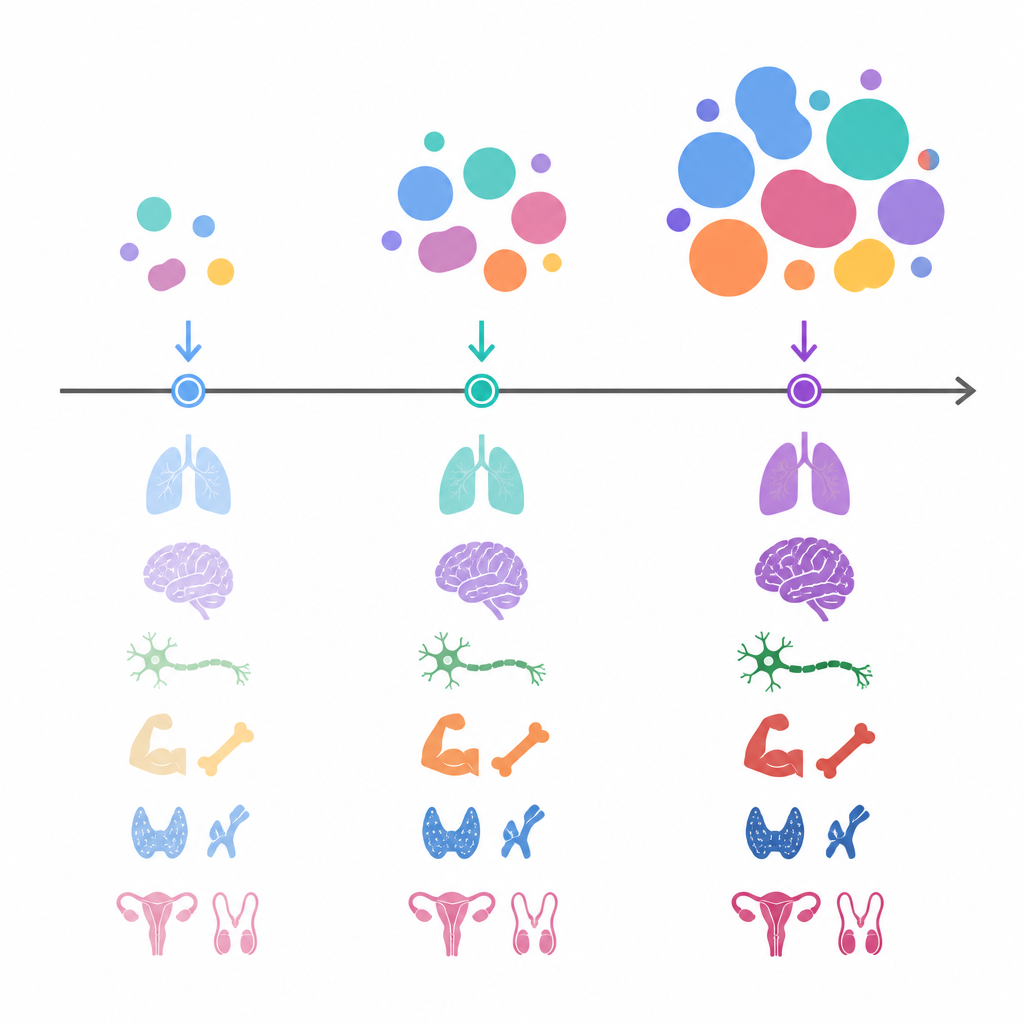
The direction of change in symptom burden over time turned out to be just as important. Survivors whose symptoms stayed moderate or climbed to a high level between surveys had a noticeably greater chance of developing new or worse chronic conditions in the years that followed. Rising or persistently high symptoms were strongly tied to later worsening in neurologic, respiratory, endocrine, and reproductive health. In contrast, the types and doses of past cancer treatments did not consistently predict which survivors’ total burden of chronic conditions would progress during the same periods, although some treatments remained linked to specific issues such as heart problems after certain drugs or chest radiation.
What this means for survivor care
For people who survived cancer as children, this study shows that how they feel day to day can reveal hidden risks that medical history alone might miss. Patterns of physical and emotional symptoms, and how those patterns change over time, offer early warning signs of future health decline in several organ systems. Building simple, repeated symptom checks into routine follow up care could help doctors spot trouble sooner, tailor screening and lifestyle guidance, and direct extra attention to survivors whose symptoms remain moderate or high. In short, careful listening to survivors’ own reports may be a key step toward safer and more personalized long term care.
Citation: Horan, M.R., Liu, W., Wang, M. et al. Patient-reported symptoms in predicting the subsequent progression of chronic health conditions among childhood cancer survivors. Commun Med 6, 287 (2026). https://doi.org/10.1038/s43856-026-01527-4
Keywords: childhood cancer survivors, symptom monitoring, chronic health conditions, survivorship care, patient reported outcomes