Clear Sky Science · en
Pretreatment blood NfL indicates response to cellular therapies in cerebral adrenoleukodystrophy
Why this matters for families
Cerebral X-linked adrenoleukodystrophy is a rare brain disease that mainly affects boys and can lead to rapid loss of skills such as walking, talking, and seeing. Today, doctors can slow or halt this damage with stem cell transplants or gene therapy, but these treatments are risky and work best when given at just the right time. This study asks a simple but crucial question: can a blood test help doctors decide which children are most likely to benefit from these intensive therapies?
A rare brain illness that moves fast
In boys with this inherited condition, certain fats build up in the body and damage the white matter of the brain. Once the brain form, called cerebral adrenoleukodystrophy, begins, it often advances quickly. Doctors now monitor at-risk boys with frequent MRI scans looking for early signs of damage. If new lesions appear, they may recommend a stem cell transplant or, in some cases, gene therapy. However, MRI scoring can be hard to interpret when lesions are unusually placed or the disease is already advanced, making it difficult to know who will truly benefit from treatment and who may still decline despite it.
Looking for answers in a blood drop
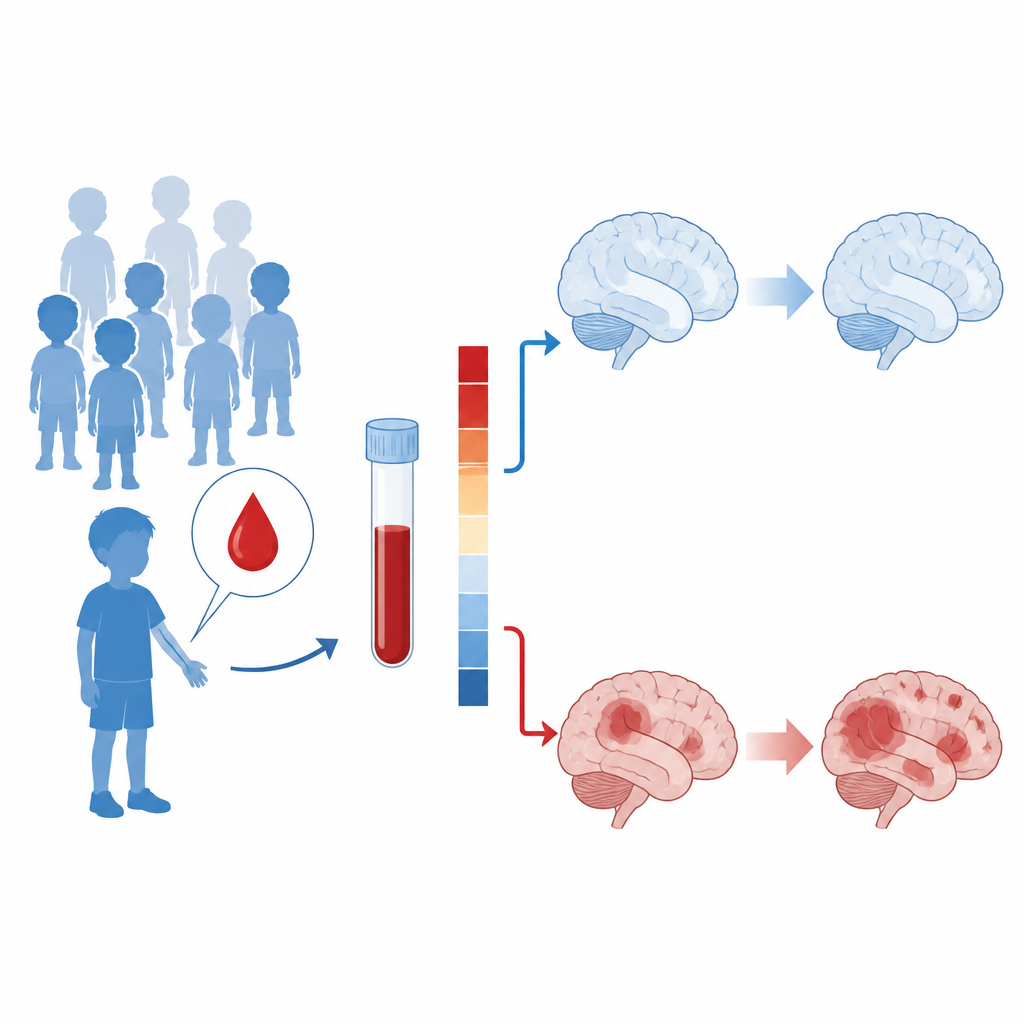
The researchers focused on two proteins that can be measured in blood: neurofilament light chain, which reflects injury to nerve fibers, and glial fibrillary acidic protein, which signals damage or activation of supporting brain cells. They followed 14 boys, aged 5 to 13, who received either stem cell transplants or gene therapy and tracked their blood levels of these proteins for up to five and a half years. They then compared these readings, taken before treatment, with how each child did afterward, using brain scans and detailed neurological exams to judge whether disease activity calmed down or continued to progress.
What the blood test revealed
All of the boys with the brain form of the disease had higher neurofilament levels in their blood than symptom free boys with the same gene defect. Children whose neurofilament level before treatment stayed at or below a certain value tended to show stable disease or only slight worsening after therapy, even if MRI scores already looked worrisome. In contrast, boys with very high neurofilament levels before therapy almost always developed major functional problems later, no matter what their MRI score showed at the start. The second protein, glial fibrillary acidic protein, did not track treatment outcome as clearly and showed weaker links to MRI based measures of damage.
Side effects of powerful treatment
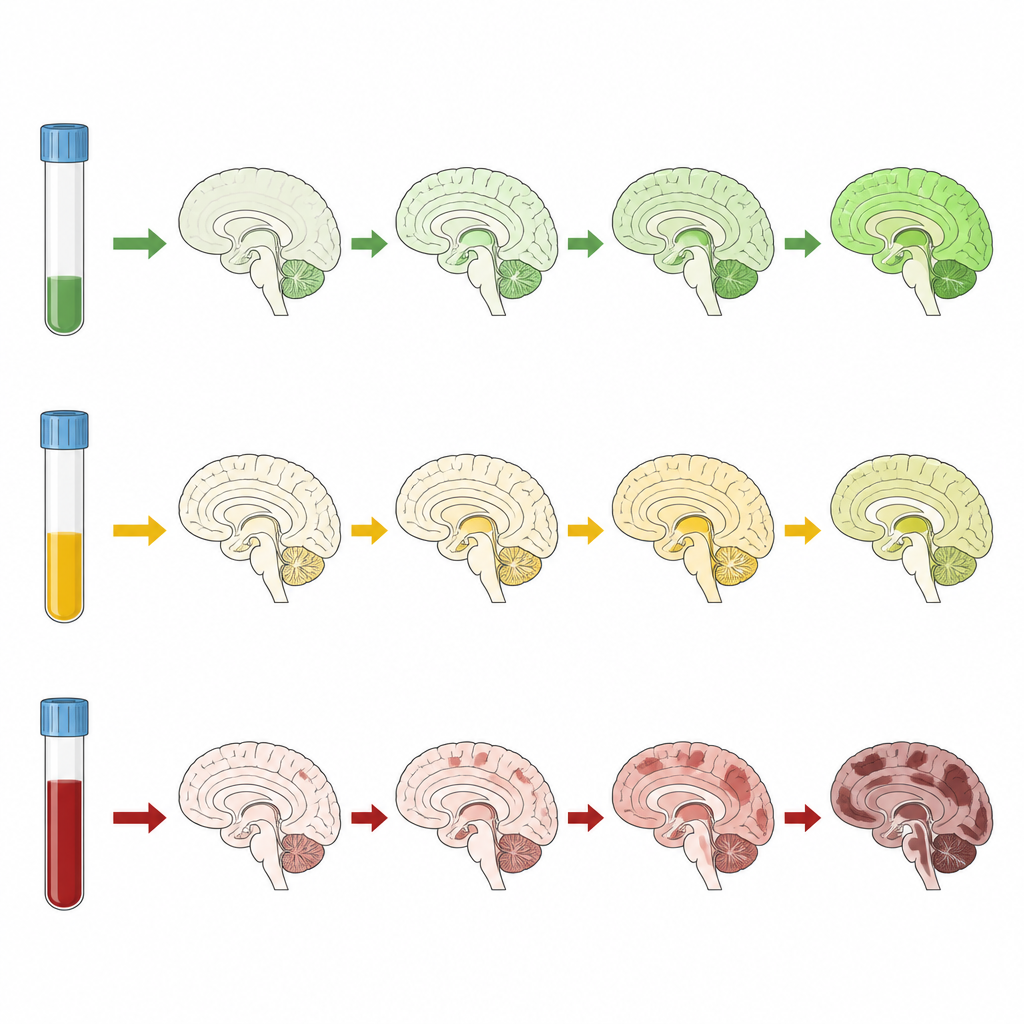
The intense chemotherapy used to prepare the body for a transplant or gene therapy caused a temporary spike in both blood markers, especially in children whose levels were lower before treatment. This suggests that the conditioning drugs themselves briefly stress or injure the nervous system. However, in boys who ultimately did well, these levels later dropped toward normal. Years after successful treatment, both markers remained only slightly higher than in symptom free boys, hinting at lingering but largely quiet brain injury.
What this means for care
The study suggests that a single blood test for neurofilament light chain, done before stem cell transplant or gene therapy, may give doctors important extra information beyond MRI scans. In particular, it may help identify children who are likely to stabilize and those who remain at high risk of decline despite treatment, including boys with unusual brain scan patterns or more advanced disease. While the work involved only a small group and needs confirmation in larger studies, it points toward a future in which a simple blood draw could guide life altering decisions for families facing this devastating childhood brain disease.
Citation: Weinhofer, I., Ponleitner, M., Rommer, P. et al. Pretreatment blood NfL indicates response to cellular therapies in cerebral adrenoleukodystrophy. Commun Med 6, 278 (2026). https://doi.org/10.1038/s43856-026-01525-6
Keywords: cerebral adrenoleukodystrophy, neurofilament light chain, blood biomarker, stem cell transplant, gene therapy