Clear Sky Science · en
Reconstructing the pharmacogenomic landscape of psychiatric medication metabolism in the Indian population
Why some pills work differently for different people
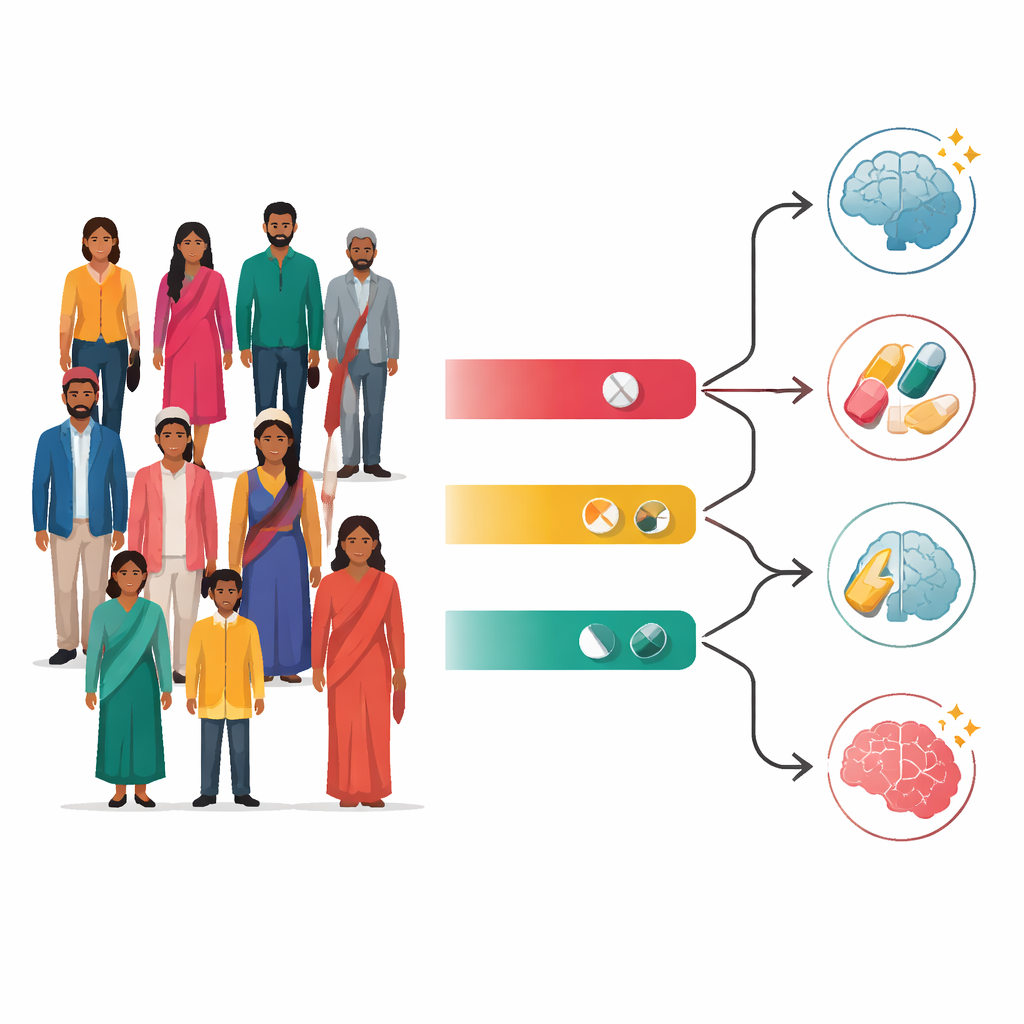
Two people can take the same antidepressant or mood stabilizer yet experience very different results—one feels better, another feels no change or troubling side effects. This study looks under the hood of that mystery in India, a country with enormous genetic diversity but little data on how its people process psychiatric medications. By mapping key drug‑processing genes in Indian patients, the authors show that many important genetic differences are missed by standard tests, with direct consequences for treatment success.
Hidden helpers that handle your medicine
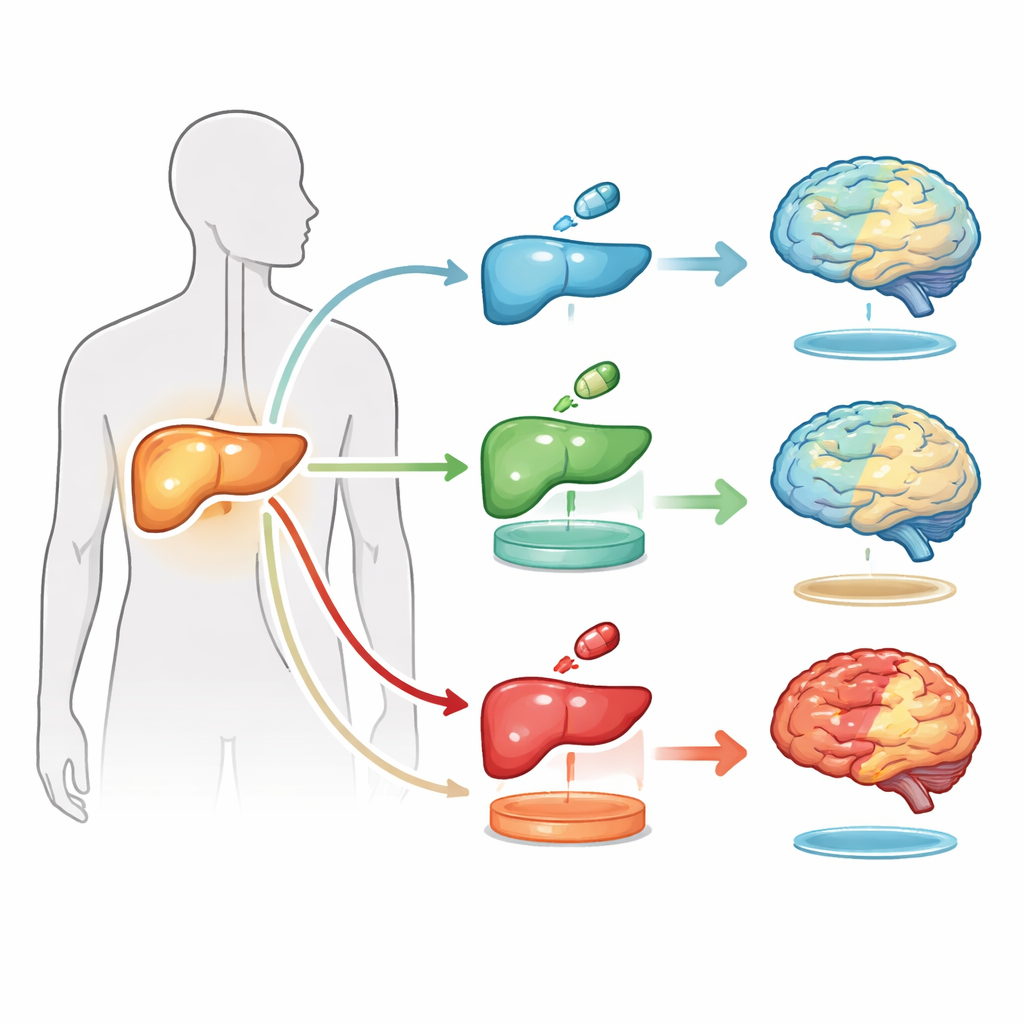
When you swallow a pill, your body relies on a family of proteins in the liver and other tissues to break it down. Three of these—called CYP2C19, CYP2D6, and CYP2C9—play a major role in clearing common psychiatric drugs used for conditions such as depression, schizophrenia, bipolar disorder, and anxiety. Small changes in the DNA instructions for these proteins can make them sluggish, average, or unusually fast. Doctors describe people with these differences as poor, intermediate, normal, rapid, or ultra‑rapid "metabolizers," and those categories strongly influence how much of a drug ends up in the bloodstream and brain.
A closer look at Indian patients and volunteers
The researchers analyzed 264 psychiatric patients and 119 healthy volunteers recruited from a military hospital in northern India. Using a high‑density genetic array designed to capture both common and rare variants, they read out detailed patterns in the three drug‑processing genes. Instead of testing only a few well‑known variants, as many commercial panels do, this platform scans dozens of possible versions, including those rarely seen or not yet well studied in other parts of the world.
Rare gene patterns with big effects
The team found that focusing only on the usual suspects would miss a meaningful slice of the Indian genetic picture. Alongside common patterns like CYP2C19 *1/*2, they detected much rarer combinations such as CYP2C19 *1/*34, CYP2C9 *1/*11, and CYP2D6 *4/*5. Even though each rare pattern showed up in only a small percentage of people, together they added up—and they often meant that a person processed drugs more slowly than expected. Overall, 13.26% of the psychiatric patients were poor metabolizers for CYP2C19, 3.41% for CYP2C9, and 2.27% for CYP2D6. Importantly, about 3% of all participants appeared to have compromised drug handling across all three genes at once, marking them as likely non‑responders or at high risk of side effects if treated with standard doses.
India’s genetic fingerprint in drug response
To see how these findings fit into the global picture, the authors compared their results with data from other regions, including Europe, Africa, East Asia, and the Middle East. Using mathematical techniques that group similar patterns together, they showed that the Indian psychiatric cohort clustered apart from most other populations and sat closest to Middle Eastern groups. This suggests that guidelines built mainly on European or East Asian data do not fully describe Indian patients. The work also highlighted that the control group and the patient group in India share a broadly similar genetic backdrop, underlining that the differences they observed are rooted in population history, not just illness status.
Toward more tailored treatment for the mind
For a layperson, the core message is straightforward: many Indians carry gene variants—some quite rare—that change how their bodies handle psychiatric drugs, and routine tests often do not look for these variants. As a result, a subset of patients may be given medicines or doses that are unlikely to help them or that raise the risk of side effects. This study argues that broader, India‑specific genetic screening panels, built to capture both common and rare variants, could help doctors choose better drugs and more precise doses from the outset. In time, such tailored approaches could make psychiatric care in India more effective and safer, and also guide care for people of Indian ancestry living around the world.
Citation: Garg, R., Saxena, S., Singh, V. et al. Reconstructing the pharmacogenomic landscape of psychiatric medication metabolism in the Indian population. Commun Med 6, 226 (2026). https://doi.org/10.1038/s43856-026-01497-7
Keywords: pharmacogenomics, psychiatric medication, India, drug metabolism, personalized medicine