Clear Sky Science · en
Developing a general research framework for long COVID using causal modelling
Why this matters for everyday life
Many people recover quickly after a COVID-19 infection, but a substantial minority continue to struggle with exhaustion, breathlessness, and brain fog months or even years later. Doctors call this cluster of lingering problems “long COVID,” and it has been frustratingly hard to pin down. This paper does not test a new drug or discover a single culprit. Instead, it offers a new way of thinking: a common roadmap that links what happens during the initial infection to who goes on to develop long-term problems. That roadmap could help researchers compare studies, plan better trials, and ultimately guide care for people living with long COVID.
From scattered clues to a shared map
Long COVID is not one disease but a tangled mix of possible causes and overlapping symptoms. Some scientists point to leftover virus hiding in tissues, others to runaway inflammation, immune system glitches, damaged mitochondria, or reawakening of old infections. At the same time, studies use different definitions of who counts as having long COVID and measure different outcomes, making results hard to compare. The authors argue that what is missing is a clear “cause and effect” map that connects early infection, organ damage, and later symptoms in a way that all researchers can share, even if they disagree on the finer details.
Using arrows and probabilities to capture cause and effect
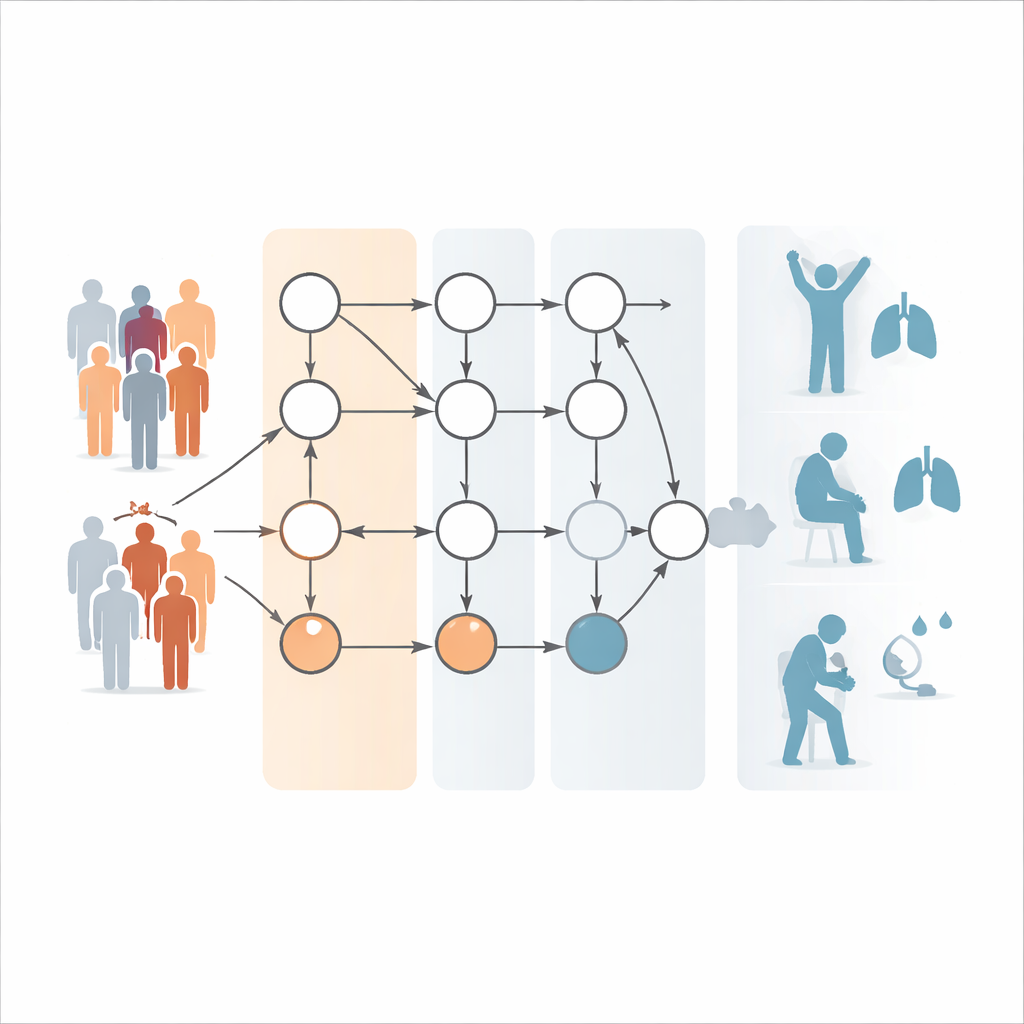
To build that shared map, the team uses a kind of diagram called a causal Bayesian network. In these diagrams, circles represent things like mild or severe illness, organ injury, treatment, and symptoms, and arrows show which factors are thought to lead to others. On top of this structure, the authors layer probabilities—estimates of how likely each state is, given what is already known. Crucially, the model is dynamic: it follows people across four broad time windows, from the start of infection through the acute illness, into the post-acute phase, and finally to long-term outcomes up to one or two years later. This lets the same framework describe both short-term and lingering problems, and how one can grow out of the other.
Four stories that illustrate risk over time
The researchers then use their framework to play out four clinical “what if” stories. In the first, a person has a mild case at the beginning; the model suggests only a small chance of serious long-term organ damage, and symptoms usually fade as the body repairs itself. In the second, the person starts out with severe disease, such as requiring hospital care. Here, the likelihood of both early and lasting organ problems, and of ongoing symptoms, is considerably higher, even as treatment helps many improve. In the third scenario, the only fact known is that the person reports symptoms during the acute phase; the framework infers a mix of mostly mild but some severe illness, with an intermediate risk of lasting damage.
What it means to have symptoms that persist
The fourth scenario reflects a common real-world definition of long COVID: someone has symptoms during the initial illness and still reports them several months later. When the model is given this pattern—symptoms early and again later—it sharply raises the estimated chance that the person has persistent organ dysfunction, and that additional pathways and new symptoms may emerge over time. This exercise illustrates how repeated symptom reporting can signal deeper, less visible problems, and how a causal map can turn scattered observations into structured inferences about what might be going on inside the body.
Zooming in on the lungs, zooming out to other illnesses
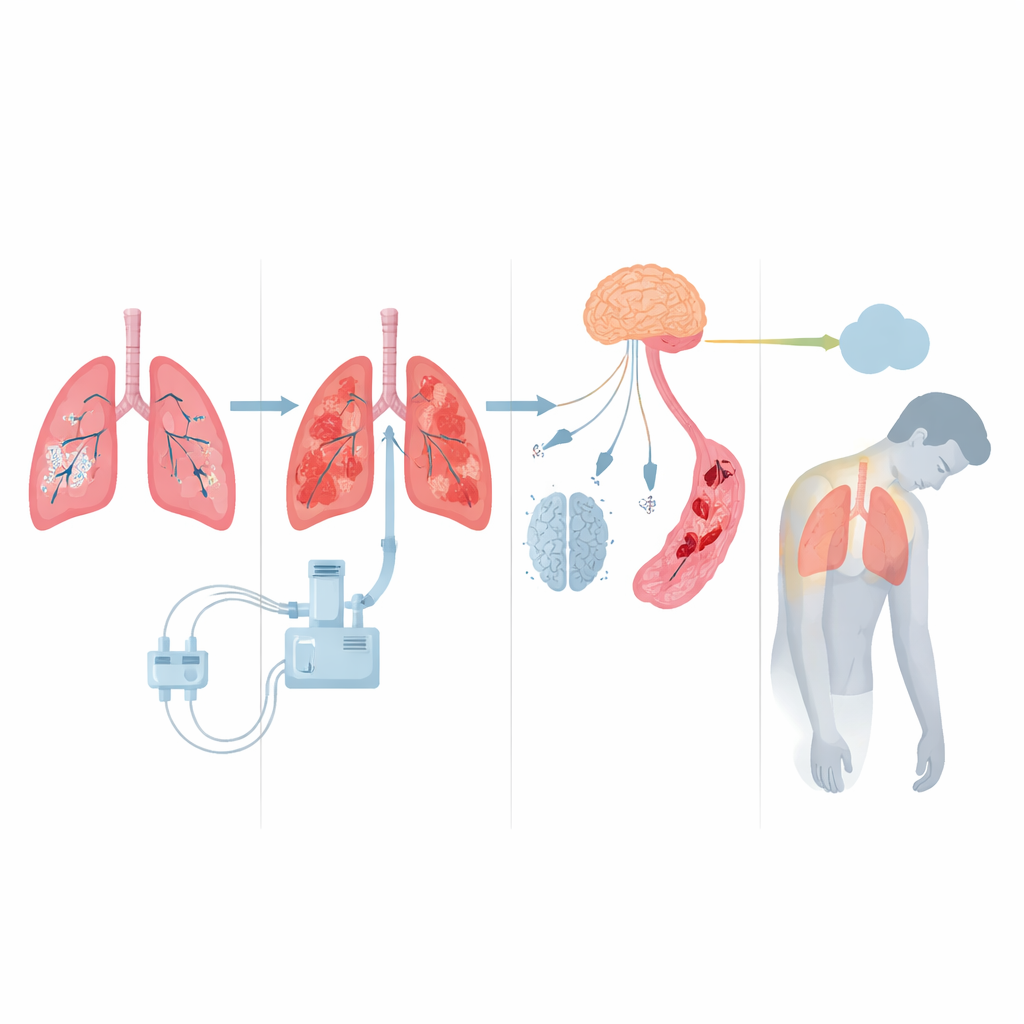
To show that the framework is flexible, the authors apply it specifically to the lungs. They plug in proposed processes such as inflammation in the air sacs, injury from mechanical ventilation, the build-up of fluid and blood clots, and later scarring and impaired oxygen exchange. These lung events are then linked forward to breathlessness and fatigue, and backward to the severity of the original infection. Because the framework is built at a high level—using broad categories like “reversible” versus “persistent” organ problems and generic time periods—it can also be adapted to other organs, or even to other post-infection syndromes that share features with long COVID, such as chronic fatigue conditions.
How this new roadmap could help patients
For people living with long COVID, this work does not yet provide a diagnostic test or a personalized forecast. Its value lies in giving scientists and clinicians a common language for cause and effect. With this shared roadmap, researchers can design studies that answer clearer questions, such as how particular treatments during the acute phase might change the odds of later fatigue or breathing difficulties. As real-world data from trials and observational studies are plugged into these models, they could become practical tools to support diagnosis, predict who is most at risk of long-term problems, and clarify how long COVID overlaps with other chronic post-infection conditions.
Citation: Pérez Chacón, G., Mascaro, S., Estcourt, M.J. et al. Developing a general research framework for long COVID using causal modelling. Commun Med 6, 251 (2026). https://doi.org/10.1038/s43856-026-01488-8
Keywords: long COVID, causal modelling, Bayesian networks, post-acute infection, respiratory symptoms