Clear Sky Science · en
Identifying genetic and cellular connections and distinctions among 15 autoimmune diseases using an in-silico approach
When the Body’s Defenders Turn Against It
Autoimmune diseases, from type 1 diabetes to lupus and psoriasis, affect roughly one in ten people. They arise when the immune system, meant to fight infections, mistakenly attacks the body’s own tissues. Many of these diseases run in families, and large genetic studies have uncovered thousands of DNA regions linked to risk. Yet doctors still struggle to explain why some people develop one autoimmune disease instead of another, or why some treatments help one condition but not a closely related one. This study tackles those questions by looking under the hood of the immune system’s genes and cells across 15 common autoimmune conditions.
Looking Across Many Immune Illnesses at Once
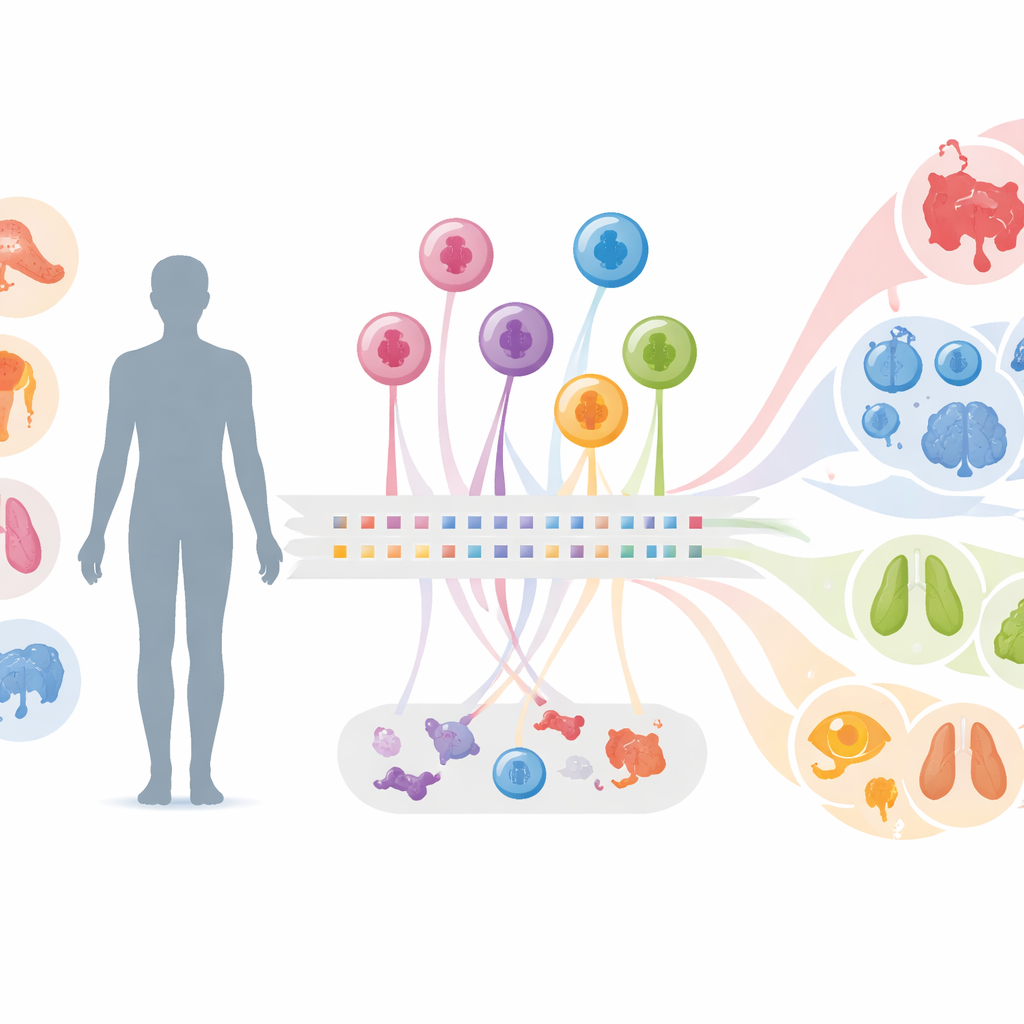
The researchers gathered results from large genetic association studies for 15 autoimmune diseases, including multiple sclerosis, rheumatoid arthritis, inflammatory bowel disease, type 1 diabetes, psoriasis, and others. They then expanded each risk variant to nearby, strongly linked variants and grouped these into wider genetic neighborhoods, called loci, and into more precise clusters of variants acting together, called signals. To move beyond simple lists of DNA changes, they overlaid this map with detailed "multi-omics" information: which variants affect gene activity, which lie in active switches in the genome, which genes they likely control, and in which major immune cell types these effects occur. This allowed them to ask not just where risk lies in the genome, but how it is likely to change immune behavior.
Shared Regions, Distinct Genetic Messages
One of the headline findings is that sharing a genetic region across diseases does not always mean sharing the same underlying cause. About half of all risk loci were linked to more than one autoimmune disease. But when the team zoomed in to the level of individual signals—tightly linked groups of variants likely to act as a unit—only about 15 percent were truly shared. In other words, different diseases often occupy the same postal code in the genome but receive different "letters": separate signals with different effects. By clustering diseases based on these signals, the authors saw clear groupings, such as one cluster that included inflammatory bowel disease, psoriasis, ankylosing spondylitis, and multiple sclerosis, and another that grouped type 1 diabetes with autoimmune thyroid disease and vitiligo.
Which Immune Cells Matter Most
To understand where in the body these genetic messages are read, the team asked which immune cell types show signs of regulatory activity at each signal. They concentrated on six broad cell groups: two kinds of T cells, B cells, natural killer cells, monocytes, and dendritic cells. For most signals, only a small number of these cell types seemed directly involved, and about one in five signals appeared specific to a single cell type. Overall, T cells dominated the landscape, but there were disease-specific twists: B-cell involvement was particularly enriched in systemic lupus erythematosus and primary biliary cholangitis, echoing the central role of antibody-producing cells in these conditions. These patterns hint that even when the same gene is implicated in several diseases, it may be misregulated in different immune cells, helping explain differences in symptoms and organ targets.
Zooming In on Key Genes and Pathways
Next, the researchers built a scoring system that combined several lines of evidence to link each genetic signal to one or more likely target genes. This approach yielded 1,554 genes associated with the 15 diseases, two-thirds of which were tied to just one condition. Yet more than 500 genes were shared by at least two diseases, and some—such as STAT4, SH2B3, and BACH2—appeared again and again, pointing to core components of autoimmune biology. When the team examined which biological pathways these genes fell into, they repeatedly saw themes such as T-cell differentiation, responses to viruses, interferon signaling, and interleukin (immune messenger) signaling. At the same time, some pathways were strikingly disease-specific, such as complement activation in lupus, keratinization in psoriasis, and certain inflammatory signaling routes in inflammatory bowel disease and celiac disease.
From Networks of Proteins to Possible Treatments
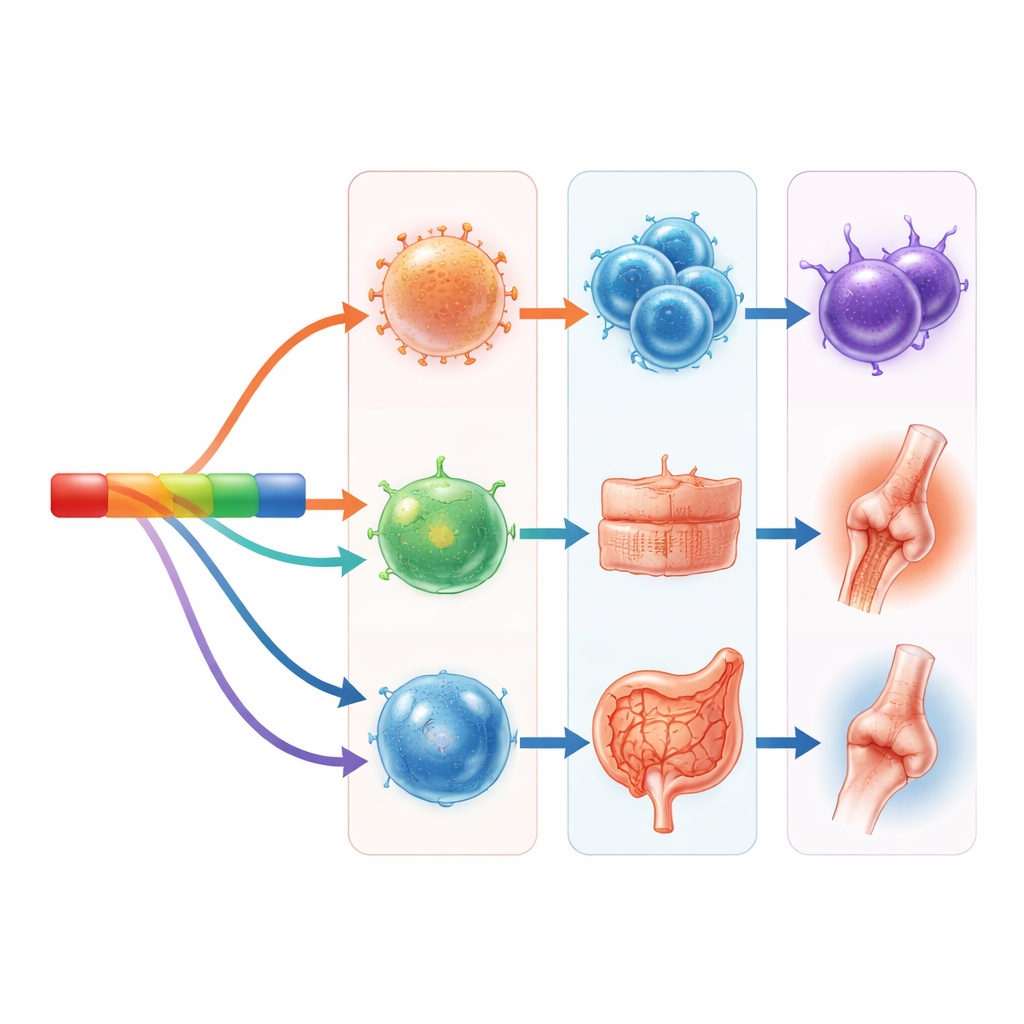
Because proteins often work together in teams, the authors then mapped how the 1,554 proteins interact with each other, creating a large network and splitting it into 32 functional modules. Some modules, such as one centered on immune recognition molecules (HLA genes) and another on helper T-cell differentiation, were important across nearly all diseases. Others were far more selective: one module linked to complement and blood clotting stood out mainly in lupus, while another enriched for skin cell maturation was specific to psoriasis. By cross-referencing these modules with existing drug databases, the team highlighted dozens of drugs that already target proteins within these networks—some approved for one autoimmune disease but not yet tried in others. This framework suggests concrete candidates for drug repurposing and for tailoring therapies to the functional modules that matter most in each condition.
What This Means for Patients and Future Care
For a layperson, the key message is that many autoimmune diseases share broad genetic neighborhoods and core immune pathways, but the details—exact variants, target genes, and cell types—often differ. These fine-grained differences help explain why closely related diseases do not always respond to the same treatments and why targeting a specific branch of an immune pathway can be more effective, and safer, than broadly blocking it. By systematically connecting genetic risk to immune cell behavior, protein networks, and known drugs, this study provides a roadmap for understanding why autoimmune diseases both resemble and diverge from one another—and points toward more precise, mechanism-based therapies in the future.
Citation: Dang, X., Wang, F.Q., Zhang, C. et al. Identifying genetic and cellular connections and distinctions among 15 autoimmune diseases using an in-silico approach. Commun Med 6, 235 (2026). https://doi.org/10.1038/s43856-026-01487-9
Keywords: autoimmune diseases, genetic risk, immune cell types, multi-omics, drug repurposing