Clear Sky Science · en
Efficacy and safety of eribulin plus gemcitabine as second-line treatment for recurrent HER2-negative breast cancer: a phase II, single-arm, open-label trial
Why this study matters for people with advanced breast cancer
Many women with advanced breast cancer eventually run out of effective treatment options, especially when their tumors are HER2‑negative and have already been exposed to standard drugs like anthracyclines and taxanes. This study explores whether combining two existing chemotherapies—eribulin and gemcitabine—can offer meaningful extra time before the disease worsens, without overwhelming side effects. Its findings will interest patients, families, and clinicians looking for realistic, near‑term options rather than experimental breakthroughs far in the future.
A hard‑to‑treat stage of breast cancer
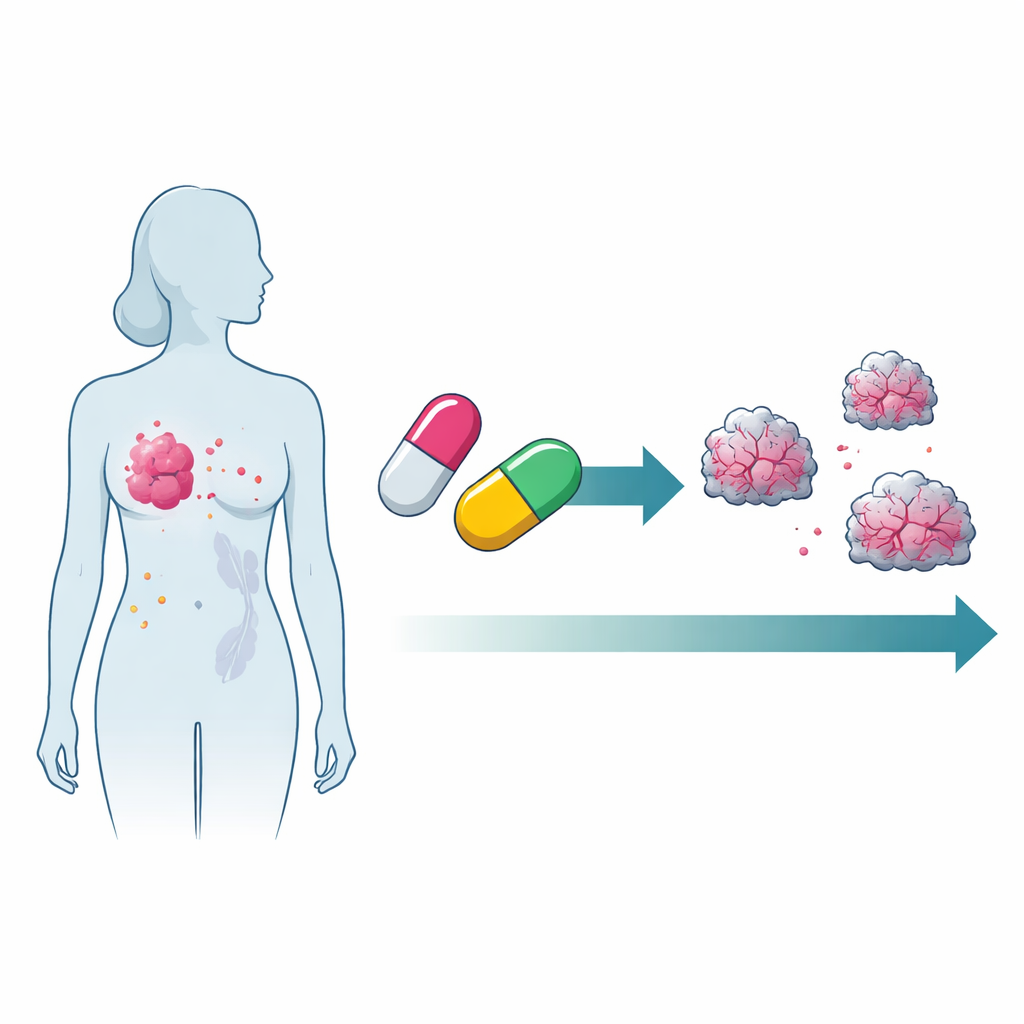
When breast cancer spreads to other parts of the body, it becomes metastatic breast cancer, a condition that is treatable but not usually curable. For tumors that are HER2‑negative, chemotherapy remains one of the main tools. Many patients in this situation have already received multiple rounds of different drugs, including anthracyclines and taxanes, and their cancers have learned to resist them. At that point, doctors need regimens that can still shrink tumors, control symptoms, and buy more time, but that are tolerable enough for patients whose bodies have already been through a lot.
The drug pair being tested
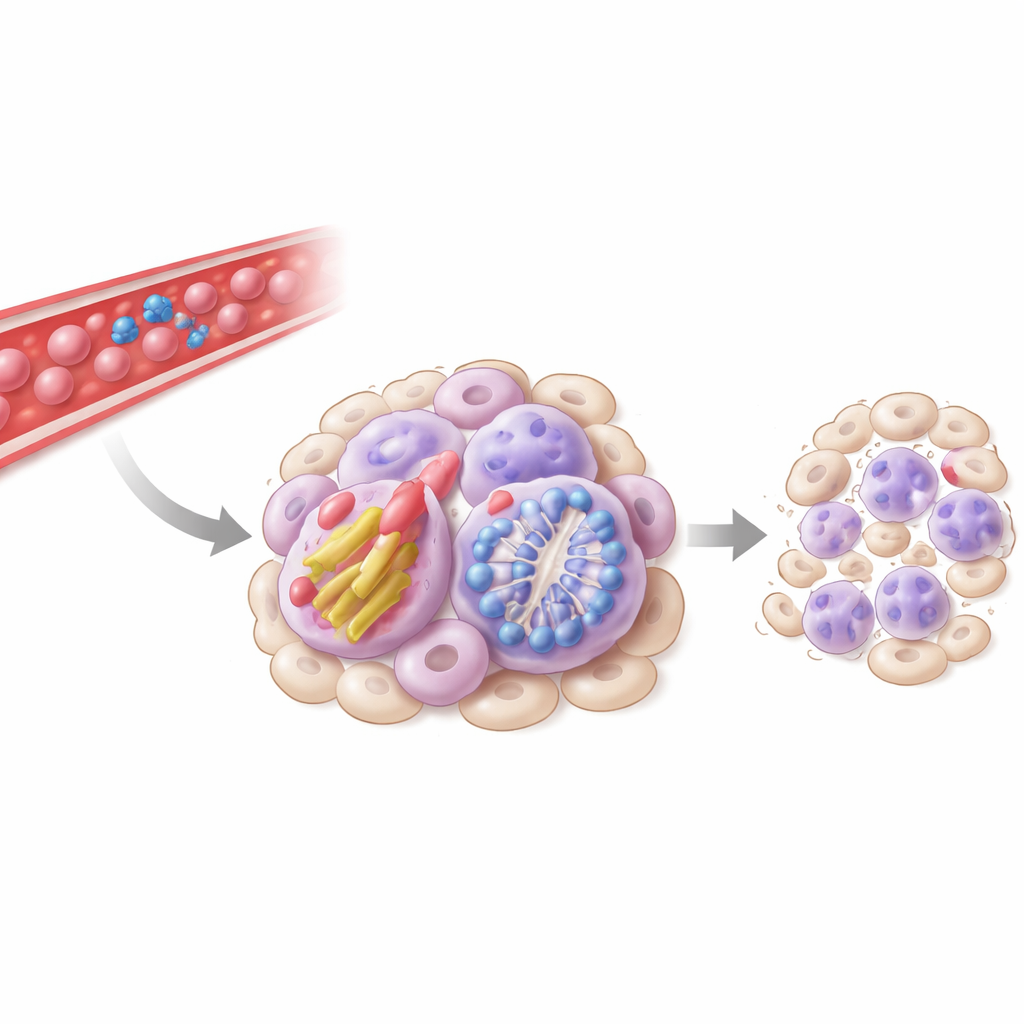
Eribulin and gemcitabine are both established cancer drugs that work in different ways. Eribulin interferes with the internal skeleton of dividing cells, freezing them in place and triggering cell death. Gemcitabine is a DNA‑blocking drug that slips into the genetic material of rapidly growing cells, preventing them from copying themselves. Earlier work suggested that using these two drugs together as a first treatment for metastatic breast cancer could control disease with fewer nerve‑related side effects than some standard regimens. The open question was whether this same combination could help patients later on, after other treatments had stopped working.
How the study was carried out
Researchers in China ran a phase II, single‑arm trial at 13 hospitals, enrolling 70 women with HER2‑negative metastatic breast cancer. Most (about 71%) had hormone‑receptor‑positive disease, while the rest had triple‑negative tumors, a more aggressive subtype. On average, patients had already received three different systemic treatment regimens before joining the study. All participants were given intravenous eribulin and gemcitabine on days 1 and 8 of a 21‑day cycle, continuing as long as the cancer did not progress and side effects remained manageable. The main outcome was how many patients had measurable tumor shrinkage, with additional tracking of how long they lived without the disease getting worse and what side effects occurred.
What the researchers found
Nearly half of the women—about 49%—saw their tumors shrink enough to qualify as an objective response, and more than 92% achieved at least temporary disease control (shrinkage or stable disease). On average, patients lived 7.2 months before their cancer progressed again. Those with hormone‑receptor‑positive tumors stayed progression‑free for a median of 8.4 months, while those with triple‑negative disease had a median of 6.3 months; this difference was not statistically strong, suggesting the regimen can help both groups. Importantly, women whose hormone‑receptor‑positive cancers had already failed targeted CDK4/6 inhibitor drugs still experienced a median of 7.2 months without progression when treated with this combination.
Safety and side effects in everyday terms
The main side effects involved the blood, which is common with chemotherapy. Many patients developed low white blood cell counts (which can increase infection risk), anemia, or low platelets, but these problems were usually predictable and could be managed with dose adjustments and supportive medications like growth factors. Severe fatigue and insomnia were relatively rare, and there were no treatment‑related deaths. Nerve damage, a side effect that often limits other regimens, was mostly mild when it did occur. Overall, the safety profile suggests that while this is still strong chemotherapy, it is feasible for patients who have already been heavily treated.
What this means for patients and clinicians
For women with HER2‑negative metastatic breast cancer who have already been through several lines of therapy, this study indicates that combining eribulin and gemcitabine can offer additional months of meaningful disease control for many, with side effects that can generally be anticipated and managed. It does not represent a cure or a dramatic breakthrough, but rather a practical, evidence‑based option to consider when standard regimens have been exhausted—particularly for those needing relatively fast tumor shrinkage to relieve symptoms. Larger, randomized trials will be needed to compare this approach directly with other available treatments, but for now it adds a valuable tool to the limited arsenal against advanced breast cancer.
Citation: Xu, X., Zhong, J., Lin, H. et al. Efficacy and safety of eribulin plus gemcitabine as second-line treatment for recurrent HER2-negative breast cancer: a phase II, single-arm, open-label trial. Commun Med 6, 202 (2026). https://doi.org/10.1038/s43856-026-01483-z
Keywords: metastatic breast cancer, HER2-negative, eribulin, gemcitabine, second-line chemotherapy