Clear Sky Science · en
A generalizable cross-continent prediction of esophageal squamous cell carcinoma using the oral microbiome
A Simple Spit Test for a Deadly Cancer
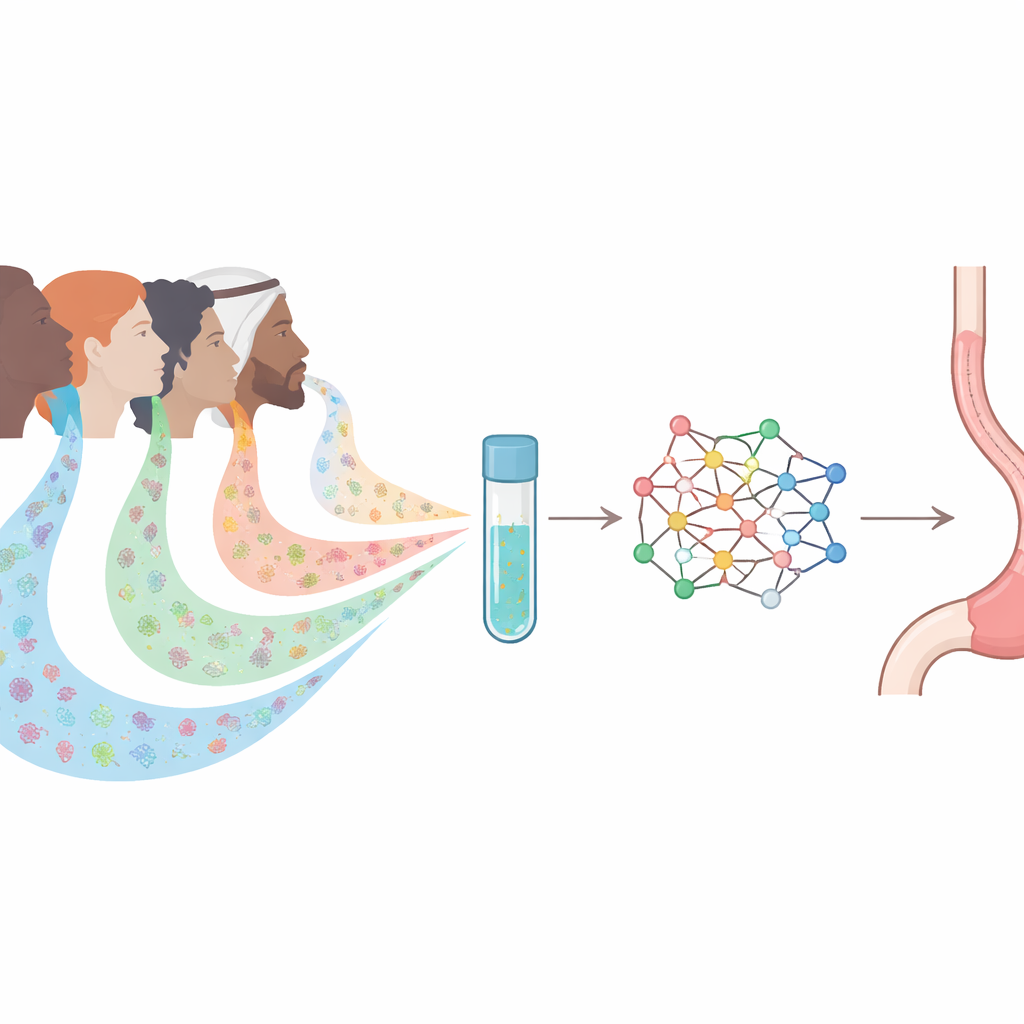
Esophageal squamous cell carcinoma is a mouthful of a name for a cancer with a deadly reputation. It often strikes people in parts of Africa and Asia where medical resources are limited, and it usually isn’t found until swallowing becomes painful—when treatment is far less likely to save a life. This study explores a surprisingly simple idea: could a small tube of spit, analyzed for the microbes it contains, help flag this cancer early and reliably, even in very different parts of the world?
Tiny Mouth Residents as Warning Signs
Our mouths are home to bustling communities of bacteria—the oral microbiome—that constantly wash down the esophagus. Because the esophagus is hard to sample directly, scientists wondered whether patterns in saliva might mirror what is happening deeper inside the body. In this work, researchers focused on people in Soweto and Johannesburg, South Africa, where this cancer is common. They collected saliva from 48 adults with confirmed esophageal squamous cell carcinoma and 110 similar adults without cancer, then read out the microbial "barcodes" in each sample using DNA sequencing.
Clear Differences Between Patients and Healthy People
The team found that people with this cancer had a noticeably disrupted mouth ecosystem. Their saliva contained fewer kinds of bacteria overall and a different mix of species compared to controls. Certain bacterial groups—such as Capnocytophaga, Lautropia, Selenomonas, Streptococcus, and some specific strains like Fusobacterium nucleatum, Veillonella dispar, and Lautropia mirabilis—were more common in patients, while others were less abundant. One strain of F. nucleatum in particular stood out: on its own, its presence and level could moderately distinguish cancer patients from healthy participants. Together, these shifts paint a picture of a mouth community that has been tipped out of balance in people with disease.
Teaching Computers to Read Microbial Patterns
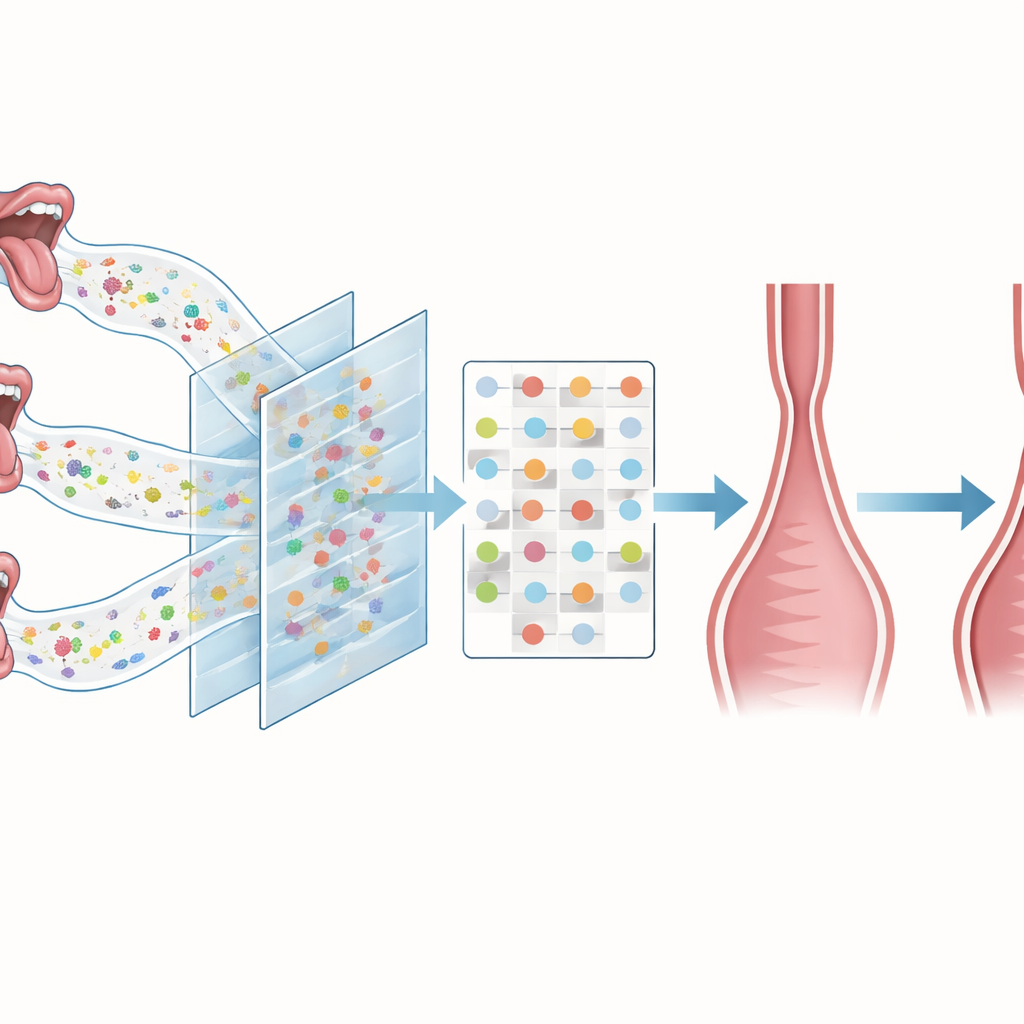
To test whether these microbial differences could be turned into a practical screening tool, the researchers trained computer models to separate patients from controls based only on saliva data. They compared this with models that used common risk information such as age, smoking, alcohol use, education, and other background details. Basic clinical information gave only modest performance. By contrast, when the models looked at the full microbial patterns in saliva, they classified cancer status with striking accuracy. Adding clinical data on top of the microbial profiles did not improve results, suggesting that the microbes themselves already carry the key signals.
Does the Signal Hold Up Across the Globe?
Because mouth bacteria differ from place to place, the team then asked whether a saliva-based signature of cancer from South Africa would still be useful elsewhere. They re-analyzed data from three studies of patients in high-risk regions of China and tested how well their South Africa–based models—now simplified to focus on species-level patterns—could spot cancer in these independent groups. Performance varied, in part because one Chinese study enrolled only people with gum disease and another focused on very early cancers. However, when the scientists trained models across all four studies and then tested on whichever study had been left out, the combined microbial signal still separated cancer from non-cancer reasonably well in each region. Many of the same types of bacteria showed consistent links to disease or health across continents.
What This Could Mean for Future Screening
For people living in areas where this cancer is common but endoscopy is scarce, a simple saliva test that can be mailed or done in a clinic could be a game changer. This study shows that the mix of microbes in saliva is reliably different in those with esophageal squamous cell carcinoma and that computer models can translate those differences into strong predictions, even across very different populations. More work is needed in larger groups, especially in people with early-stage disease and in other high-risk regions, but the results suggest that our everyday mouth bacteria could someday help guide who should be sent for further, life-saving testing.
Citation: ElNaggar, S., Chen, W.C., Prodehl, L.M. et al. A generalizable cross-continent prediction of esophageal squamous cell carcinoma using the oral microbiome. Commun Med 6, 197 (2026). https://doi.org/10.1038/s43856-026-01468-y
Keywords: esophageal cancer, oral microbiome, saliva testing, microbiome diagnostics, machine learning in medicine