Clear Sky Science · en
Prediction of risk of hearing loss by industry noise from cross-sectional and longitudinal data
Why workplace noise matters
Many people think of loud noise at work as a nuisance, not a health threat. Yet years spent in clanging factories or shipyards can quietly erode the ability to hear the very frequencies needed to understand speech. This not only makes conversations exhausting, it is linked to loneliness, depression, dementia, and other serious health problems. The study summarized here asks a practical question with big consequences: can we use routine tests and basic personal information to spot workers who are headed toward this kind of hearing damage early enough to protect them?
Looking closely at shipyard workers
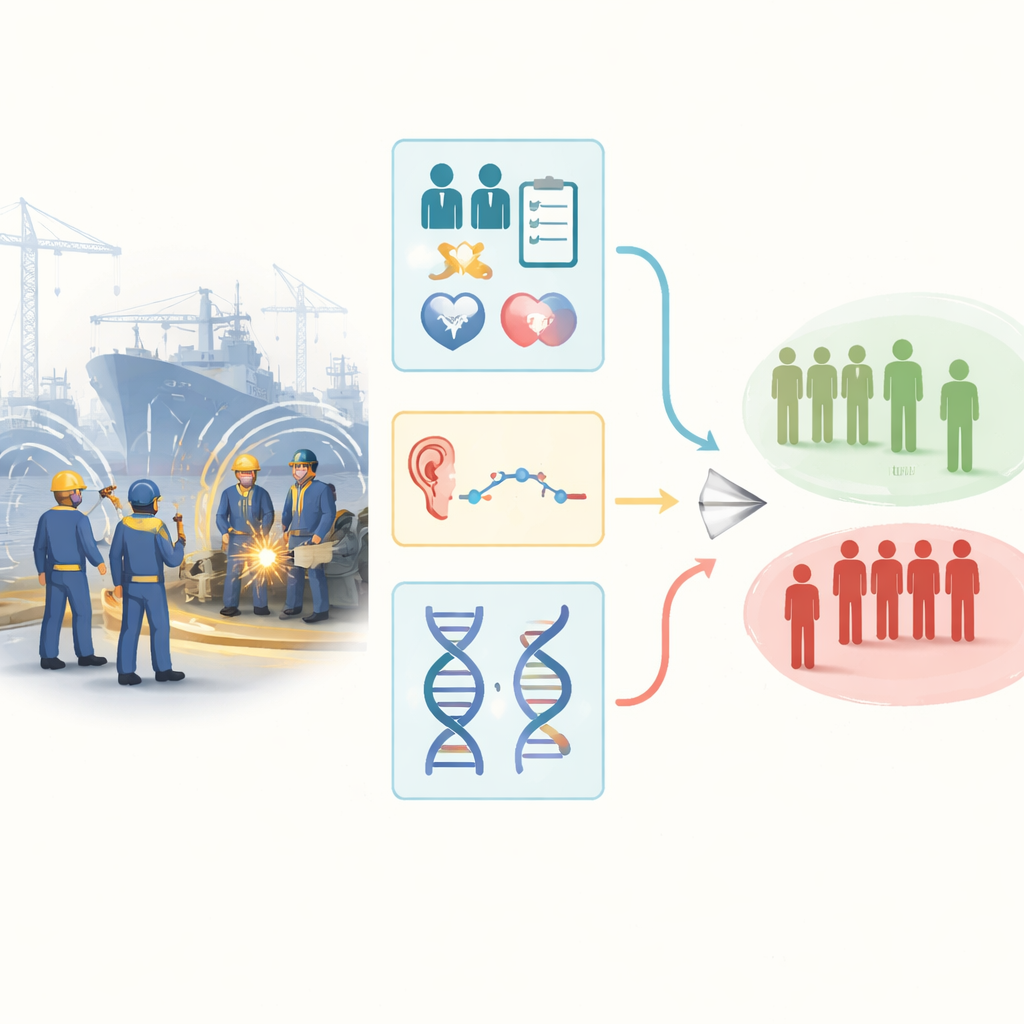
The researchers followed nearly 10,000 workers from two large shipyards in China over more than a decade. These workers regularly spent their shifts around powerful machines and tools that generate hazardous levels of noise. To focus on hearing damage caused by sound itself, the team excluded people with other known ear diseases, congenital deafness, unusual middle-ear test results, or exposure to chemicals that can poison hearing. At each visit workers filled out questionnaires about their jobs and habits, underwent standardized hearing tests in a mobile clinic, and in many cases provided blood samples so that the team could examine genetic variations linked to noise sensitivity.
Finding the most telling early warning signs
Noise-induced hearing loss often starts at very high pitches and creeps downward into the frequencies used for everyday speech. The team examined hearing thresholds at multiple test tones, along with age, sex, smoking, drinking, and a careful estimate of lifetime noise exposure on the job. Using modern data-mining methods, they searched for the smallest set of measures that best distinguished workers who already had speech-frequency loss from those who did not. Two simple numbers stood out: the average hearing threshold in both ears at 3 kilohertz, and a combined measure that averaged 3 and 6 kilohertz. People who already needed louder sounds at these pitches were far more likely to have damage in the speech range, even after accounting for age and total noise exposure.
Turning data into a personal risk score
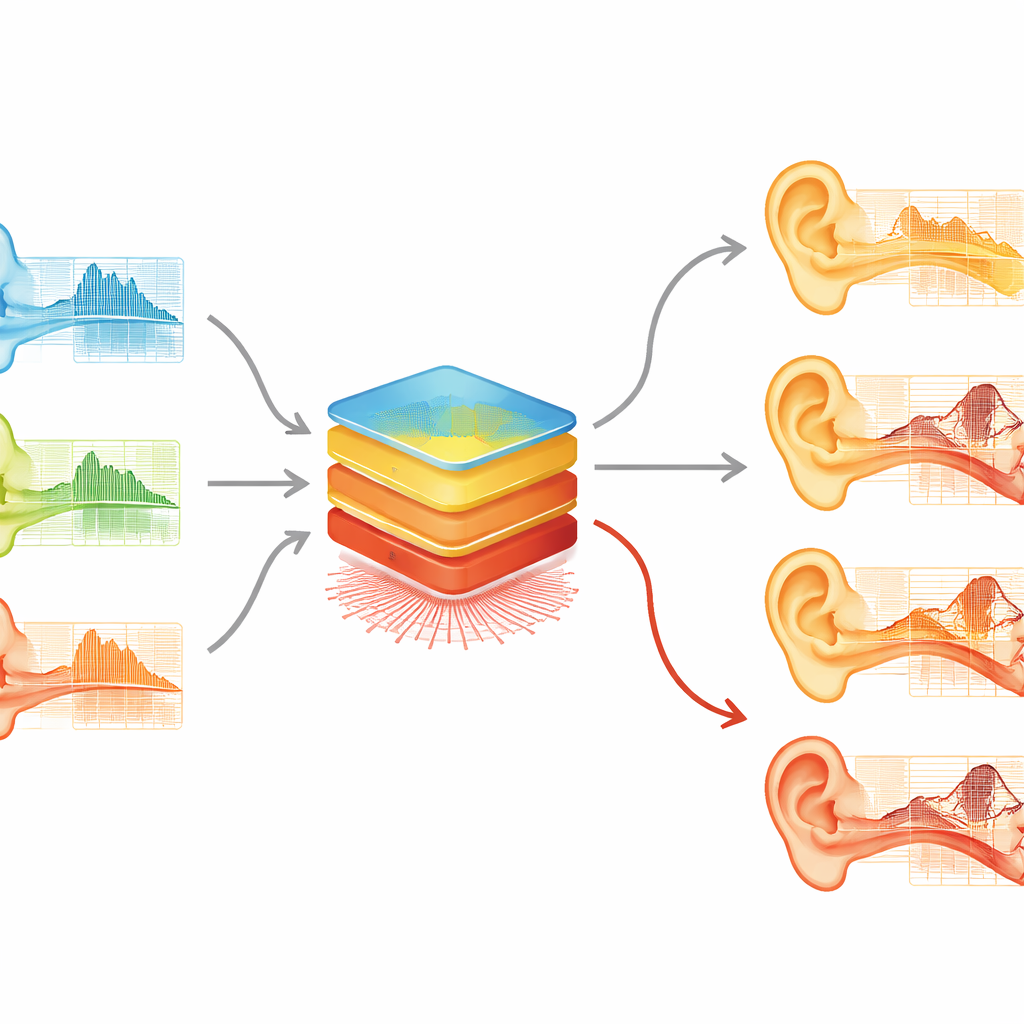
Next, the researchers asked whether those same measures could forecast who would develop speech-frequency loss over the following years. They focused on a subgroup of more than 2,400 workers who started the study with normal hearing in the speech range and were tested repeatedly for at least three years. For both men and women, older age, higher cumulative workplace noise, and poorer thresholds at 3 and 3–6 kilohertz all pointed to a much higher future risk. Statistical models built on these factors were able to distinguish higher- from lower-risk workers with strong accuracy: in both the original shipyard and the external validation shipyard, measures of performance such as the area under the curve and concordance index were generally at or above 0.8, a level considered good for medical prediction tools.
The added twist of inherited sensitivity
Because some people seem to have “tender ears” that are more easily harmed by noise, the team also examined a set of known genetic variants linked to noise-related hearing problems. In more complex versions of their models, including this genetic information modestly improved the ability to sort workers into higher and lower risk groups, especially among women. However, the gains were small and inconsistent across different definitions of speech-frequency loss and between training and test groups. For the sake of practicality and reliability, the authors chose not to include genetic markers in the final graphical tools that clinicians or occupational-health officers would use, although they note that richer genetic data in future studies could change this picture.
What this means for protecting hearing
In everyday terms, the study shows that a straightforward hearing test at a slightly higher pitch than normal speech, combined with a worker’s age and total noise exposure, can offer an individualized forecast of who is most likely to lose the ability to follow conversation in coming years. The models are strong enough to support real-world decisions, such as intensifying protection and monitoring for high-risk workers or considering job changes before serious damage occurs. While the work was done in shipyards, the same approach could be adapted to other loud industries. The message is clear: by treating hearing tests not just as snapshots but as early warning systems, workplaces can move from reacting to hearing loss after it happens to preventing the most life-altering forms of damage before they take hold.
Citation: Yu, X., Li, J., Wang, J. et al. Prediction of risk of hearing loss by industry noise from cross-sectional and longitudinal data. Commun Med 6, 190 (2026). https://doi.org/10.1038/s43856-026-01463-3
Keywords: noise-induced hearing loss, occupational health, hearing screening, predictive risk models, industrial noise exposure