Clear Sky Science · en
Ecological and socioeconomic factors associated with globally reported tick-borne viruses
Why Ticks and Hidden Viruses Matter to You
Most of us think of tick bites as a nuisance of summer hikes, not as clues in a global detective story. Yet tiny viruses that ride on ticks can cause serious illness in people and animals, and their true spread is largely invisible. This study asks a deceptively simple question with big public health consequences: where in the world are tick-borne viruses being reported, and how much of that map reflects biology versus money, education, and political stability? By unpacking who can actually detect and report these infections, the authors reveal that what we count as "disease risk" often says as much about societies as it does about microbes.
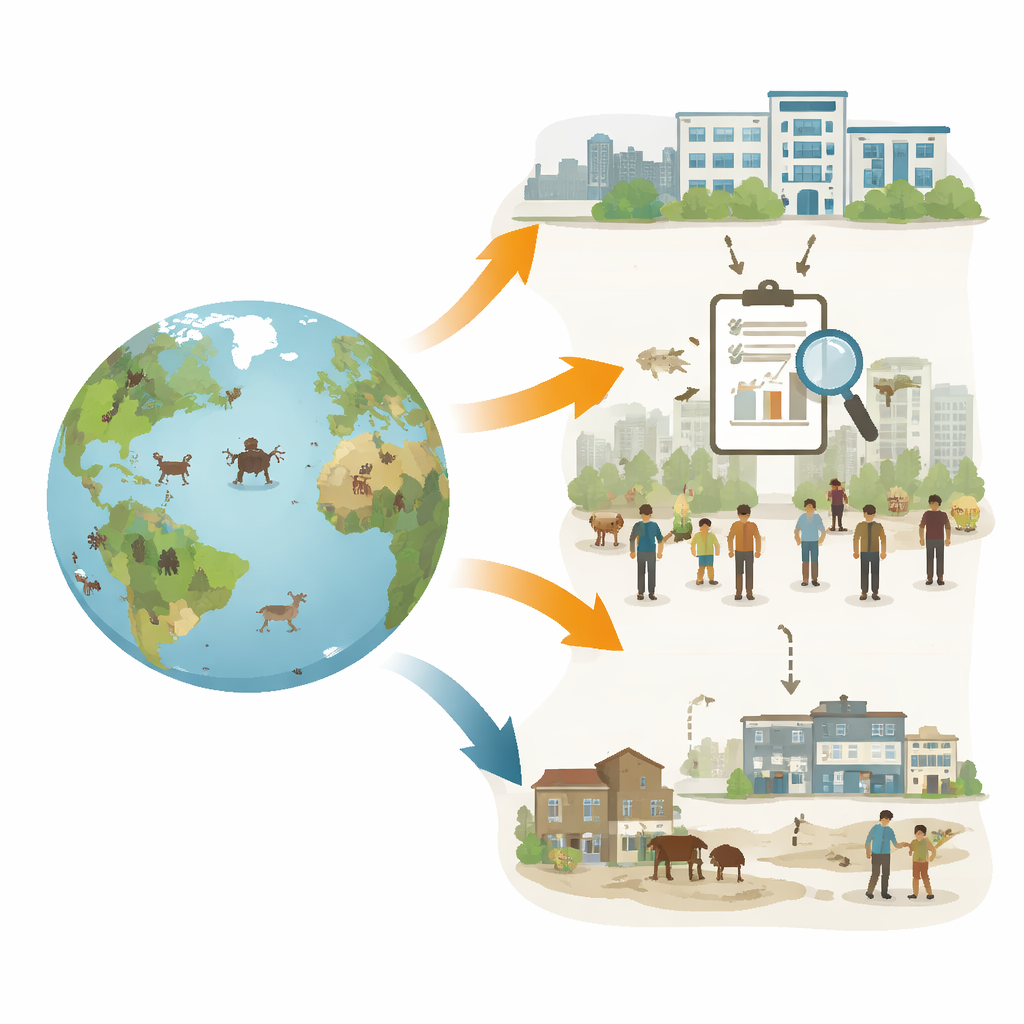
From Tick Bite to Official Case Count
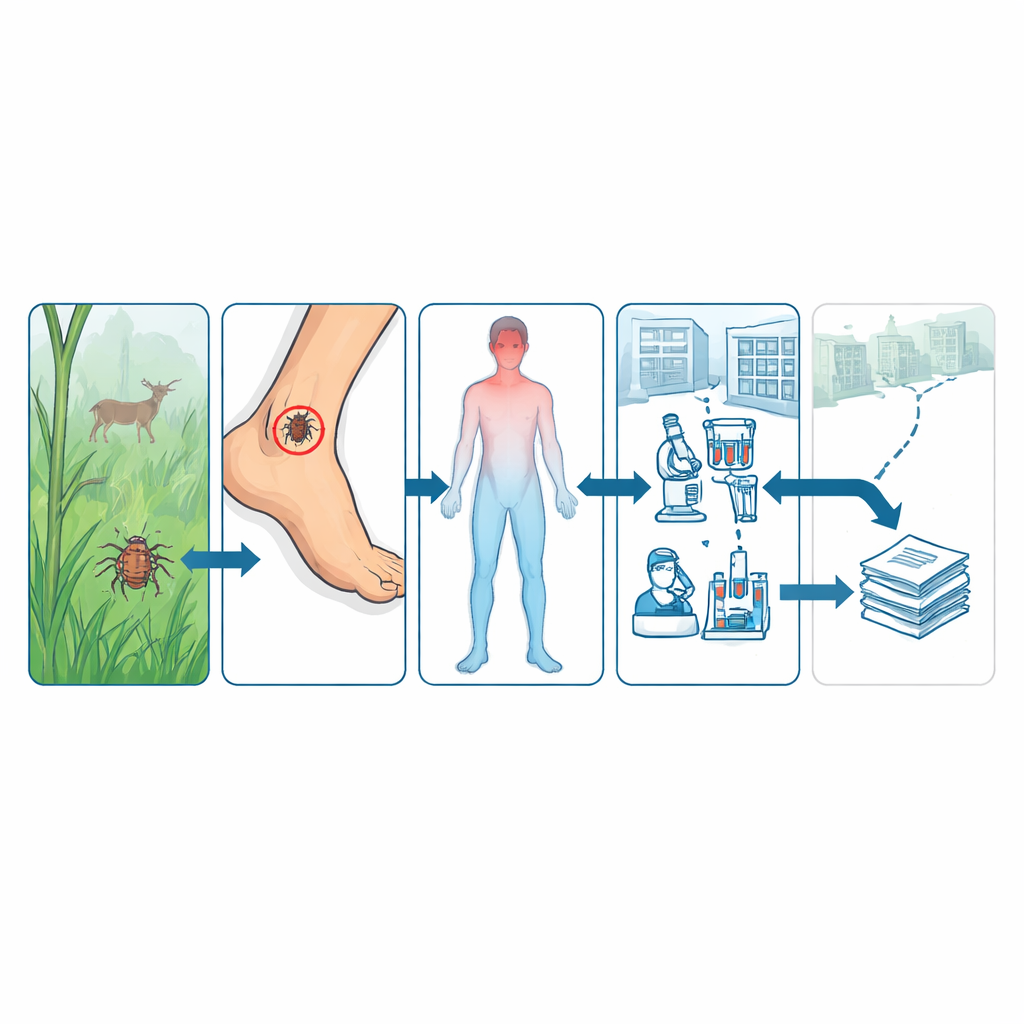
Reporting a tick-borne virus case is not just about a tick finding a human. First, the environment must support ticks and the wild animals that carry their viruses. Then a person has to be bitten, fall ill, and recognize the problem. They need access to a clinic that can run specialized tests, and that clinic must be plugged into a system that records and forwards the information to national and international databases. The authors describe this as a multi-step pathway: suitable habitat, exposure, disease awareness, health care access, financial resources, and finally a functioning reporting pipeline. If any step fails, the virus may be circulating locally but never appear in official statistics.
Building a Global Picture of Risk and Reporting
To explore what shapes this pathway at the scale of whole countries, the researchers combined two large data sources. One is a global database of tick-borne viruses detected in ticks themselves, focusing on 14 viruses of special concern that affect both animals and people. The other is a set of 24 country-level measures that capture climate, landscapes, farming activity, education, health spending, income inequality, conflict, and more. Using a machine-learning approach known as boosted regression trees, they asked which combinations of these ecological and socioeconomic traits best distinguished countries that had reported at least one tick-borne virus from those that had not.
What Sets Reporting Countries Apart
The analysis revealed that both nature and society play strong roles, but the social side often decides whether infections are seen. Certain climate types, especially subarctic and temperate oceanic zones, were linked with higher chances that a country had reported tick-borne viruses, reflecting environments where ticks thrive and where long-standing surveillance systems exist. Yet some of the strongest signals came from measures of national capacity: countries with large populations, lower income inequality, and more graduates trained in agriculture, forestry, and veterinary fields were much more likely to appear in the virus database. The presence of student veterinary organizations and higher pesticide use also tracked with reporting, hinting at more intensive farming and better professional awareness of tick problems.
Wealth, Stability, and the Invisible Burden
Equally revealing were the traits of countries that rarely or never show up in tick-virus records. Where more people live in poverty, experience conflict, or face high social vulnerability, reporting drops off—even if the environment seems suitable for ticks. Limited health budgets, scarce diagnostic labs, and thin surveillance networks mean that infections may go untreated or misdiagnosed, and never reach national tallies. When the authors tested whether their results could simply reflect where scientists publish more studies, they found only a modest link. This suggests that their models are picking up genuine patterns in where tick-borne viruses are both present and visible, not just where researchers happen to look most often.
What This Means for Protecting People
For a layperson, the key message is that official maps of tick-borne disease are not neutral reflections of biology; they are filtered through economics, education, and political stability. The study supports a "One Health" view that ties human, animal, and environmental health together, and argues that improving living conditions and professional capacity can be as important as monitoring the ticks themselves. Strengthening veterinary and public health training, investing in clinics and laboratories, and reducing conflict and inequality can all help bring hidden infections to light. In the long run, the authors suggest, policies that foster economic development and fairer access to health resources may be among the most effective tools for reducing the global toll of tick-borne viruses.
Citation: Sambado, S., Ryan, S.J. Ecological and socioeconomic factors associated with globally reported tick-borne viruses. Commun Med 6, 210 (2026). https://doi.org/10.1038/s43856-026-01461-5
Keywords: tick-borne viruses, disease surveillance, One Health, global health inequality, vector-borne diseases