Clear Sky Science · en
Antigen heterogeneity in the development and clinical validation of a multiplexed urine test for tuberculosis
Why a Simple Urine Test for TB Matters
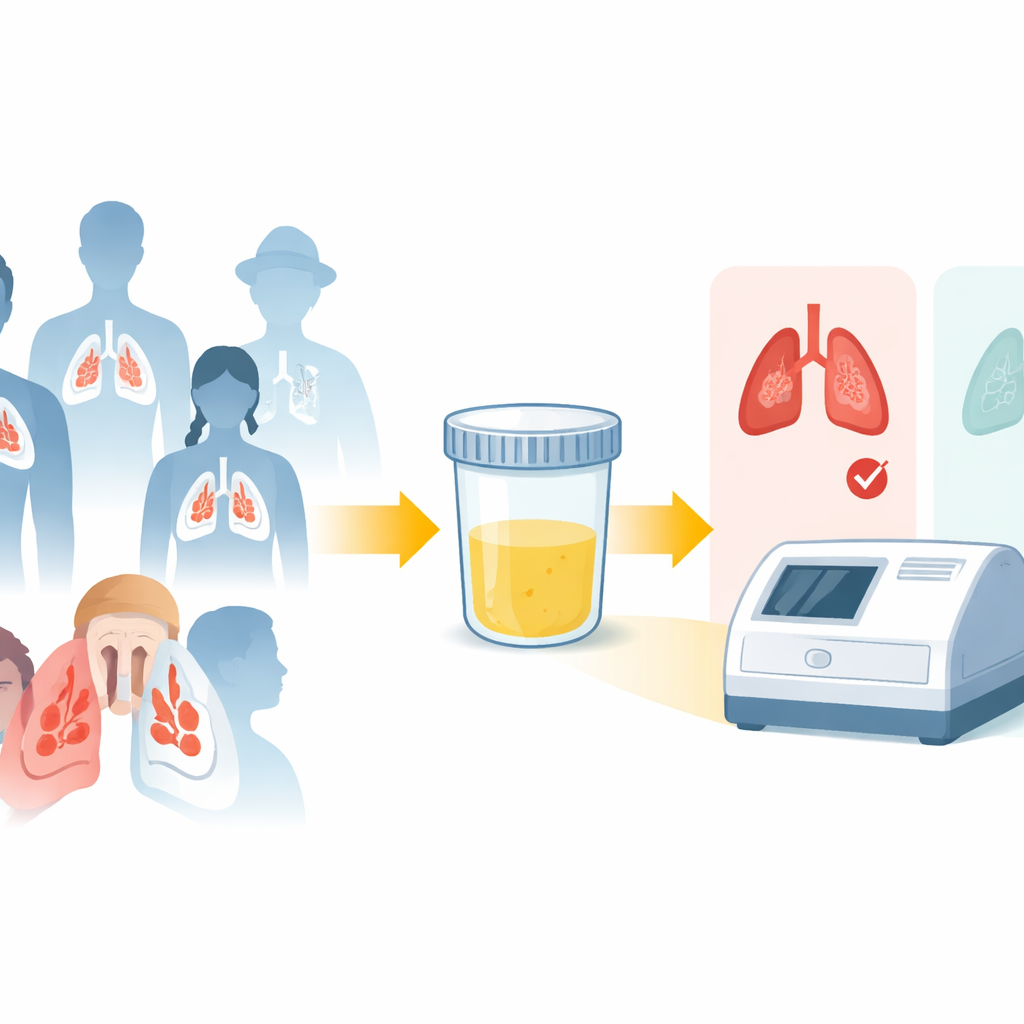
Tuberculosis (TB) still kills more than a million people every year, largely because too many patients are never diagnosed in time to start treatment. Today’s tests often require infectious sputum samples, specialized laboratories and days or weeks of waiting, all of which are scarce in many parts of the world. This study explores a different approach: a highly sensitive urine test that looks for tiny fragments of the TB germ, with the goal of giving doctors a safer and simpler way to spot the disease, especially in people living with HIV.
Looking for TB Clues in Urine
Instead of searching directly for whole TB bacteria, the researchers focused on two telltale molecules that the germs shed into the body: a fatty-sugar molecule called lipoarabinomannan (LAM) and a protein called antigen 85B (Ag85B). Both can leak from infected tissues into the bloodstream and then pass through the kidneys into urine. Because urine is easy to collect and does not generate infectious aerosols, it offers a much safer sample type than sputum. Earlier urine tests for LAM exist, but they miss many true TB cases, particularly in people without advanced HIV, prompting the team to try a more sensitive technology.
An Ultrasensitive Molecular Counting Device
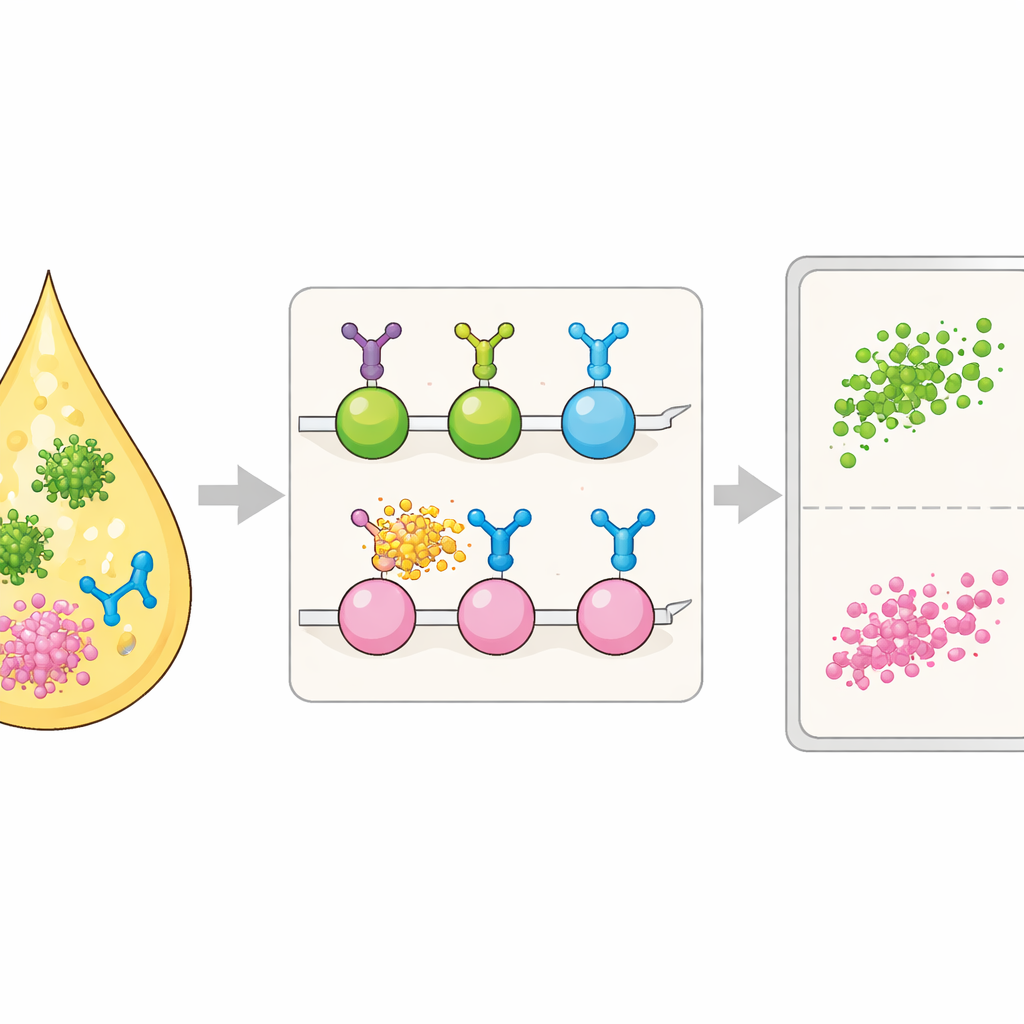
The team built their test on a platform known as single-molecule array technology, which can detect extraordinarily low levels of proteins and similar molecules. In this setup, microscopic beads are coated with antibodies that each grab one specific target. The authors designed a four-part "multiplex" assay: one pair of antibodies captured Ag85B, while three different antibody pairs each latched onto distinct regions of the LAM molecule. By shining light on the beads and measuring the resulting fluorescence, the instrument effectively counts how many target molecules from the urine sample are present, generating separate readings for Ag85B and for each of the three LAM-binding strategies.
Testing the Assay Around the World
To see whether this lab tool could work as a real diagnostic test, the researchers analyzed urine from 576 adults who had symptoms of TB in South Africa, Peru, Vietnam and Cambodia. All samples were collected before treatment and were carefully anonymized. Patients were classified as having TB or not based on standard methods such as culture, smear microscopy, molecular tests and clinical follow-up. The scientists used part of the sample set to train a computer model to combine the four biomarker measurements into a single TB-or-not score, then evaluated its performance both with statistical cross-checking and in a fully blinded test set that the computer had never seen before.
How Well Did the New Test Perform?
Across all 576 people, the urine test correctly identified TB in about 45 percent of confirmed cases, while correctly ruling it out in 98 percent of people who did not have the disease. Its performance was better in people living with HIV: among them, sensitivity rose to 58 percent while specificity stayed very high at 98 percent. In a blinded comparison on one cohort, the new assay outperformed the existing rapid urine LAM test used in many clinics, especially for HIV-positive patients. However, it was still less sensitive than more complex sputum-based molecular tests, and it did not yet meet the ambitious targets laid out by the World Health Organization for a stand-alone TB diagnostic.
What Antigen Diversity Reveals
One of the study’s surprises was that different antibodies gave strikingly different LAM readings from the same urine sample. Some antibodies detected higher apparent levels, others showed clearer separation between TB and non-TB patients, and still others were more easily confused by unrelated molecules in urine. When the authors combined all three LAM measurements plus Ag85B in their computer model, the overall accuracy improved only modestly compared with using the single best LAM assay alone. This finding suggests that there is no single, uniform "LAM concentration" in urine; instead, the TB bacteria produce subtly different versions of the molecule, and antibodies vary in how cleanly they recognize these forms across different countries, HIV statuses and bacterial lineages.
What This Means for Future TB Diagnosis
For a layperson, the bottom line is that the researchers have advanced a promising but still imperfect step toward a simple urine test for TB. Their multiplex assay shows that it is possible to detect TB-related molecules at extremely low levels in urine and to do so more reliably than current rapid LAM tests used for people with HIV. Yet the disease signals are often so faint and variable that even this ultrasensitive method misses many cases. The work highlights both the potential and the limits of chasing TB antigens in urine, and it provides a rich dataset and technical blueprint that could help guide the next generation of safer, easier tests to help doctors start life-saving TB treatment sooner.
Citation: Dougan, T.J., Roth, S., Xie, L. et al. Antigen heterogeneity in the development and clinical validation of a multiplexed urine test for tuberculosis. Commun Med 6, 219 (2026). https://doi.org/10.1038/s43856-026-01458-0
Keywords: tuberculosis diagnostics, urine biomarker test, lipoarabinomannan LAM, single molecule array, HIV-associated TB