Clear Sky Science · en
Distinct prognostic value of [18F]FDG PET and [68Ga]Ga-PSMA-11 PET in advanced hormone-sensitive prostate cancer
Why this matters for men and their families
Prostate cancer is one of the most common cancers in men, and many patients are diagnosed when the disease has already spread beyond the prostate but still responds to hormone-blocking treatment. Doctors increasingly use advanced scans to see where the cancer is and how active it is, but it has not been clear which scans best predict how a man will do or who needs more aggressive treatment such as chemotherapy. This study looks at two different types of PET scans and shows how each offers a different, useful window on the disease.
Two scans that see cancer in different ways
PET scans work by injecting a tiny amount of a radioactive tracer that travels through the body and lights up on the scan. In this study, nearly 300 men with newly diagnosed advanced hormone-sensitive prostate cancer had two tracers before starting treatment. One tracer, FDG, highlights how much sugar tumors are using, a general sign of how aggressive they are. The other, PSMA-11, sticks to a protein that is usually abundant on prostate cancer cells and helps doctors see even tiny spots of disease. Because these tracers reveal different aspects of the cancer, the researchers wanted to know how each related to treatment response and how long patients stayed free of worsening disease.
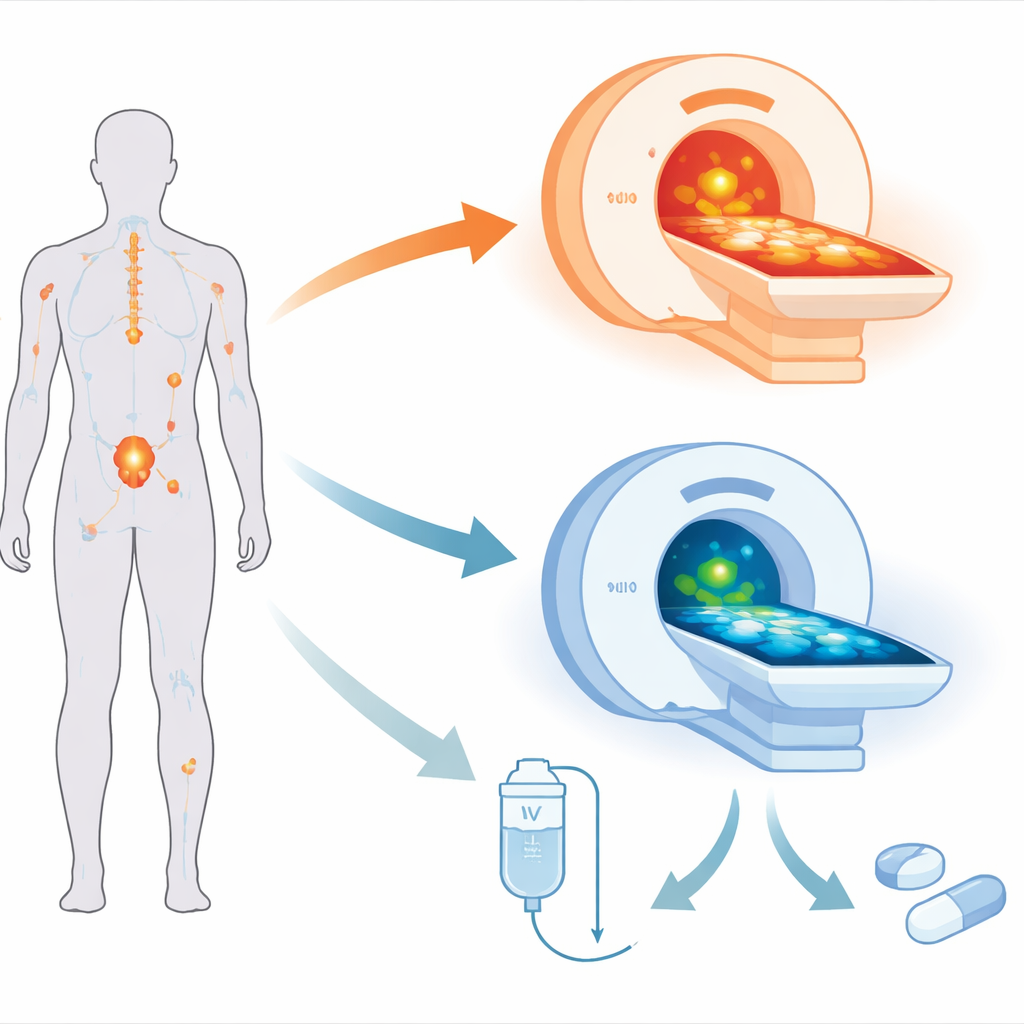
What overall scan activity says about future risk
When the team added up FDG activity across all visible tumors in each patient, they found a clear pattern: men whose cancers showed higher total FDG uptake at the start tended to have shorter periods before their disease progressed. In other words, a big whole-body FDG signal was a warning sign of more aggressive cancer and a higher chance that standard hormone-based therapy would stop working sooner. A measure of how much tumor volume was taking up FDG showed a similar link to poorer outcomes. In contrast, for the PSMA-11 scan, only the total volume of PSMA-positive tumor predicted worse survival; the overall intensity of PSMA signal itself did not clearly separate higher- and lower-risk patients.
Zooming in on single tumors within the same patient
The story changed when the researchers examined individual tumors rather than the whole body. In over 260 measurable lesions with follow-up imaging, spots that had stronger PSMA-11 uptake at baseline were more likely to shrink or disappear on scans after several months of hormone-based therapy. Lesions with weak PSMA signal were more likely to shrink only a little or not at all, suggesting that they could later become the seeds of relapse. FDG uptake, by contrast, did not distinguish which individual lesions would respond well. This shows that while FDG is useful for summarizing overall disease aggressiveness, PSMA-11 is better at telling which specific tumors are truly sensitive to hormone-blocking treatment.
Guiding decisions about adding chemotherapy
The investigators also explored which patients benefited most from adding chemotherapy on top of hormone and hormone-blocking drugs. They found that men with a high whole-body FDG burden gained a clear survival advantage when chemotherapy was included, whereas those with low FDG burden did not see a meaningful difference. Measures derived from the PSMA-11 scan did not identify who would benefit from chemotherapy. This suggests that FDG PET could help flag patients who need a more intensive initial approach, while PSMA-11 PET complements this by pinpointing lesions that are likely or unlikely to respond to systemic therapy.
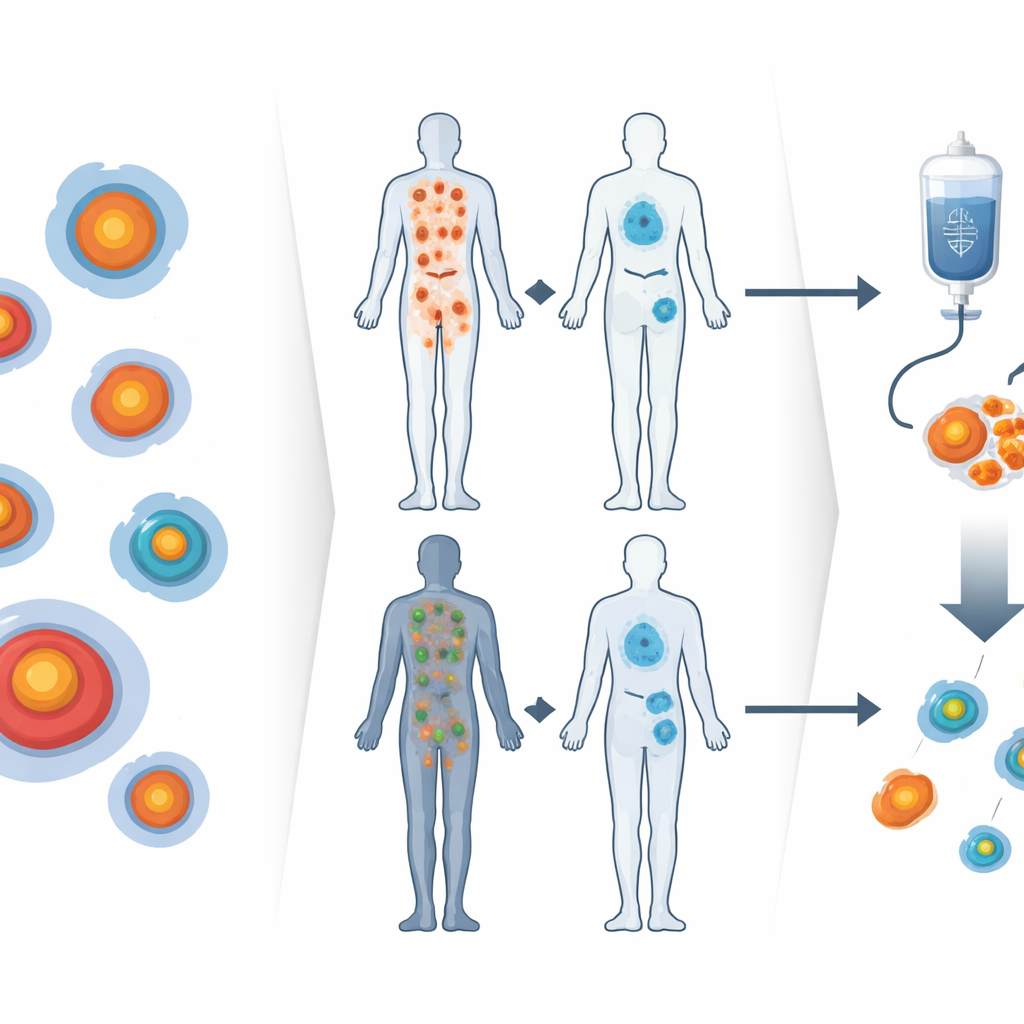
What this means for personalized prostate cancer care
Taken together, the findings show that FDG and PSMA-11 PET scans are not competing technologies but rather provide distinct and complementary information. A strong whole-body FDG signal warns that a patient is at higher risk of earlier progression and more likely to benefit from adding chemotherapy, while high PSMA uptake in individual tumors reassures that those lesions are more likely to shrink with hormone-based treatment. Using both scans together may therefore help doctors build a more complete picture of each man’s disease, refine risk estimates, and tailor treatment plans more precisely—potentially improving outcomes while avoiding unnecessary side effects for those unlikely to benefit from extra therapy.
Citation: Li, A., Wu, H., Zhou, X. et al. Distinct prognostic value of [18F]FDG PET and [68Ga]Ga-PSMA-11 PET in advanced hormone-sensitive prostate cancer. Commun Med 6, 164 (2026). https://doi.org/10.1038/s43856-026-01444-6
Keywords: prostate cancer imaging, PET scans, FDG and PSMA, hormone-sensitive prostate cancer, personalized cancer treatment