Clear Sky Science · en
Hormonal contraceptives and EEG biomarkers for antidepressant treatment response in women
Why this matters for women with depression
Many women of childbearing age use hormonal birth control and, at the same time, are more likely than men to experience major depression. Doctors are eager to use brain-based tests to predict who will benefit from antidepressants, but if birth control quietly changes how the brain responds to treatment, those tests may mislead us—especially for women. This study asks a simple but important question: do common hormonal contraceptives change brain-wave markers of antidepressant response, and are women on the pill helped by antidepressants to the same degree as women who do not use hormonal birth control?
How the study was set up
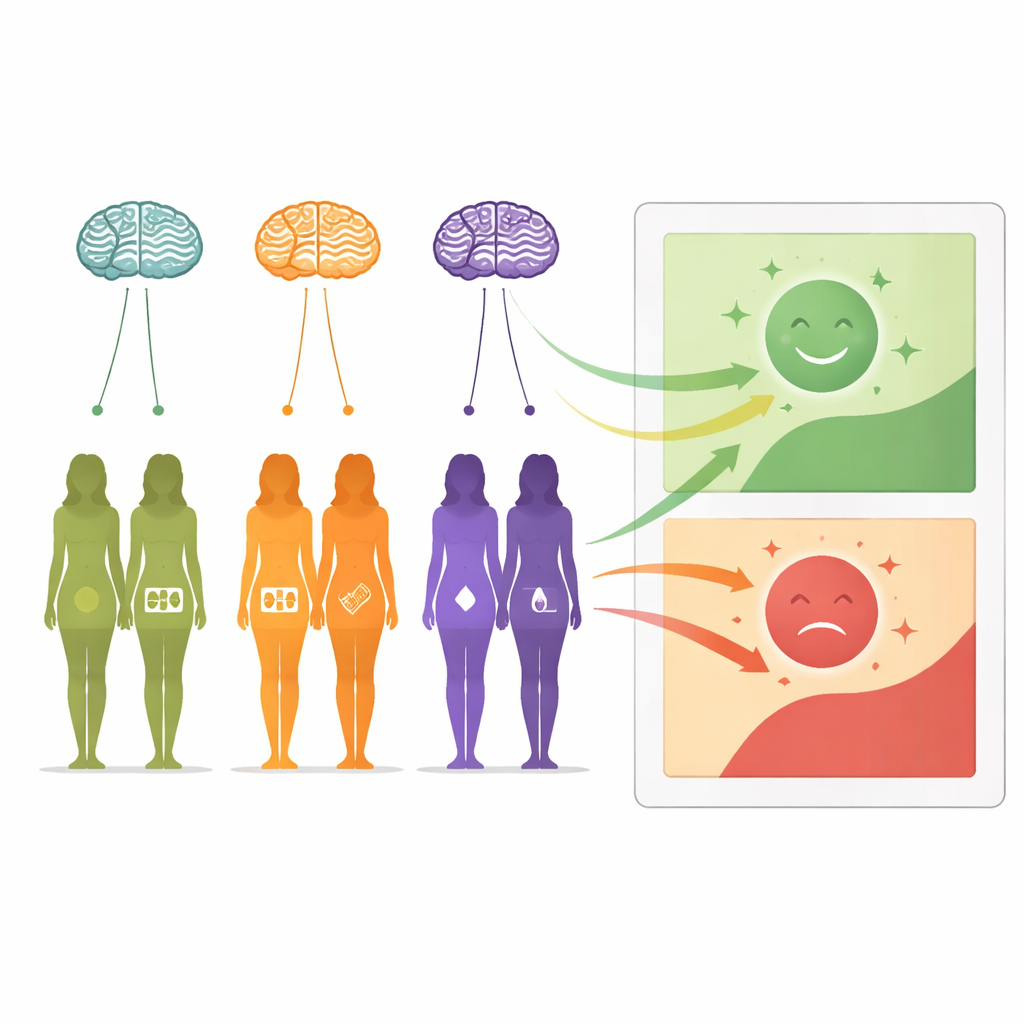
The researchers studied 60 premenopausal women with moderate to severe major depression who were not taking other psychiatric medications. They were divided into three groups: women not using hormonal contraception, women taking combined oral contraceptive pills that include estrogen and progestin, and women using progestin-only methods such as certain pills or hormone-releasing intrauterine devices. Before starting treatment with the antidepressant escitalopram, each woman had a detailed recording of her brain activity with an electroencephalogram (EEG). The team focused on five EEG features that earlier work had linked to how well patients respond to antidepressants.
What the brain waves did—and did not—show
The five EEG features included the natural rhythm of alpha waves, how balanced these waves were between the left and right front of the brain, a measure of how stable alertness was during rest, the strength of slower theta waves in a key mood-related region called the anterior cingulate cortex, and how strongly the brain’s response to sound grew with increasing loudness. These signals have been proposed as “biomarkers” that might forecast whether a person will improve on certain antidepressants. Surprisingly, when the researchers compared these brain measures across the three contraceptive groups, they found no meaningful differences. In other words, at baseline, women on the pill, on progestin-only methods, and on no hormonal contraception showed very similar EEG patterns despite their different hormone exposures.
When brain waves and birth control meet treatment outcome
The story changed once the women completed eight weeks of antidepressant treatment. Overall, women who did not use hormonal contraception were far more likely to respond to escitalopram than those on combined pills, with progestin-only users falling in between. About seven in ten non-users showed at least a 50 percent drop in depression scores, compared with only about one in four women on combined oral contraceptives and a little under half of those on progestin-only methods. When the researchers built statistical models to predict treatment success from EEG features, adding each woman’s contraceptive status consistently improved prediction accuracy. Advanced modeling techniques suggested that, for some EEG markers—especially the speed of alpha waves and theta activity in the anterior cingulate—how well those markers predicted outcome depended on the type of birth control used.
What this means for using brain tests in the clinic
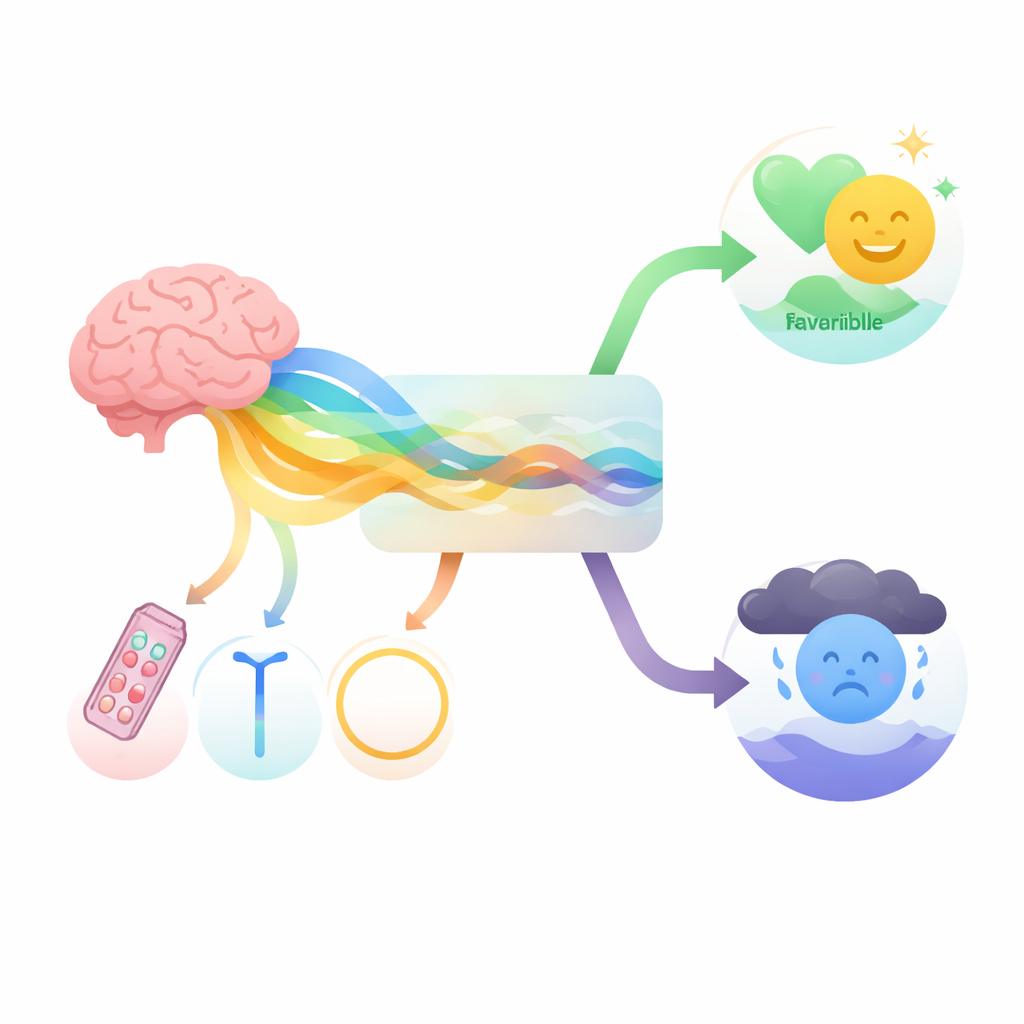
These findings carry two important messages. First, although hormonal contraceptives did not visibly reshape the EEG signals themselves, they did change how those signals related to antidepressant response. This implies that the same brain-wave profile might mean something different for a woman on the pill than for a woman who is not using hormonal contraception. Second, combined oral contraceptive use on its own emerged as a strong warning sign for poorer response to escitalopram in this group, even after accounting for age and medication dose. Together, these results suggest that future efforts to build brain-based tools for choosing antidepressants in women should routinely include contraceptive status as part of the predictive puzzle.
Take-home message for patients and clinicians
For women with depression, this study suggests that common hormonal birth control—especially combined estrogen–progestin pills—may be linked to lower chances of responding to a widely used antidepressant, even though standard EEG readings look similar across users and non-users. Including simple clinical information about whether, and what kind of, hormonal contraception a woman uses can make EEG-based predictions of treatment success more accurate. While larger studies are needed to confirm these results and to guide any changes in prescribing, the work highlights that personal factors like birth control choice may be crucial ingredients in tailoring depression treatment for women.
Citation: Jensen, K.H.R., Juvik, A.K., Larsen, S.V. et al. Hormonal contraceptives and EEG biomarkers for antidepressant treatment response in women. Commun Med 6, 180 (2026). https://doi.org/10.1038/s43856-026-01438-4
Keywords: hormonal contraception, women and depression, EEG brain waves, antidepressant response, personalized psychiatry