Clear Sky Science · en
Nusinersen rescues taurine deficiency in patients with type 1 Spinal Muscular Atrophy
Why this matters for families
Spinal muscular atrophy is a rare genetic condition that weakens the muscles of infants and children, often with heartbreaking consequences for movement and breathing. This study looks at a simple natural compound called taurine, already present in the body and in many baby formulas, to see how it might be involved in the disease and how a current drug treatment, Nusinersen, may help restore its balance.
A closer look at spinal muscle weakness
Spinal muscular atrophy (SMA) occurs when a vital protein, called SMN, is missing or too low because of changes in specific genes. Without enough SMN, the nerve cells that control muscles in the spinal cord and brainstem gradually degenerate, leading to poor head control, trouble sitting, and breathing problems in the most severe form, type 1. Although new medicines like Nusinersen have transformed care, they do not fully cure the disease, so researchers are investigating other body chemicals that may worsen or ease its effects.
The calming brain chemical taurine
Taurine is a small amino acid like molecule that helps steady activity in the developing brain and supports cell protection, energy use, and antioxidant defenses. In early life, when other brain messengers are still scarce, taurine acts as a major calming signal, shaping how nerve circuits grow and fire. Because SMA is known to disturb both nerve communication and cellular energy, the authors asked whether taurine might also be disturbed in this condition and whether that disturbance might be linked to disease severity.
What the mouse experiments revealed
To start, the team studied a well established mouse model of severe SMA. Using a laboratory technique that can precisely measure small molecules, they examined taurine levels in several brain regions and the spinal cord during the first days after birth. They found that in healthy mice taurine naturally declined as the nervous system matured, which matched earlier work. In the SMA mice, this age related decline still occurred, but by the time symptoms were advanced, taurine was specifically lower in the brainstem, an area rich in motor nerve cells that is especially vulnerable in SMA.
Measuring taurine in children with SMA
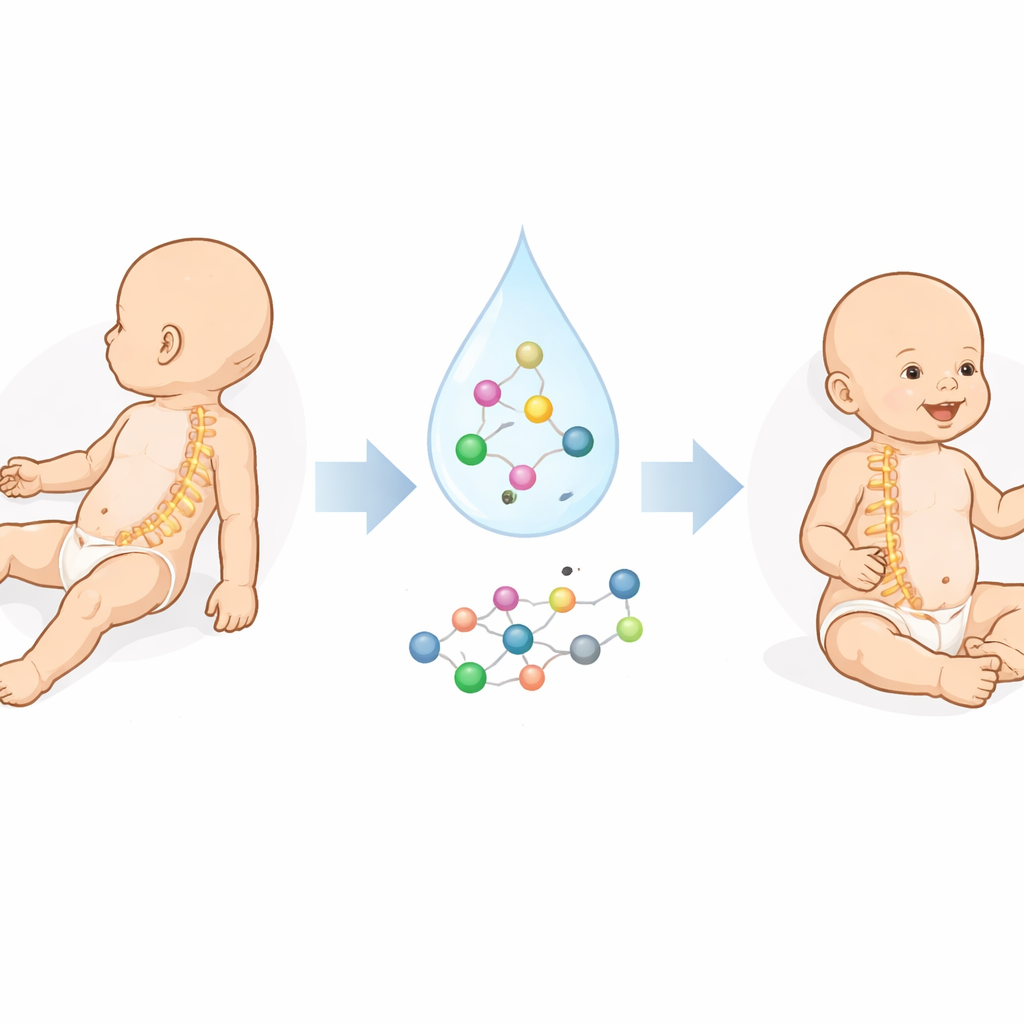
The researchers then turned to spinal fluid samples from 37 children with different forms of SMA and seven similarly aged children without neurological disease. They discovered that taurine levels in spinal fluid were clearly reduced in untreated children with type 1 SMA compared with controls, while levels in type 2 and type 3 were closer to normal. Children who had fewer backup copies of the SMN gene, and therefore produce less SMN protein, also tended to have lower taurine, suggesting a link between SMN shortage and taurine balance.
How treatment changed the chemical picture
All SMA patients in the study received regular doses of Nusinersen, a drug delivered into the spinal fluid that boosts SMN production from the backup gene. When the researchers compared taurine levels before treatment and about ten months later, they saw that taurine roughly doubled in children with type 1 SMA, returning to the range seen in control children. In contrast, taurine levels in type 2 and type 3 patients did not shift much with treatment, although in type 2 some patterns hinted that higher taurine after therapy might track with better motor scores. The study was not large enough to prove this link, but it offers a clue for future work.
What this means going forward
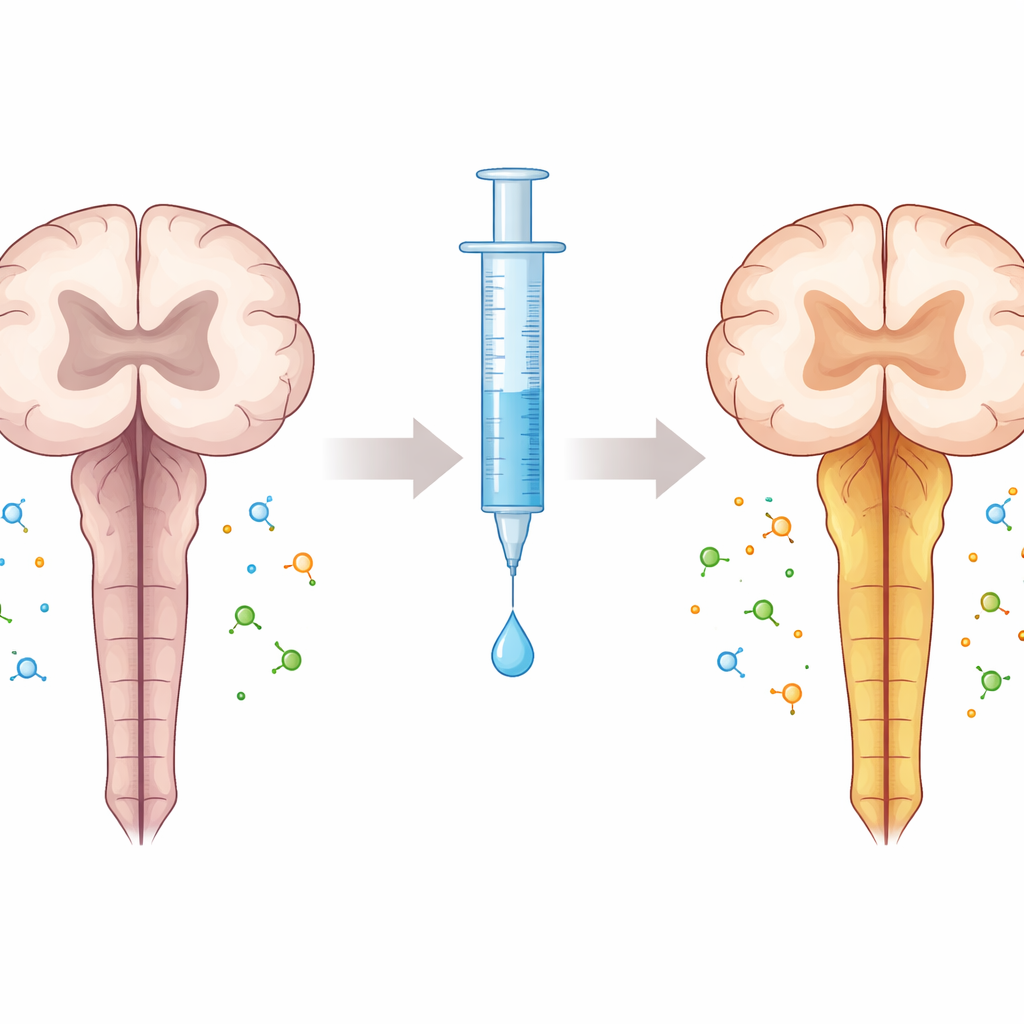
In plain terms, the study suggests that severe SMA goes hand in hand with a shortfall of taurine in the brain and spinal fluid, and that Nusinersen not only raises the missing SMN protein but also helps refill this taurine gap in the sickest children. The findings point to taurine related pathways as possible markers of how well treatment is working and as potential add on targets for future therapies. More studies will be needed to learn exactly how SMN shortage disrupts taurine, and whether safe taurine supplements could further support nerve health when combined with current SMA drugs.
Citation: di Vito, R., Hassan, A., Nuzzo, T. et al. Nusinersen rescues taurine deficiency in patients with type 1 Spinal Muscular Atrophy. Commun Med 6, 271 (2026). https://doi.org/10.1038/s43856-026-01434-8
Keywords: spinal muscular atrophy, taurine, Nusinersen, cerebrospinal fluid, neurochemistry