Clear Sky Science · en
A machine learning model for frailty based on wearable device measurements
Why everyday movement in old age matters
As more people live into their 70s, 80s, and beyond, doctors are searching for better ways to spot who is at risk of becoming weak, losing independence, or needing emergency care. The medical term for this vulnerability is frailty, but today’s frailty tests are slow, often subjective, and hard to repeat regularly. This study explores whether simple movement data from a wrist-worn activity tracker can stand in for those tests and even improve doctors’ ability to foresee serious outcomes such as hospitalization and death.
From clipboards to wristbands
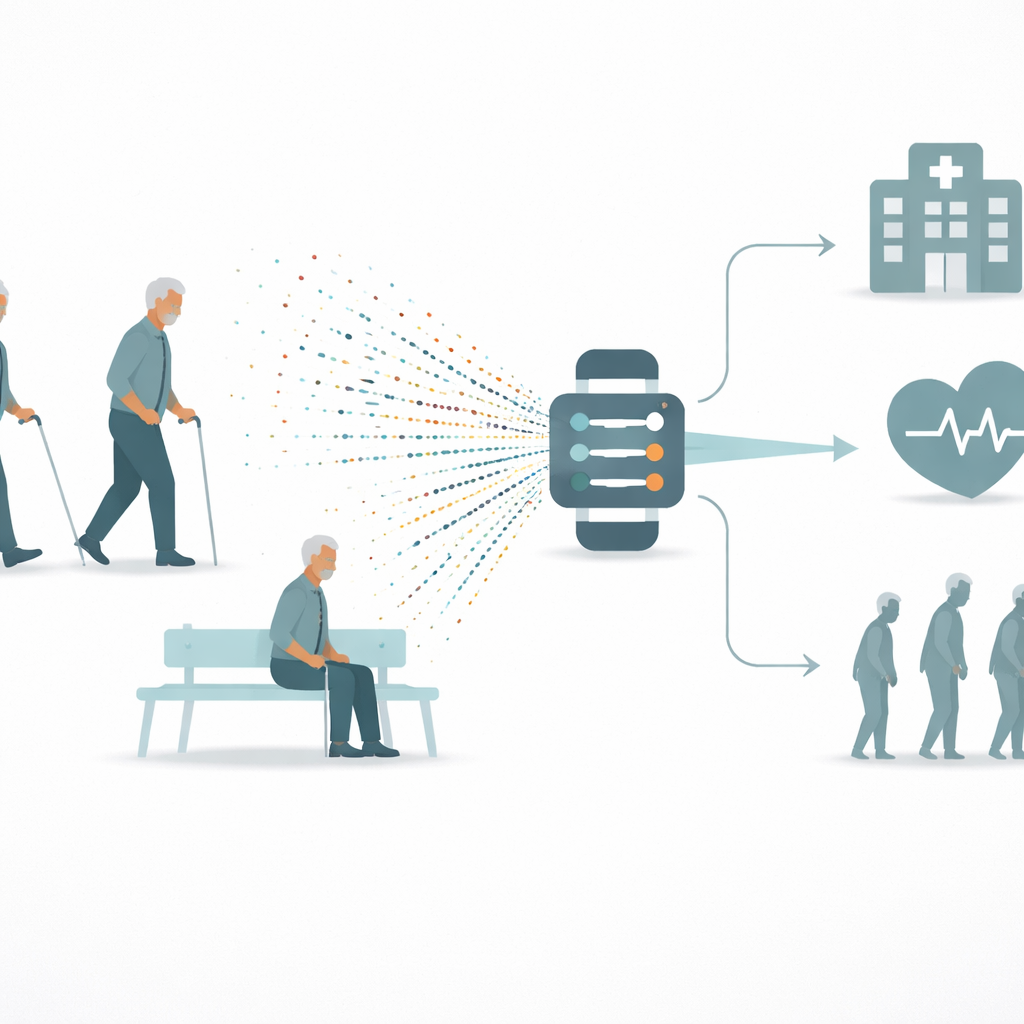
Traditional frailty scores ask about tiredness and weight loss, measure walking speed and grip strength, and tally up many health problems. These tools are helpful but time-consuming, and some rely on a person’s memory or a busy clinician’s judgment. The researchers behind this work wondered if a more objective window into daily life—how much people actually move, sit, and sleep—could capture the same information more efficiently. Using a smartwatch-like device called an accelerometer, they recorded every step, pause, and burst of activity in older adults over the course of a week.
A week of movement turned into risk scores
The team drew on the Toledo Study for Healthy Aging in Spain, which follows hundreds of adults over 65. After interviews, physical exams, blood tests, and body scans, 437 participants were asked to wear the activity device for seven days. Specialized software turned the raw motion signals into numerical features such as total steps, stretches of vigorous movement, and long sedentary periods, as well as patterns related to sleep and wakefulness. These features were then fed into a machine learning model—a computer program that learns patterns from data—to see whether it could recreate several established frailty scales and related health risk factors.
Teaching a computer to recognize frailty
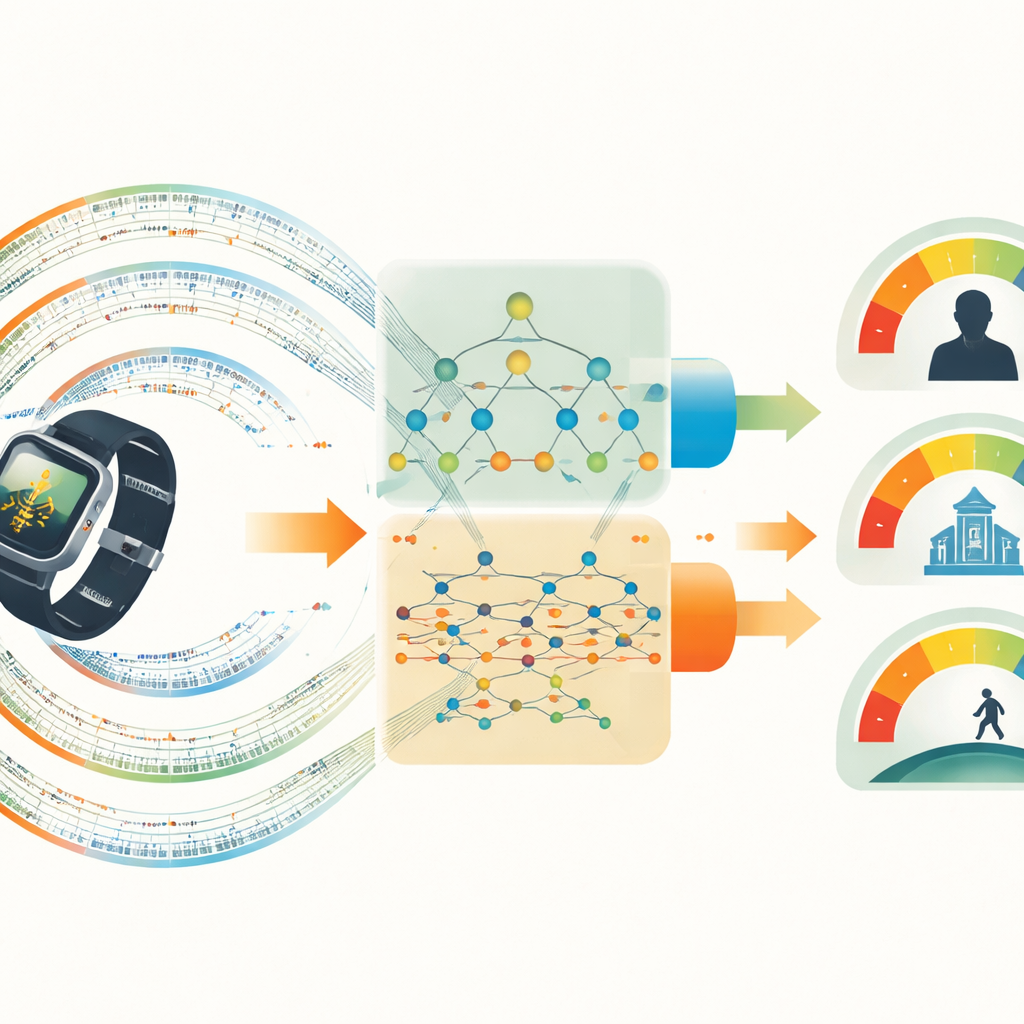
The researchers used an approach called gradient-boosted decision trees, which combines many simple decision rules into a powerful predictor. They repeatedly split their dataset into two halves, training the model on one half and testing it on the other, to make sure the results would hold up in unseen people. The model was able to estimate a detailed frailty score, known as the Frailty Trait Scale, with good accuracy based solely on activity patterns. Similar success was seen for other frailty measures and for individual risk factors tied to aging, such as blood test results and grip strength. Notably, two days—around 48 hours—of carefully chosen data were almost as informative as the entire week, suggesting that short, targeted monitoring could be enough.
Looking ahead to hospital stays and survival
Beyond matching existing frailty scores, the activity-based model was tested on outcomes that matter deeply to patients and families: being admitted to the hospital and the risk of dying over time. Here, the movement-derived predictions often outperformed the traditional frailty scales themselves. In other words, how someone actually moves and rests in their daily life provided a clearer signal of looming trouble than snapshot clinic-based tests alone. This finding hints that wearables could help doctors identify high-risk patients earlier and tailor follow-up care or support services before crises occur.
What this could mean for healthy aging
The study suggests that brief periods of monitoring with a simple wrist device can provide an efficient, objective stand-in for complex frailty exams, while also sharpening predictions of serious health events. For older adults, that could eventually mean fewer lengthy clinic visits and more continuous, at-home insight into how their health is changing. For health systems, it opens the door to tracking frailty in large populations and directing limited resources to those most in need. The authors caution that more diverse groups and additional biological measurements will be needed to build the most complete picture of aging. Still, their results point toward a future in which everyday movement, quietly recorded, becomes a powerful tool for protecting independence and extending healthy years of life.
Citation: Culos, A., Manas, A., Shidara, K. et al. A machine learning model for frailty based on wearable device measurements. Commun Med 6, 173 (2026). https://doi.org/10.1038/s43856-026-01419-7
Keywords: frailty, wearable sensors, older adults, machine learning, healthy aging