Clear Sky Science · en
Conserved neutrophil degranulation transcripts in HIV-TB coinfected children across East and Southern Africa
Why this matters for children in Africa
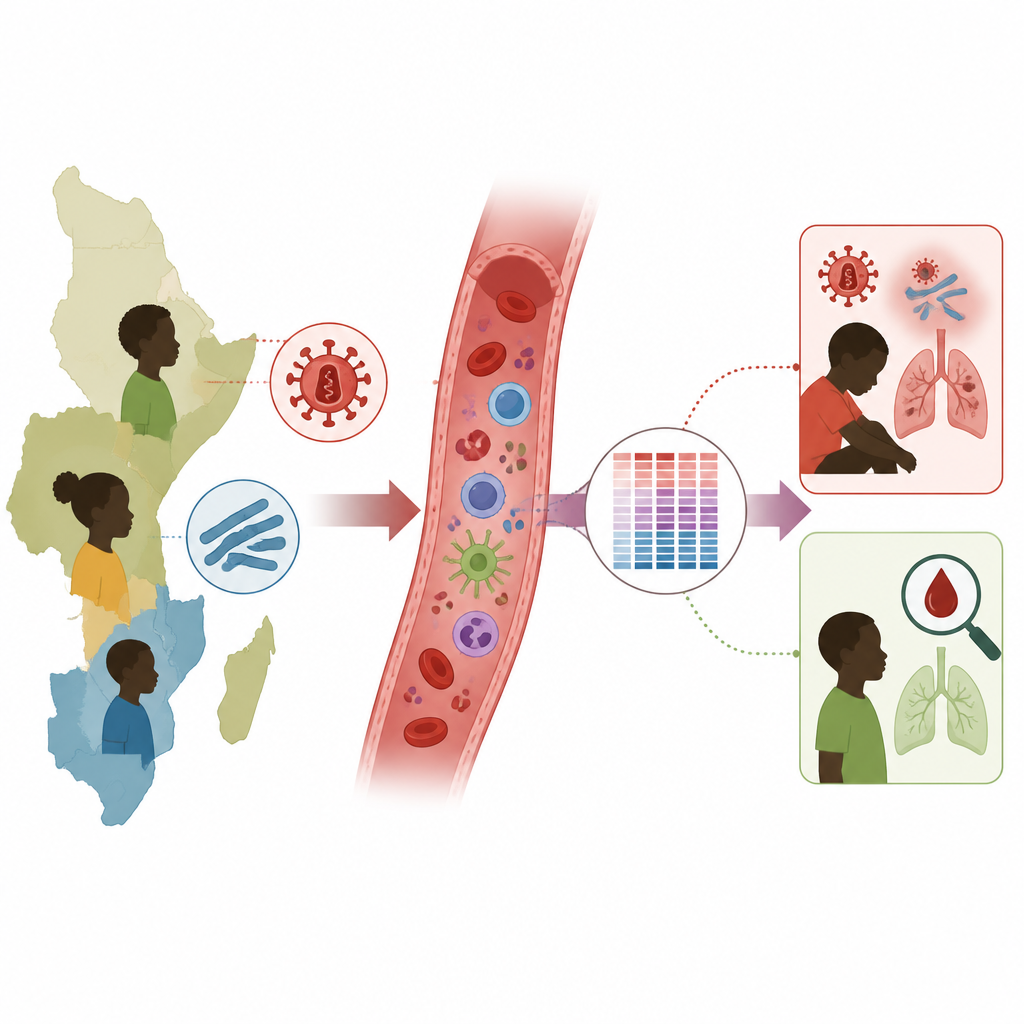
For many children in sub-Saharan Africa, living with HIV dramatically raises the risk that a tuberculosis infection will become severe and life threatening. Yet TB is notoriously hard to diagnose in kids, especially when HIV is also present. This study looks inside their blood at patterns of gene activity to ask a simple question: do HIV-TB coinfected children across different African regions share a common immune “fingerprint” that could one day help doctors spot TB more easily?
Looking at blood messages, not just germs
Instead of searching directly for TB bacteria, the researchers examined which genes are turned on or off in children’s blood. They focused on children living with HIV in Uganda, Botswana, and Eswatini, some of whom had active TB and some of whom did not. Modern sequencing tools allowed them to read millions of short fragments of genetic material from each blood sample and to measure the activity of individual “transcripts” – the working copies of genes that cells use as instructions.
Digging deeper than standard gene tests
Most earlier studies in adults have treated each gene as a single unit, even though many genes can produce several slightly different versions of a transcript. These versions, known as isoforms, can act in distinct ways inside cells. By zooming in at the transcript level, this study could spot more subtle changes in how the immune system responds to HIV and TB together. The team carefully filtered the sequencing data, controlled for technical differences between batches, and compared children with and without TB within each region.
Different details, similar immune story
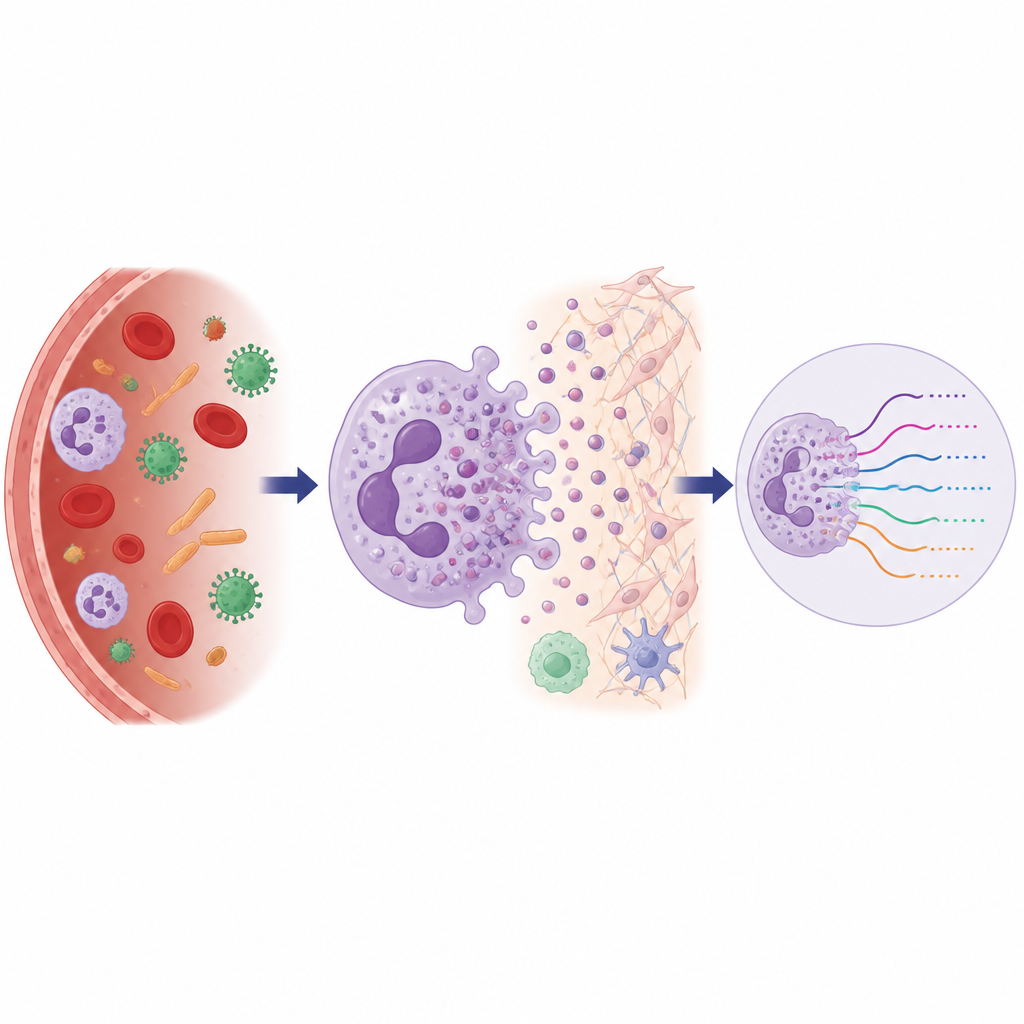
The fine-grained analysis showed that the exact transcripts that changed with HIV-TB coinfection were not the same in East and Southern Africa. Uganda had more altered transcripts than Botswana and Eswatini, and only a small handful of these changes overlapped between regions. However, when the scientists grouped transcripts into broader biological pathways, a striking pattern emerged. In all regions, the same three immune pathways stood out: general immune responses, the body’s rapid “innate” defenses, and a process in white blood cells called neutrophil degranulation.
A shared signal from frontline defender cells
Neutrophils are fast-acting immune cells that release packets of antimicrobial molecules to fight invading germs. The study found that four of the six shared transcripts between regions were tied to this degranulation process. These included molecules linked to directly killing microbes and others associated with tissue damage in TB-infected lungs. Because the analysis used whole blood, the signal could reflect more neutrophils in circulation, changes in how these cells behave, or both. Either way, a consistent neutrophil-related pattern appeared across very different African settings.
Hidden variations in immune building blocks
The transcript-level view also uncovered genes that looked stable at the coarse level but differed in which isoforms were active in each region. Several of these genes help immune cells recognize infected tissue or interact with other cells. Such region-specific isoform patterns would have been invisible in standard gene-level studies, yet they may be important for understanding how local human and pathogen diversity shapes children’s responses to HIV and TB.
What this means for future care
To a non-specialist, the key message is that despite many local differences, HIV-TB coinfected children in East and Southern Africa share a common blood-based imprint rooted in the behavior of neutrophils. This conserved pattern may eventually help researchers develop blood tests that flag TB in children living with HIV, even when symptoms are vague and lung samples are hard to obtain. The work is an early, exploratory step, but it highlights how reading the body’s own molecular messages could improve diagnosis and understanding of this dangerous combination of infections.
Citation: Katagirya, E., Mlotshwa, B., Kyobe, S. et al. Conserved neutrophil degranulation transcripts in HIV-TB coinfected children across East and Southern Africa. Commun Med 6, 280 (2026). https://doi.org/10.1038/s43856-025-01284-w
Keywords: HIV-TB coinfection, pediatric tuberculosis, neutrophil degranulation, blood gene expression, Africa child health