Clear Sky Science · en
Peroxisomes orchestrate metabolic flexibility and longevity via an interorganelle cascade
Why our cells lose their fuel flexibility with age
As we age, our bodies become less adept at switching between sugars and fats as fuel, a loss of flexibility that raises the risk of obesity, diabetes and other metabolic diseases. This study asks a deceptively simple question with big implications: which tiny parts inside our cells first fall out of step, and can protecting them help keep metabolism youthful for longer?
Small cell compartments with a big job
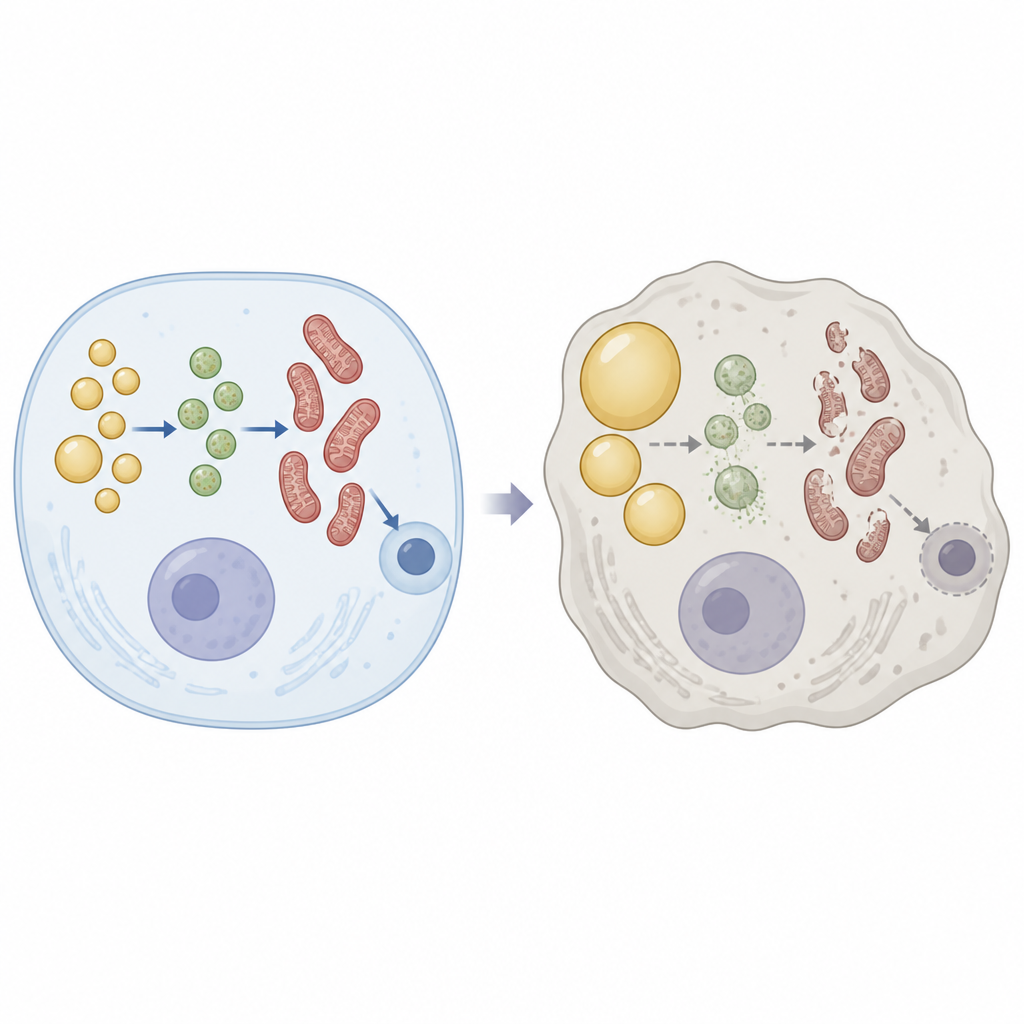
The researchers focus on peroxisomes, small bubble like structures inside cells that help break down certain fats. Working in the tiny roundworm Caenorhabditis elegans and supported by data from mice and human cells, they show that peroxisomes act as early organizers of how cells respond to feast and famine. In young animals, a short fast strongly boosts the activity of peroxisome genes, especially one called prx-5 that is needed to bring proteins into peroxisomes so they can do their work. This rapid response helps the cell tap stored fat when food is scarce.
When peroxisomes fall behind, fat storage goes awry
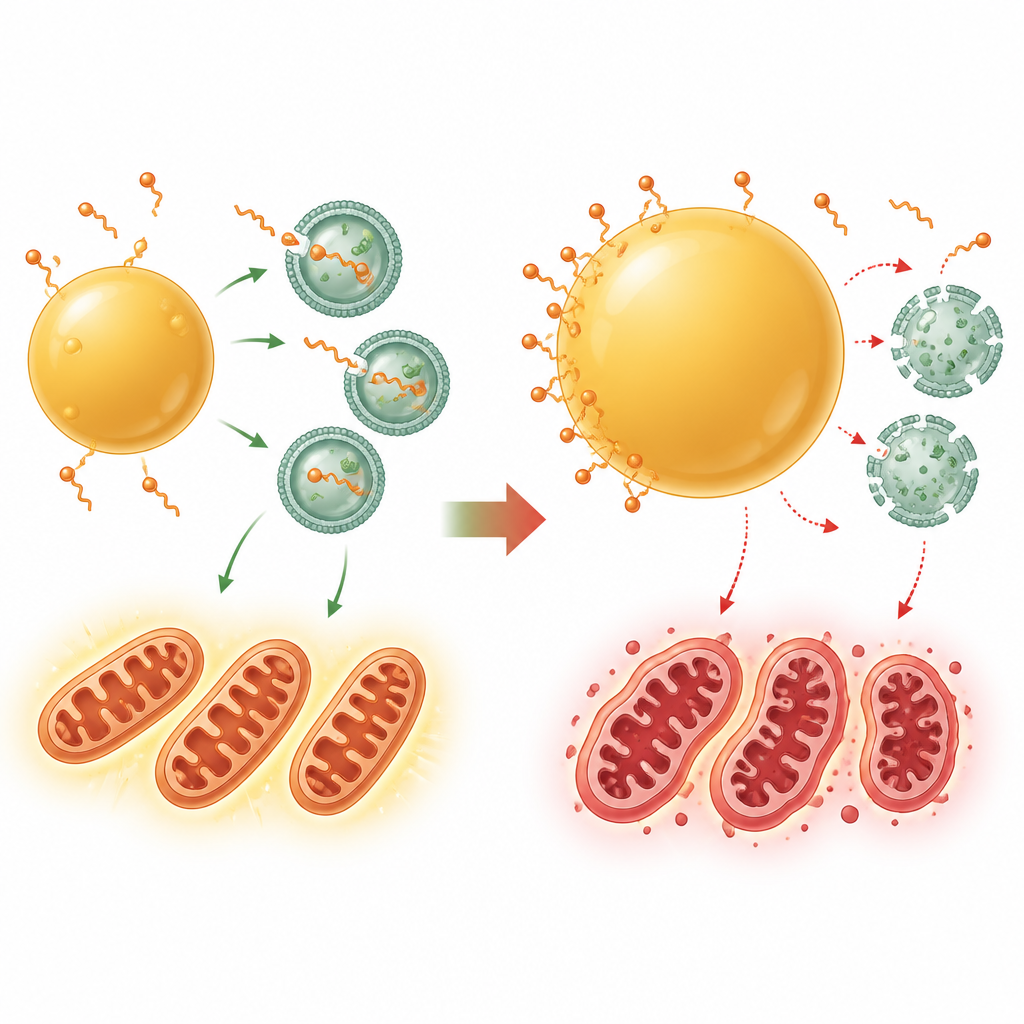
With age, this fasting response fades. The team finds that older worms still eat, but their peroxisome genes no longer switch on properly during fasting. At the same time, protein import into peroxisomes steadily weakens as levels of PRX-5 drop. Using fluorescent tags, the authors watch peroxisomes become less capable of pulling in their cargo and see some of them diverted to cellular waste systems. As peroxisomes falter, fat filled droplets inside cells grow larger and more numerous, and, crucially, they no longer shrink when animals are fasted. Detailed fat profiling reveals that, without efficient peroxisomes, droplets hoard long and highly unsaturated fats that are normally burned in these compartments, giving the droplets physical properties that promote oversized, stubborn structures.
A domino effect from fat droplets to mitochondria
The damage does not stop at fat handling. Mitochondria, the cell’s main power plants, depend on a steady, well managed flow of fats. When the researchers switch off peroxisome import in adult worms, mitochondria quickly become swollen, fragmented and energetically disturbed. Their electrical charge becomes abnormally high, a sign of unhealthy stress, and cells shift toward relying more on sugar burning outside mitochondria. Similar changes appear in cultured human lung cells lacking the human version of PRX-5. These experiments suggest that peroxisomal failure sits upstream in an interlinked chain of organelles, with problems in fat processing triggering later collapse in the cell’s energy factories.
How eating less helps cells stay coordinated
The study also sheds light on why eating less without malnutrition, often called dietary restriction, can extend life in many species. Worms kept on a dilute food supply lived longer and retained youthful peroxisome function well into later life. Their peroxisomes continued to import proteins efficiently, their fat droplets remained more manageable and their mitochondria stayed better organized. When the team deliberately disabled PRX-5 under dietary restriction, the lifespan benefit disappeared and mitochondrial protection was lost. This shows that working peroxisomes are not just passengers in this longevity strategy but are essential for it.
Turning up a key genetic switch
At the genetic level, the scientists identify a master regulator called NHR-49, related to the human fat sensing switch PPAR alpha, as a driver of peroxisome health. NHR-49 activity stays higher in low energy states and directly boosts prx-5 and other peroxisome and fat burning genes. In normal aging, NHR-49 gradually leaves the cell nucleus and becomes less active around midlife, matching the time when fat droplets become resistant to breakdown. Worms with naturally higher prx-5 levels, or engineered to overproduce PRX-5, maintain smaller fat droplets, better mitochondrial structure and live up to about a quarter longer than controls, highlighting the power of sustaining this pathway.
What this means for healthy aging
To a non specialist, the message of this work is that aging metabolism may begin to unravel in a specific place: the tiny peroxisomes that manage hard to burn fats. When these compartments stop importing the tools they need, fat droplets swell, mitochondria struggle and cells lose their agility in switching fuels. States that gently lower energy intake help keep the relevant gene switches on, preserving peroxisome function and, with it, a more youthful internal landscape. While the experiments were done mainly in worms and cells, they suggest that protecting peroxisomes and their control circuits could one day be a strategy to delay metabolic diseases and support healthier aging.
Citation: Sharma, A., Prabhakar, A., Valera-Alberni, M. et al. Peroxisomes orchestrate metabolic flexibility and longevity via an interorganelle cascade. Nat Aging 6, 987–1006 (2026). https://doi.org/10.1038/s43587-026-01122-1
Keywords: peroxisomes, metabolic flexibility, lipid droplets, mitochondria, dietary restriction