Clear Sky Science · en
Compensatory dynamics among dominant species stabilize plant communities in Tibetan alpine steppes
Why mountain grasslands matter
High mountain grasslands on the Tibetan Plateau may look empty at first glance, but they quietly supply food for livestock, store carbon in their soils, and support hardy plants found almost nowhere else. These steppes are poor in nutrients and sensitive to change, yet they are increasingly exposed to extra nitrogen and phosphorus from fertilizer and air pollution. This study asks a simple question with big consequences for herders and ecosystems alike: when we change the nutrient balance in these fragile pastures, what keeps the plant community from swinging wildly from year to year?
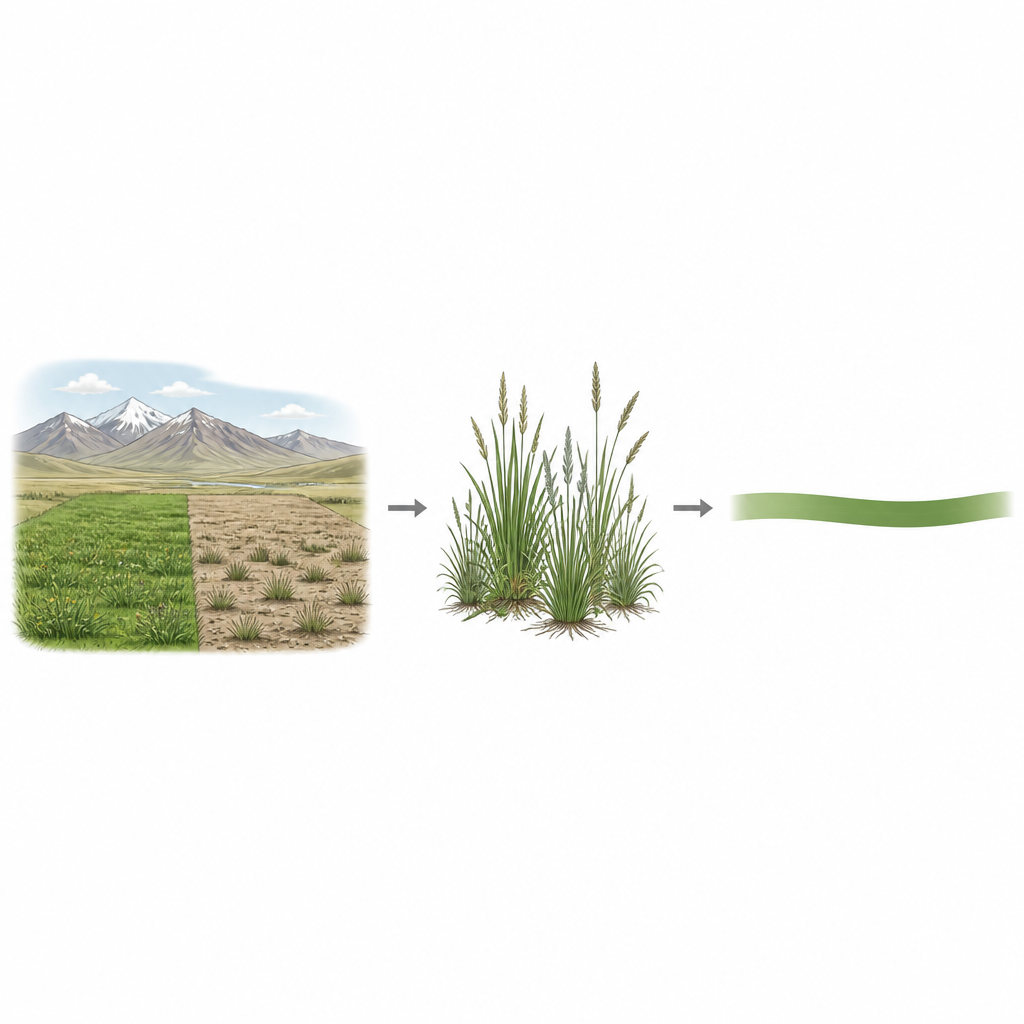
Hidden teamwork among a few key plants
The researchers focused on two kinds of alpine steppe in Tibet: relatively intact grasslands and nearby patches that had already been degraded, with thinner soils and more bare ground. They added different amounts of nitrogen and phosphorus to fenced experimental plots and followed plant cover and species mix over several years. Instead of tracking only how much plant matter the grasslands produced, they also examined how steady that production remained over time, and how individual plant species rose or fell from year to year.
The role of scarce nutrients
The experiments revealed that intact and degraded steppes do not suffer from the same shortages. In undegraded grassland, phosphorus was the main nutrient limiting plant cover and diversity. Adding phosphorus there increased plant cover and made species composition more varied from place to place, but it also tended to reduce the steadiness of dominant species. In degraded grasslands, where soils have already lost much of their nitrogen, both nitrogen and phosphorus were needed to boost plant cover. Nitrogen, in particular, helped restore diversity and changed how plants shared space and resources. These differences show that nutrient additions interact strongly with the starting condition of the land.
How plants balance each other out
To understand what truly stabilizes the community, the team broke plant dynamics into two parts. One is a simple averaging effect: if many species fluctuate randomly, their ups and downs can cancel out. The other is compensatory behavior: when some species decline in a given year, others reliably increase, like partners taking turns carrying a load. In both intact and degraded steppes, the second process was key. A small group of dominant species, which together made up more than 60 percent of the plant cover, showed strong compensatory patterns. When one dominant grass did poorly, others tended to fill in the gap. This biological give and take, rather than simple averaging across many species, was the main reason that total plant cover stayed relatively stable.
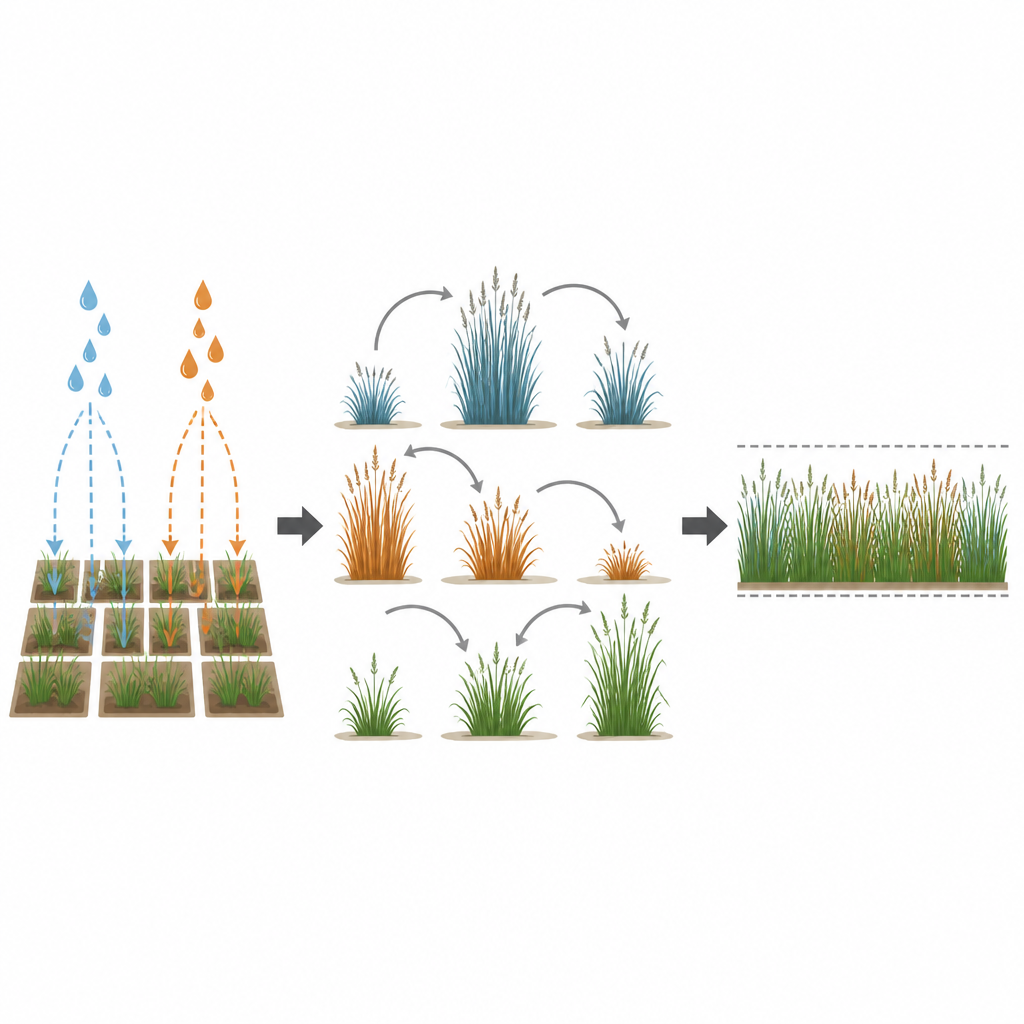
Different paths to stability in healthy and worn lands
The study also teased apart how dominant species responded to fertilizer in the two settings. In the healthier steppe, phosphorus supported more plant cover but directly reduced how consistently individual dominant species performed, even though their back and forth still buffered the community as a whole. In the degraded steppe, nitrogen reduced the stability of single dominant species yet increased overall diversity and the tendency of dominants to offset each other. Across all treatments, the core pattern held: the inner workings of the dominant plants, not the sheer number of species or simple averaging effects, best explained why some plots were more stable than others.
What this means for managing fragile grasslands
For land managers and policy makers, the findings carry a clear message. In these Tibetan alpine steppes, community stability depends less on having many rare species and more on the dynamics of a handful of dominant plants that trade off in response to shifting nutrients. Phosphorus alone can unsettle otherwise pristine steppes, while carefully balanced nitrogen and phosphorus can help degraded areas recover without undermining stability. By recognizing and supporting the compensatory relationships among these key species, we can design fertilization and restoration plans that boost productivity while keeping these high mountain grasslands steady through the environmental ups and downs of a changing world.
Citation: Dong, J., Zhao, L., Xue, K. et al. Compensatory dynamics among dominant species stabilize plant communities in Tibetan alpine steppes. Commun Earth Environ 7, 433 (2026). https://doi.org/10.1038/s43247-026-03596-8
Keywords: alpine steppe, grassland stability, dominant species, nutrient addition, Tibetan Plateau