Clear Sky Science · en
Rising atmospheric carbon dioxide ignites metal mobilization in acid mine drainage
Why rising CO2 and old mines matter to you
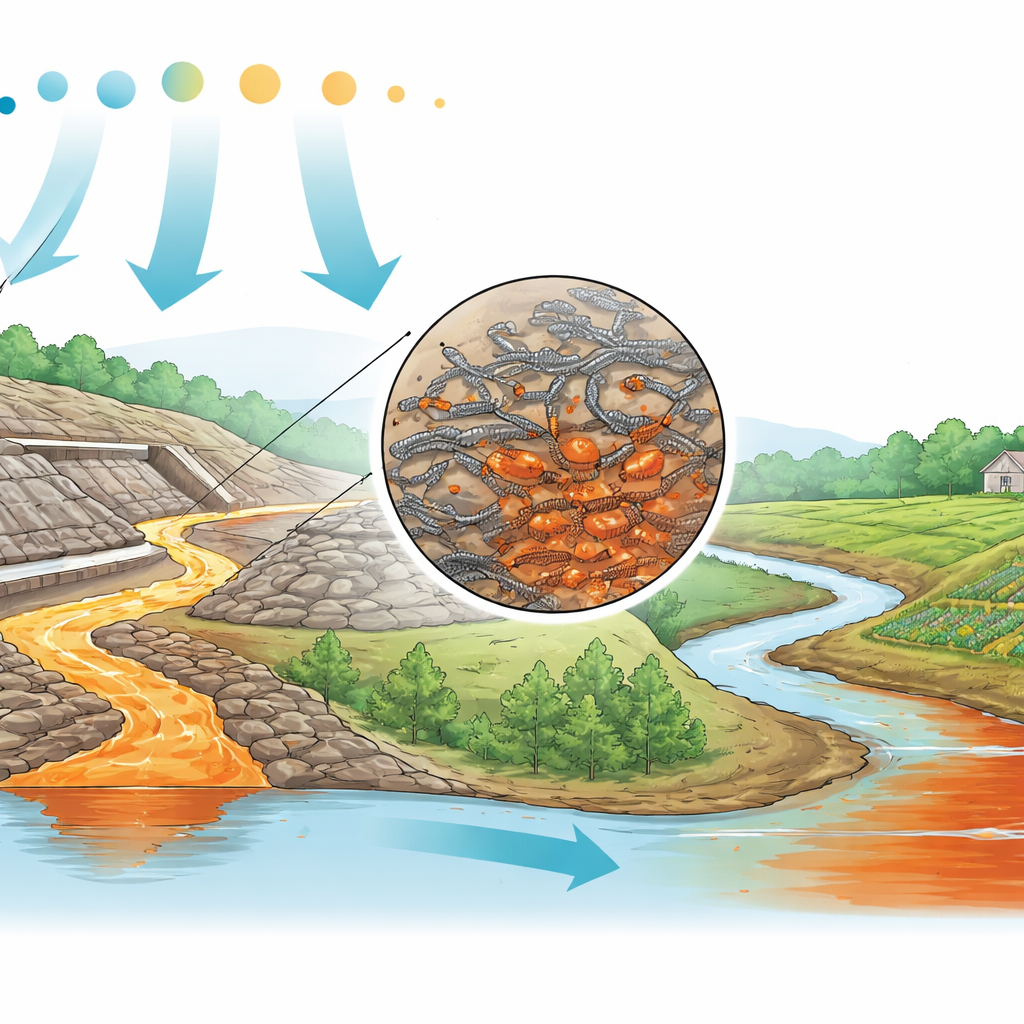
Across the world, abandoned and active mines leak rusty, acidic water laced with toxic metals into rivers and fields. At the same time, carbon dioxide (CO2) in the air keeps climbing because of human activity. This study asks a simple but important question: as CO2 rises, will that make metal pollution from mine waste worse? By combining a global survey of polluted sites with detailed lab experiments, the authors show that the answer is yes—and that tiny bacteria are the key middlemen.
Hidden rivers of acid and metal
Acid mine drainage is the orange or milky water that seeps from waste rock and tunnels at more than 180,000 mine sites worldwide, contaminating about 480,000 kilometers of rivers. It is extremely acidic and packed with metals such as cadmium and zinc that can move into soils, crops, and drinking water. The new study analyzed 800 samples from 82 mine-affected locations on five continents, spanning different climates and ore types. In these harsh environments, one group of bacteria, called Acidithiobacillus, repeatedly showed up as a major player, sometimes making up more than half of all bacteria present.
Tiny miners powered by the air
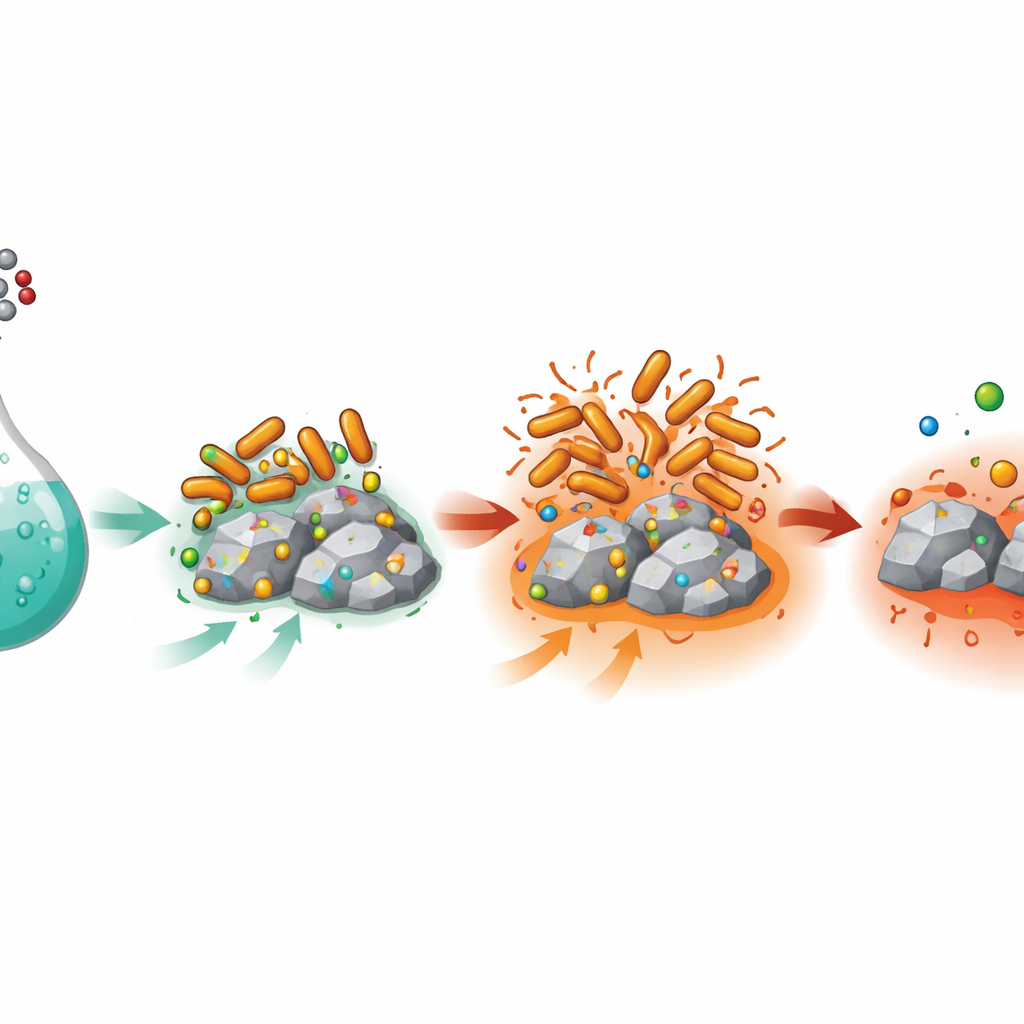
These microbes feed on iron and sulfur in sulfide minerals, producing acid that dissolves surrounding rock and releases metals. Using machine-learning analysis, the researchers found that atmospheric CO2 was the strongest single global predictor of how abundant Acidithiobacillus is in mine waters—more important even than acidity or iron levels. That suggested that CO2 from the air might be acting as a kind of fuel. To test this, they grew a representative species, A. ferriphilus, under CO2 levels representing pre-industrial air (200 ppm), today (around 400 ppm), a near-future world (1000 ppm), and a high experimental level (5000 ppm). As CO2 increased, dissolved CO2 in water rose, the bacteria grew faster, reached higher population sizes, and oxidized iron up to three times more quickly, driving the pH down toward stronger acidity.
How extra CO2 turns up the metal tap
The team then recreated a miniature mine system in the lab using arsenopyrite, a sulfide mineral rich in iron and arsenic. Under higher CO2, bacterial numbers climbed and the mineral surface became more heavily corroded. The water turned more acidic, and metals such as zinc, cadmium, nickel, manganese, copper, and lead were released more rapidly, with zinc and cadmium showing the largest jumps. Crucially, when no bacteria were present, raising CO2 alone had little effect on metal release. Genetic and enzyme measurements revealed why: elevated CO2 switched on the microbes’ carbon-fixing machinery and their internal power systems, boosting iron oxidation and energy production. This, in turn, sped up acid generation and the breakdown of metal-bearing minerals.
From climate scenarios to real-world risk
Using statistical models, the authors translated these lab findings into numbers that can be compared with future climate pathways. For every 100 ppm rise in atmospheric CO2, they estimate that cadmium and zinc release from acid mine drainage will increase by roughly 0.5–2 percent, with smaller but measurable increases for other metals. Plugging these sensitivities into standard climate projections up to the year 2100, they find that cadmium flux from mine drainage could rise by 0.25–10.6 percent, and zinc by up to about 15 percent, in mine sites where Acidithiobacillus is abundant. The highest increases occur under high-emissions scenarios, and in regions already struggling with metal-contaminated croplands, such as parts of China, Mexico, and Pakistan.
What this means for people and the planet
The study shows that rising atmospheric CO2 does more than warm the planet: it also indirectly "ignites" metal pollution from mine wastes by supercharging acid-generating microbes. While the projected percentage increases in metal release may look modest, they come on top of existing contamination in waterways that feed farmland and communities. The authors argue that CO2 levels should be explicitly included in assessments and cleanup plans for acid mine drainage, especially at sites rich in iron and sulfur minerals. They also suggest new control strategies that target the microbial engine of acid production rather than just treating the polluted water. In a world heading toward higher CO2, understanding and managing these hidden feedbacks between climate and pollution will be critical for protecting ecosystems and human health.
Citation: Wang, X., Ji, B., Li, H. et al. Rising atmospheric carbon dioxide ignites metal mobilization in acid mine drainage. Commun Earth Environ 7, 377 (2026). https://doi.org/10.1038/s43247-026-03551-7
Keywords: acid mine drainage, carbon dioxide, microbial metal mobilization, heavy metal pollution, climate change impacts